“COVID-19 and Imperial Value: Commodity Chains, Global Monopolies, and Catastrophe Capitalism,” International Critical Thought (forthcoming vol. 12, no. 3 [September 2022], 16 pp.
Author: John Bellamy Foster
-
The Return of the Dialectics of Nature
“The Return of the Dialectics of Nature,” Historical Materialism (forthcoming 2022, Isaac and Tamara Deutscher Memorial Lecture), 10,000 words.
-
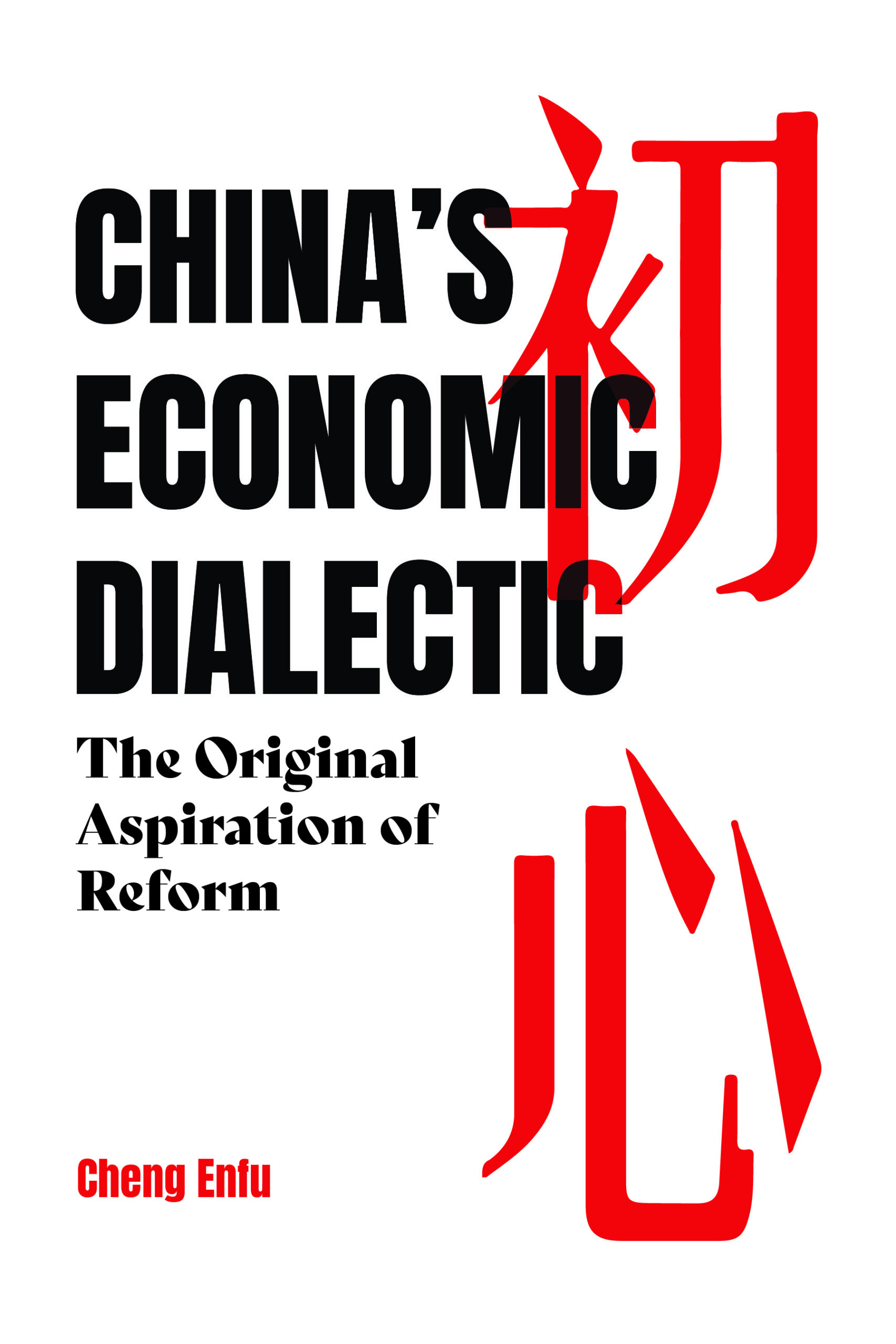
“Foreword” to Cheng Enfu, “China’s Economic Dialectics”
“Foreword” to Cheng Enfu, China’s Economic Dialectics (New York: International Publishers, 2021), vii-xiii.
 For Western Marxists, what is likely to be most astonishing is the many-sided approach to Marxism displayed throughout this work. This reflects a strong emphasis on cultivating an open Marxism, drawing on different views and debates, and various movement vernaculars, in the continuing world struggle for socialism.
 -
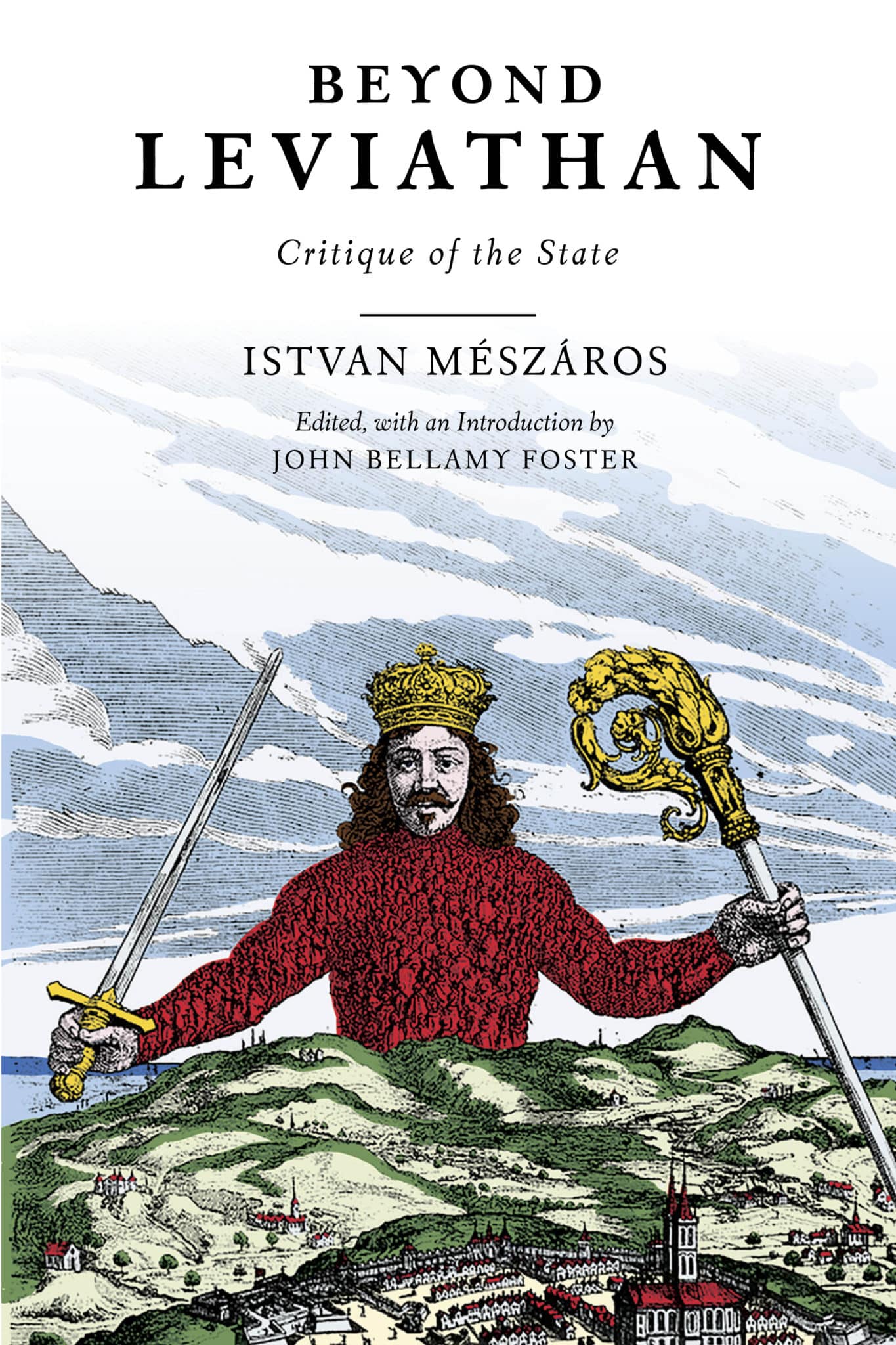
“Introduction” to István Mézáros, “Beyond Leviathan: Critique of the State”
“Introduction” to István Mézáros, Beyond Leviathan: Critique of the State (New York: Monthly Review Press, 2022), 7-37.
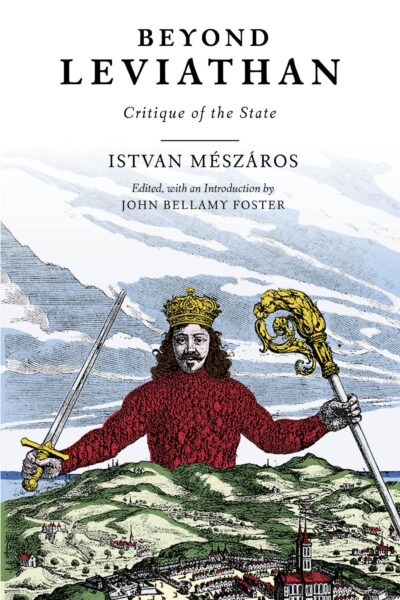 István Mészáros was one of the greatest political theorists of the twentieth century. Left unfinished at the time of his death, Beyond Leviathan is written on the magisterial scale of his previous book, Beyond Capital, and meant to complement that work. It focuses on the transcendence of the state, along with the transcendence of capital and alienated labor, while traversing the history of political theory from Plato to the present. Aristotle, More, Machiavelli, and Vico are only a few of the thinkers discussed in depth.
The larger objective of this work is no less than to develop a full-fledged critique of the state, in the Marxian tradition, and set against the critique of capital. Not only does it provide, for the first time, an-all-embracing Marxian theory of the state, it gives new political meaning to the notion of “the withering away of the state.” In his definitive, final work, Mészáros seeks to illuminate the political preconditions for a society of substantive equality and substantive democracy.
In his scholarly and personal introduction, John Bellamy Foster traces the gestation of this masterwork and its place in the history of political theory.
—Hugo Chávez, former Venezuelan President and a leader of the Bolivarian revolution
-
Capitalism in the Anthropocene: Ecological Ruin or Ecological Revolution
 Capitalism in the Anthropocene: Ecological Ruin or Ecological Revolution (New York: Monthly Review Press, forthcoming 2022), 693 pp.
Over the last 11,700 years, during which human civilization developed, the earth has existed within what geologists refer to as the Holocene Epoch. Now science is telling us that the Holocene Epoch in the geological time scale ended, replaced by the onset of a new, more dangerous Anthropocene Epoch, which began around 1950. The Anthropocene Epoch is characterized by an “anthropogenic rift” in the biological cycles of the Earth System, marking a changed reality in which human activities are now the main geological force impacting the earth as a whole, generating at the same time an existential crisis for the world’s population.
What caused this massive shift in the history of the earth? In this comprehensive study, John Bellamy Foster tells us that a globalized system of capital accumulation has induced humanity to foul its own nest. The result is a planetary emergency that threatens all present and future generations, throwing into question the continuation of civilization and ultimately the very survival of humanity itself. Only by addressing the social aspects of the current planetary emergency, exploring the theoretical, historical, and practical dimensions of the capitalism’s alteration of the planetary environment, is it possible to develop the ecological and social resources for a new journey of hope.
What people are saying about Capitalism in the Anthropocene
―Vijay Prashad, Director, Tricontinental: Institute for Social Research
-
Beyond Leviathan: Critique of the State
István Mézáros Beyond Leviathan: Critique of the State, edited and introduced by John Bellamy Foster (forthcoming, New York: Monthly Review Press, 2022), 512 pp.
István Mészáros was one of the greatest political theorists of the twentieth century. Left unfinished at the time of his death, Beyond Leviathan is written on the magisterial scale of his previous book, Beyond Capital, and meant to complement that work. It focuses on the transcendence of the state, along with the transcendence of capital and alienated labor, while traversing the history of political theory from Plato to the present. Aristotle, More, Machiavelli, and Vico are only a few of the thinkers discussed in depth.
The larger objective of this work is no less than to develop a full-fledged critique of the state, in the Marxian tradition, and set against the critique of capital. Not only does it provide, for the first time, an-all-embracing Marxian theory of the state, it gives new political meaning to the notion of “the withering away of the state.” In his definitive, final work, Mészáros seeks to illuminate the political preconditions for a society of substantive equality and substantive democracy.
In his scholarly and personal introduction, John Bellamy Foster traces the gestation of this masterwork and its place in the history of political theory.
“Posthumously edited by Professor John Bellamy Foster, “Beyond Leviathan: Critique of the State” by Istvan Meszaros is a seminal work that will be an enduringly appreciated and valued addition to college and university library Political Economy and Religious Philosophy collections in general, and Communism/Marxism political science studies lists in particular.”
—Midwest Book Review -
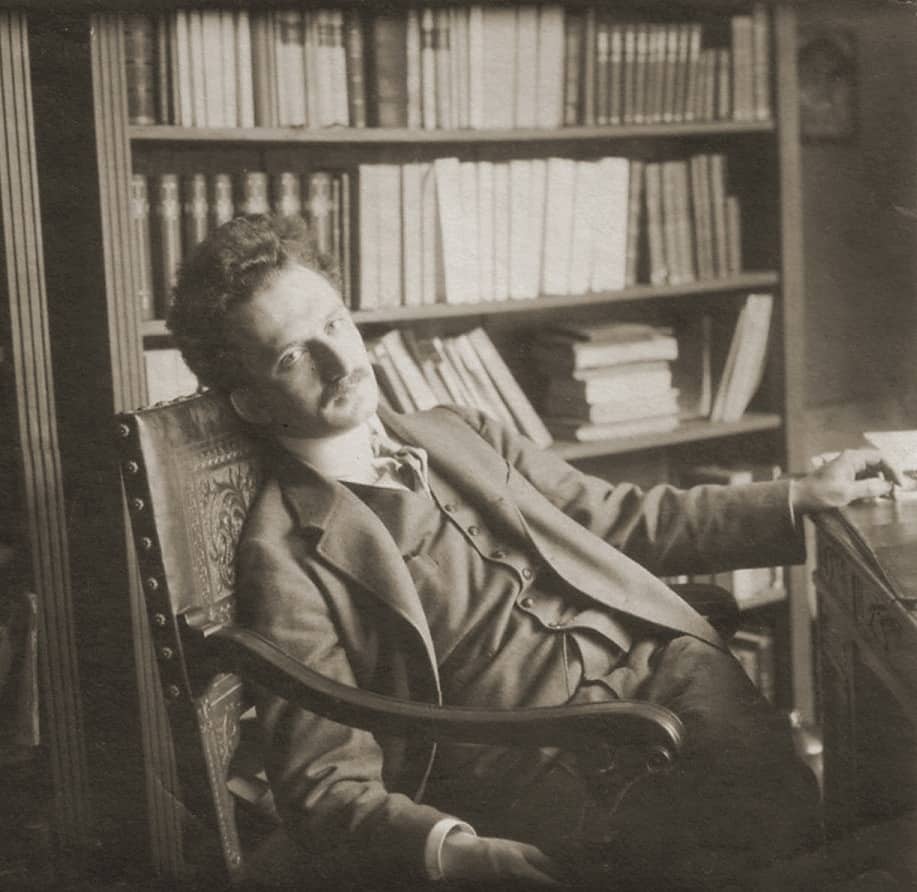
Lukács and the Tragedy of Revolution
“Lukács and the Tragedy of Revolution,” Monthly Review 73, no. 9 (February 2022), pp. 1-12.
In his 20s and early 30s, Georg Lukács emerged as one of Europe’s towering intellectuals, the author of the two-volume A History of the Development of Modern Drama (1908, 1911), Soul and Form (1910), Aesthetic Culture (1913), The Theory of the Novel(1916), and Heidelberg Aesthetics (1916–18). While Lukács’s primary field was aesthetics, the philosophical basis of his thought was neo-Kantian, dividing subject and object, facts and values, empirical reality and utopian free will, and society and nature. Writing in the years leading up to and including the First World War, Lukács was torn by what he perceived as a contradiction between a dominant world of vulgarity, decadence, and inauthenticity, versus a merely potential alternative lifeworld of authenticity. Although this contradiction was mediated in the cultural objectifications of art, it could not be transcended on the plane of historical practice. Politically and ethically, Lukács in these years adhered to a kind of revolutionary Dostoevskian-Tolstoyan existentialism.1 Though critical of German social democracy from the left, the dominant motif in his thought was one of tragedy borne of neo-Kantian dualism, and the perceived impossibility of revolution, constituting a tragedy of inaction. The only authentic individual actions appeared to be the recourse to religion or suicide.2
This tragedy of inaction, as perceived by Lukács, was shattered by the Russian Revolution in 1917. Suddenly, revolutionary action, which seemed so far removed before, was conceivable. This created a period of intense internal conflict within Lukács, evident particularly in his essays “Bolshevism as an Ethical Problem” (1918) and “Tactics and Ethics” (1919). In the first of these two essays, he rejected Bolshevism on ethical grounds, as still representing a tragedy of inaction. In the second, which announced his conversion to communism, he embraced Bolshevism on ethical grounds that were, if anything, more poignantly tragic, but taking the form of a tragedy of action.3 This reflected Lukács’s recognition of the acute problems of the individual faced with the challenge posed by both action and inaction in a revolutionary situation. His solution to this problem in 1919 was to foreshadow his great work of Hegelian-Marxian dialectical synthesis, History and Class Consciousness (1923), in which he sought to transcend his previous neo-Kantian frame based on a theory of the revolutionary consciousness of the proletariat.4
“Bolshevism as an Ethical Problem” embodies the tragic dilemma that Lukács, still embracing both neo-Kantian epistemology and a radical Tolstoyan commitment to nonviolence, found himself in when faced with the reality of the October Revolution. Although sympathizing with the Bolshevik cause, he found himself confronted by what he called the “metaphysical assumption that good can issue from evil.” Here, he referred to Fyodor Dostoevsky’s Crime and Punishment regarding the question of murder, even if, as Raskolnikov in the novel misguidedly tells himself, it is for a good cause. Hence, for Lukács writing in 1918, “at the root of Bolshevism [is] an insoluble ethical dilemma.” “Democracy,” or the pursuit of change through legal forms, requires “only superhuman self-abnegation and self-sacrifice,” since one must in the end lay aside one’s convictions and surrender to the result, running “the risk that most of humanity is disinterested in the new world.” In contrast, “Bolshevism’s moral problem” lies deeper since it is based on action. Inaction in the face of revolution seems to avoid the full severity of the ethical dilemma that confronts anyone who chooses to act. Lukács concludes that one should not bloody one’s hands through revolutionary action, particularly given an uncertain future. Tyranny and class rule, he argues, cannot be justified—even if introduced by the proletariat or the party with the aim of combating an oppressive tyranny and regressive class rule, based on the mere faith that this will negate “the endless, senseless chain of struggle.”5
A dramatic instance of the dialectic of continuity and discontinuity can be seen in a comparison of the argument of “Bolshevism as an Ethical Problem,” which Lukács describes as “my last hesitations before making my final, irrevocable choice,” with that of “Tactics and Ethics,” written only a few months later between January and March 1919.6 In the latter essay, he publicly declared his commitment to the revolutionary cause after joining the Hungarian Communist Party in December 1918 (at a time when there were less than one hundred members), inverting his earlier position on the ethics of Bolshevism.7 Rather than simply rejecting his previous argument on ethics and revolution, he sought to transcend it dialectically, “in the direction of praxis.”8
The same ethical dilemma as before was in many ways still evident, but what had formerly been, for Lukács, the tragedy of inaction now took the form of the tragedy of action. However, the shift in his underlying theoretical position could not have been more different. He first clearly indicated this by arguing that “the Marxist theory of class struggle, which in this respect is wholly derived from [G. W. F.] Hegel’s conceptual system, changes the transcendent objective into an immanent one; the class struggle of the proletariat is at once the objective itself and its realization.”9 This gave rise, in Lukács’s conception, to an objective historico-philosophical tendency (or logic of history) that could be directly ascertained by a revolutionary class consciousness—an argument that he developed fully in History and Class Consciousness.
Indeed, for Lukács—who retained much of the neo-Kantian problematic after December 1918 and throughout his life, coexisting inharmoniously with his Hegelian-Marxian synthesis—the ethical problem of individual action/inaction remained, if now seen from the opposite standpoint from what he presented only months before in “Bolshevism as an Ethical Problem.” Hence, an individual was now called on to accept the need for the moral sacrifice inherent in revolutionary action in line with class-based historico-philosophical necessity. Replacing his previous Tolstoyan pacificism, then, was an ethic that openly acknowledged the necessity for sin, in the form of acts of violence and “murder,” even if on the field of battle.10
Inaction was now seen as carrying an ultimate moral responsibility just as great as action, since standing by and acquiescing could only mean the support of the dominant reality. “The individual’s conscience and sense of responsibility,” Lukács wrote, “are confronted with the postulate that he must act as if on his action or inaction depended the changing of the world’s destiny.”11 Indeed, it was proletarian revolutionary action aimed at the realization of the objective potential of the class, including its promotion in the end of classlessness, that carried the entire moral force dedicated to “the changing of the world’s destiny.”
Nevertheless, tragedy at the individual ethical level was inherent in the dedication to struggle, rather than the mystic’s mere surrender.12 Lukács reintroduced the classic issue seen, for example, in Sophocles’s Antigone—that of “a primary ethic (obligation toward institutions) and a secondary ethic (obligation toward the soul).” The primacy of the secondary (second) ethic over the primary (first) ethic, he argued, “always takes on a peculiar dialectical complexity when the soul is not sufficient unto itself but is involved in mankind—as in the case of political man, of the revolutionary. Here, if the soul is to be saved, the soul must be sacrificed: starting from a mystical ethic one is forced to become a brutal Realpolitiker and to violate the absolute commandment ‘Thou shalt not kill’ which entails no obligations to institutions.”13
Referring to the novels of Boris Savinkov, a terrorist leader in the Russian Revolution of 1905—viewing these novels as “documents” rather than works of art—Lukács indicated that, according to Savinkov, “the ultimate moral basis of the terrorist’s act” was “the sacrifice for his brethren, not only of his life, but also of his purity, his morals, his very soul.”14 The point was that an immoral deed in terms of the primary ethic could turn out in terms of the secondary ethic, when combined with sacrifice for the collective cause, to be “truly—and tragically—moral.” Not content to leave matters there, in the “Luciferic” form of the second ethic represented by clearly terrorist action, Lukács ends his essay by juxtaposing this to the quite different heroine’s act represented in the biblical tradition by Judith.15 Thus, it was possible, he stated, “to express this sense of the most profound human tragedy in the incomparably beautiful words of [Friedrich] Hebbel’s Judith: ‘Even if God had placed sin between me and the deed enjoined upon me—who am I to be able to escape it?’”16
It is in Hebbel’s Judith that we find the aesthetic key to the sense of “profound human tragedy” that accompanied Lukács’s sudden conversion to revolutionary praxis. Only months after he wrote “Tactics and Ethics,” during the short-lived Hungarian Soviet Republic in 1919, when Lukács was deputy minister (People’s Commissar of Education and Culture), what was called the “ethical group” within the party leadership gathered around him and discussed Hebbel’s Judith and Dostoevsky’s Grand Inquisitor (from the Brothers Karamazov) in the residential hall of the House of the Soviet, presumably talking late into the night. As communist writer József Lengyel indicated in his memoirs, it was determined in these discussions that “we communists should take the sins of the world upon ourselves, so that we may be capable of saving the world. And why should we take the sins of the world upon us? Once again there was a very ‘clear’ answer, one taken from Hebbel’s Judith.… Just as God could order Judith to kill Holophernes—that is, to commit a sin—so may he order the communists to destroy the bourgeoisie, both metaphorically and physically.”17
The Sword of Judith and Lukács’s Second Ethic
As Walter Benjamin wrote in his Illuminations: “The value of information does not survive the moment in which it was new. It lives only at that moment; it has to surrender itself completely and explain itself to it without losing any time. A story is different. It does not expend itself. It preserves and concentrates its strength and is capable of releasing it even after a long time.”18
The Book of Judith is one of several deuterocanonical books included in the Septuagint (Greek Old Testament) and the Old Testament of both the Catholic Bible and the Eastern Orthodox Bible, but excluded from the Hebrew Old Testament canon, while Protestants assign it to the Apocrypha. Nevertheless, it is one of the most famous biblical stories. Over the last two millennia, since the Book of Judith first appeared in c. 135–78 BCE, the Judith story has been the subject of sculptors, painters, playwrights, and poets. The famous sword or scimitar with which Judith beheaded the general Holofernes is forever associated with her.
The Book of Judith—generally believed to be ahistorical—focuses on Nebuchadnezzar, king of the Assyrians, sending his general Holofernes on a mission to punish those who did not support his war on Arphaxad, king of the Medes. All nations submit to Holofernes except the Hebrews, with the Jews of Bethulia forced to block the path of the Assyrian army to the temple in Jerusalem. The brutal Holofernes places a siege on the city, cutting off their water supplies. The population of the city is weakened and demoralized. At this point, the beautiful widow Judith prays to God and decides to take matters into her own hands. She adorns herself so that she is “dressed to kill,” promising to the population of Bethulia that all will be decided in five days. She leaves for the Assyrian camp accompanied only by her own maid, determined to kill Holofernes. God meanwhile enhances her beauty. Judith, who is sharp-witted, cleverly deceives Holofernes about her true interests and intentions, with double-edged statements. The story is filled with sexual tensions. On the fourth night, Holofernes invites Judith to his tent to seduce her but ends up drinking so much wine that he collapses on the bed. Judith then cuts off his head with his own sword and puts the head in a bag, also seizing the canopy on his bed. Upon her return to Bethulia, Achior the Ammonite is converted to Judaism on recognizing Holofernes’s head. The Jews, following Judith’s advice, hang Holofernes’s head on the city walls and take the offensive against the Assyrians who are dismayed at finding the headless body of their general, resulting in a Jewish victory. Judith is praised and lives as a widow until the age of 105. Her death is mourned by all of Israel.19
In contrast, Hebbel’s Judith, written in 1840, gives to the tale of Judith a psychological as well as moral character, focusing on the questions of sin, human freedom, fate, redemption, and the absolute. Although a widow, Judith remains a virgin, as her extraordinary beauty had overwhelmed her husband and driven him mad. He died six months into the marriage after returning from working in the field, without their having consummated their marriage, leaving her entirely chaste. Hebbel then adds Holofernes’s brutal rape of Judith (along with her repressed sexuality) to the story, complicating her motivations, which in the moment of carrying out the deed are animated more by revenge than by the liberation of her people and the carrying out of God’s will. Confronting her maid with the reality of the rape and Holofernes’s sleeping body, she exclaims, “I will be repaid for the annihilation which I suffered in his arms; now that I will avenge myself for his brutal attack on my humanity.… If I have forfeited in my degradation the right to exist, I will win it back with this sword.… See, Mirza, there lies his head. Ha, Holofernes, dost thou respect me now?”20
On arriving back in Bethulia, Judith confronts a population that through thirst and hunger has fallen to the brink of degradation, with one mother suspected of having already eaten her own child. Forbidding the people from putting Holofernes’s head on a pike—a warlike practice of the time, and one that Holofernes in his brutal psychology would have undoubtedly wanted—Judith has it ignominiously buried in the ground. She insists that it no longer takes courage to defeat an enemy that has already lost. Upon being praised by the people of the city, she elicits, in the closing scene, a promise that they will kill her if she so requests, fearing a pregnancy that would result in her giving birth to the evil Holofernes’s child. Hebbel’s Judith emerges, if possible, as an even greater heroine than in the actual biblical story, having so clearly taken the sins of the world upon herself in carrying out her deed.21
It is in the passage from Hebbel’s Judith that Lukács described as “incomparably beautiful,” quoted here at greater length, that Judith first resolves to carry out the murder of Holofernes, prior to setting out for the Assyrian camp:
I thank Thee, I thank Thee, Lord! Thou makest clear mine eyes. In Thy sight the impure becomes pure. If Thou didst place a sin between me and my deed, who am I that I should contend with Thee, that I should draw back from Thee? Is not my deed worth as much as it costs me? May I love my honor, my immaculate body more than Thee? Oh the knot within me is untied! Thou madest me beautiful; now I know wherefore. Thou didst deny me a child; now I feel why and rejoice that I have not to love my own self in another. What I formerly held a curse, now appears to me a blessing! (She steps before a mirror.) I greet thee, my likeness! For shame, cheeks, that you do not yet glow! Is the way from you to my heart so long? Eyes, I praise you; you have drunk fire and are intoxicated. Poor mouth, I do not take it ill of thee that thou art pale; thou shalt kiss Horror. Holofernes, all is thine; I have no longer share in it. I have withdrawn to the inmost depths of my soul. Take it, but tremble when thou hast it. I shall emerge at an hour when thou dost not expect it, like a sword from the scabbard, and pay myself with thy life. If I must kiss thee, I will imagine that it is with poisoned lips; if I embrace thee, I will think I am strangling thee. God, let him commit atrocities before my eyes, bloody atrocities, but save me from seeing aught good in him!22
Lukács referred to the moral issue that he drew from Hebbel’s Judith as “the ethical conflict, of how it is possible to act unethically and yet rightly.”23 He devoted a chapter of his A History of the Development of Modern Drama to Hebbel’s tragedies, examining, in the words of Margit Koves, how “Hebbel’s protagonists, driven by inner forces clash with the moral order and institutions of their time.”24 In his plays, Hebbel’s greatest heroines, Mariamne of Herod and Mariamne and Judith, were women who found themselves in conflict with male protagonists and exhibited, according to Lukács, the conflicts associated with the “freedom of the will” and the “ethical world order” when confronted with what Johann Gottlieb Fichte in his Characteristics of the Present Age (1806) called “the Age of absolute indifference towards all truth…the State of complete sinfulness.”25
Hebbel’s brilliance in his tragedies (particularly Herod and Mariamne and Gyges and His Ring) was that he was already pointing to the “Nora” problem of Henrik Ibsen’s famous play, and potentially toward the liberation of women. But rather than seeing this as a historical problem subject to change, Hebbel presented it as a universal tragic problem, and thus remained conservative in outlook.26 Here, it is noteworthy that Bertolt Brecht—who, like Lukács, was influenced by Hebbel—incorporated the Judith story (and the conflict between individual ethics and social forms) in a number of his plays: The Bible (written in 1914, when he was 15), Baal(1918), The Jewish Wife (a vignette, part of the play Fear and Misery of the Third Reich [1938]), and The Judith of Shimoda (1940).27 For Lukács himself, It was precisely his historical and dialectical approach to such ethical problems that drew him toward communism. As he explained, “My interest in ethics led me to the revolution.”28
The Social Ontology of Ethics
“It is always dangerous, if not arbitrary,” István Mészáros wrote in Lukács’s Concept of Dialectic, “to parcel up philosophers as ‘the young X’ and ‘the mature X’ for sake of opposing one parcel to another.… Even a genuine conversion from ‘idealism’ to ‘materialism’ does not necessarily imply a radical rejection or repression of the original synthesizing idea.… A striking case in point in the twentieth century is Georg Lukács. His post-idealist works reveal in his approach to all major problems the same structure of thought, even though he had genuinely left behind his original idealistic positions.”29
In this sense, it is often more difficult to perceive the essential continuity in the structure of Lukács’s thought than the discontinuities, recognizing that there must always remain a dialectical relation between the two, no matter how great the theoretical transformation. Although Lukács is best known for his Hegelian-Marxist synthesis regarding proletarian class consciousness in History and Class Consciousness, which transcended his early neo-Kantian phase and its individualistic ethic, many of the issues of his earlier years remained and took on a transformed relationship in the development of his Marxian views. This can be seen in his struggles over the dialectics of nature, which governed his later excursions into social ontology.30 But it can also be seen in his continuing attempts (not unrelated to his ontology) to define an ethics of the relation of “self to selfhood,” that is, the individual’s active connection to suprahistorical forces (totality)—a concern that permeated all of his thought.31 If the revolutionary proletariat represented a de-reified class consciousness, the role of the intellectual (and the party) was to ease the proletarian’s way into this by focusing on the “consciousness of consciousness,” connecting individual, class, and totality.32
In Lukács’s focus on dialectical objectivity, there is also always a struggle with what he considered “bad objectivity,” subsuming the subject. Related to this, however, was a kind of non-dialectical duality in his thought, such that he never fully transcended the subject-object problem of epistemology that animated his deepest inquiries. It was this, in fact, that eventually propelled him to seek the answer in a deeper, ontological perspective.33 As he wrote late in life: “Society is an extraordinary complex of complexes, in which there are two opposite poles. On the one hand there is the totality of society, which ultimately determines the interactions of the individual complexes, and on the other there is the complex individual man, who constitutes an irreducible minimal unity within the process. In this process, man finally becomes man;…the aspect of freedom acquires a significance which is ever greater, ever more comprehensive, embracing the whole of humanity.”34 It was this emphasis on what he was to call “the genuinely independent personality, whose possibility had been created by previous economic development,” that was central to Lukács’s philosophy, and determined his whole conception of an ethics based on the individual as a “irreducible minimal unity” existing in a mediated relation to the historical totality.35
For Lukács in “Tactics and Ethics,” “ethics relate to the individual” but is mediated by class, giving rise to a historically generated totality.36 This focus on the “complex of the individual” remained crucial to his thought and governed his overall conception of ethics. The stakes in the consideration of the ethical as the primary mediation of the individual and society could not be higher. “Ethics,” he wrote in his Aesthetics, “is the crucial field of the fundamental, all-deciding struggle between this-worldliness and other-worldliness, of the real superseding/preserving transformation of human particularity.”37 Insofar as the genuine individual was a historical product, it was necessary, in developing an ethics in historical-materialist terms, to ground this in the historical process in its deepest sense—that is, in a social ontology. Thus, we find Lukács devoting himself to writing an Ethics (originally entitled The Place of Ethics in the System of Human Activities) at the end of his life, following the completion of his Aesthetics in 1962. He decided that this needed to be preceded by (grounded in) an ontological introduction, which quickly developed into a lengthy work, The Ontology of Social Being (and the Prolegomena to a Social Ontology attached to it), without the planned work on Ethics ever being written.38 The explanation for this, as Cornel West observes, is that Lukács sought all along to provide a new objectivist (or neo-foundationalist) basis for ethics. In this he failed to take his cue from Karl Marx himself, who, untroubled with accusations of relativism, saw ethics as thoroughly historical, arising from the class struggle itself.39
However, Lukács’s need to ground his ethics in ontology also had to do with his long struggle to overcome what he saw as the defects of History and Class Consciousness, partly due to its still neo-Kantian epistemological hesitations before a dialectic of nature. This was not conceived primarily in Frederick Engels’s sense, which Lukács had criticized, but in what he came to see as Marx’s sense of the metabolism of labor with nature, as the objective basis of human possibility as well as of alienation under capitalism’s second-order mediations. Reconstructing historical materialism thus meant reconstructing it on the basis of the social ontology of labor as the ground of social being.
Here, we are presented with another anomaly in Lukács, arising from the nature of his situation, compelling him to write an Ethics without having first written a Politics (a philosophy of right), despite their inextricable connection in the historical-materialist view—somehow conceiving it as possible to transcend this objective necessity. His proposed Ethics was to arise from his social ontology of labor, mediating the complexes of the individual and the totality, apparently without any systematic critique of the state, which in Lukács’s case would have necessarily meant engaging with the state of “actually existing socialism.”
In many ways, the tragedy of Lukács’s intellectual life was that explicit politics and a far-reaching critique of the state became impossible for him, evident in the fate of his famous work, the Blum Theses, dealing with the problem of a democratic transition in a proletarian revolution, which was suppressed by the party.40 Although Lukács continued to work on political issues, he was unable in his circumstances to address in a coherent way the theory of the state. In the last decade and a half of his life—following the suppression of the 1956 Hungarian Revolution, in which he had played a significant role as minister of culture in Imre Nagy’s extremely short-lived government (crushed by an invasion from the Soviet Union)—he refrained from politics and even political critique, placing an enormous obstacle in the way of his planned Ethics.41
Nevertheless, it was characteristic of Lukács’s approach to see ethics as partly autonomous from politics, having deeper ontological roots in the “complex of the individual.” This was signaled early on by his contention in “Tactics and Ethics” that “Hegel’s system is devoid of ethics,” a position that only made sense (even if one were to ignore Hegel’s System of Ethical Life) if one were to see ethics, as Lukács did at that time, as rooted ultimately in the individual. Such a view excluded Hegel’s attempt in The Philosophy of Right to portray the dialectics of ethical life as an objective phenomenon based in the family, civil society, and the state.42Lukács was later to rectify this judgment on Hegel in the chapter on ethics in The Young Hegel, where he presented a sophisticated mapping of Hegel’s ethics.43 Here, he focused, characteristically, on the notion of “tragedy in the realm of the ethical,” presented by Hegel in his early essay on Natural Law. “Tragedy,” Hegel wrote in relation to Aeschylus’s Eumenides (the last part of the Oresteia or Orestes cycle), “consists in this, that ethical nature segregates its inorganic nature (in order not to become embroiled in it), as a fate, and places it outside itself; and by acknowledging this fate in the struggle against it, ethical nature is reconciled with the Divine being as the unity of both.”44 It was this conception of ethics as the reconciliation of the individual and the absolute in the context of the individual’s struggle against “externalizing/alienating” reality (a concept that he also took from Hegel) that forced Lukács to move back to social ontology, rooted in labor. In this way, “the tragedy in the realm of the ethical” becomes revealed as “nothing but the contradictory path of human progress in the history of class societies—a great and real tragedy.”45
In his various aesthetic analyses, Lukács was highly critical of the growing tendency of cultural figures, with the failure of the 1848 revolution in Germany, to “replace the objective portrayal of world-historical conflict by the subjective insight of the tragic hero into the tragic necessity of his fate”—a regressive tendency he found, for example, in the later work of Hebbel. Such an approach encouraged a reversion to the static notion of the “condition humaine” (human condition) and reconciliation with a decadent reality, leading to the impoverishment of tragedy.46 Indeed, Hebbel himself had moved toward a philosophy of “pan-tragism,” meaning that “each ‘tragedy’ in history had to be acknowledged as an ‘eternal’ decree of fate,” the liquidation of the Hegelian concept of historical progress and the growth of irrationalism.47 It was thus the failure of the 1848 revolution in Germany that for Lukács was the basis for the growing irrationalism within much of German culture leading to the tragedy of the 1930s, which he was to dissect in The Destruction of Reason.
Revolution represented for Lukács the realm of the objectively possible. He saw the tragedy of action associated with his second ethic as a necessary element in a movement toward greater human freedom synonymous with historical necessity. One can easily read his brilliant, short book on Lenin: A Study of the Unity of His Thought (1924) and the description there of “revolutionary Realpolitik,” and see in Lenin, through Lukács’s eyes, a world-historical figure who took on the burden of Judith: “Even if God has placed sin between me and the deed enjoined upon me—whom am I to be able to escape it?”48 This is the tragedy of revolution, which is only ethically acceptable insofar as it is directly tied to a second ethic grounded objectively and subjectively in the possibility (and the historical necessity) of human liberation.
Notes
- ↩ See the brilliant essay by Cornel West, “Lukács: A Reassessment,” Minnesota Review 19 (1982): 86–102; and Michael Löwy, Georg Lukács: From Romanticism to Bolshevism (London: New Left Books, 1976), 91–144.
- ↩ The question of suicide was central to Lukács’s short literary work of 1912, “On Poverty of Spirit,” which Max Weber compared to Fyodor Dostoevsky’s Brothers Karamazov. Georg Lukács, “On Poverty of Spirit,” in The Lukács Reader (Oxford: Blackwell, 1995), 42–56.
- ↩ Konstantinos Kavoulakos, Georg Lukács’s Philosophy of Praxis (London: Bloomsbury, 2018), 157.
- ↩ The dialectic of the proletariat as the subject and object of history in History and Class Consciousness temporarily displaced the ethical problem for Lukács. As Mészáros wrote, “In the period when the essays of History and Class Consciousness were written, ethics itself could be conceived by Lukács as unproblematically and directly political because politics was seen as directly ethical.” István Mészáros, Beyond Capital (New York: Monthly Review Press, 1995), 408. This could not stand up, however, to Lukács’s own ruthless criticism of his ideas, and the ethical problem was to reappear in his thought.
- ↩ Georg Lukács,” “Bolshevism as an Ethical Problem,” in The Lukács Reader, 216–21.
- ↩ Georg Lukács, preface to History and Class Consciousness (London: Merlin, 1968), xi.; Georg Lukács “Tactics and Ethics,” in Tactics and Ethics (London: New Left Books, 1972), 3–11; Andrew Arato and Peter Breines, The Young Lukács and the Origins of Western Marxism (New York: Seabury, 1979), 82.
- ↩ István Mészáros, Lukács’s Concept of Dialectic (London: Merlin, 1972), 127.
- ↩ Lukács, preface to History and Class Consciousness, xi.
- ↩ Lukács, “Tactics and Ethics,” 5.
- ↩ Lukács, “Tactics and Ethics,” 10.
- ↩ Lukács, “Tactics and Ethics,” 8.
- ↩ See Lukács’s early statements in “The Metaphysics of Tragedy” (1910), as quoted in Mészáros, Beyond Capital, 286–87.
- ↩ Lukács, “Tactics and Ethics,” 10; Kavoulakos, Georg Lukács’s Philosophy of Praxis, 153–57, 160. In Sophocles’s Antigone, Creon represents the state and hence the institutional bases of ethics, while Antigone stands for the soul, spirit, and kinship, and thus a more traditional and religious ethic. In this essentially religious, classical-Greek conception, it is the ethic of the state—which, as Antigone says, demands that she transgress “the gods’ unwritten and unfailing laws”—that was to be regarded as secondary; while the ethic derived from the gods “and no one knows their origin in time” is to be seen as primary. Nevertheless, the state demands absolute adherence in war, creating a conflict between the two ethics, in which the state as absolute ruler enforces the tragic consequences. Lukács’s second ethic, in contrast, which opposes the ethic of the existing state, is essentially a revolutionary ethic, meant to transcend social rather than religious alienation, and aimed at construction of a new historical totality. Sophocles, Oedipus the King/Oedipus at Colonus/Antigone (Chicago: University of Chicago Press, 1954), 174. Lukács himself addressed the nature of this ethical dilemma in Antigone in relation to Hegel’s analysis of it in The Phenomenology of Spirit. Georg Lukács, The Young Hegel(Cambridge, MA: Massachusetts Institute of Technology Press, 1966), 411–12; G. W. F. Hegel, The Phenomenology of Spirit (Oxford: Oxford University Press, 1977), 261–63.
- ↩ Lukács was doubtless unaware, in referring to Boris Savinkov in “Tactics and Ethics,” that the latter was responsible for an anti-Bolshevik uprising in Russia, which would soon lead him to support the White Army.
- ↩ Kavoulakos, Georg Lukács’s Philosophy of Praxis, 157, 160; Rodney Livingstone, introduction to Lukács, Tactics and Ethics, xiii.
- ↩ Lukács, “Tactics and Ethics,” 11. In the edition of Hebbel’s Judith translated by Carl Van Doren, this passage reads: “If Thou didst place a sin between me and my deed, who am I that I should contend with Thee, that I should draw back from Thee?” Friedrich Hebbel, Judith: A Tragedy in Five Acts, trans. Carl Van Doren (Boston: R. G. Badger, 1914), 275.
- ↩ Löwy, Georg Lukács, 134–37; Daniel Andrés López, Lukács: Praxis and the Absolute (Chicago: Haymarket, 2019), 5.
- ↩ Walter Benjamin, Illuminations (New York: Schocken, 1969), 90.
- ↩ Deborah Levine Gera, “The Jewish Textual Traditions,” in The Sword of Judith: Judith Studies Across the Disciplines, ed. Kevin R. Brine, Elena Ciletti, and Henrike Lähnemann (Cambridge: Open Books, 2010), 23–24; The Book of Judith, Old Deuterocanonical Books, Old Testament, Holy Bible, available at st-takla.org.
- ↩ Hebbel, Judith, 310, 312.
- ↩ In his questionable intellectual biography of Lukács, Arpad Kadarkay was so eager to utilize the former’s allusions to Hebbel’s Judith as a basis for diagnosing what he calls “Lukács’s dementia” that he seriously distorted aspects of Hebbel’s play to criticize Lukács more fully. Thus, he claimed that Judith actively “forfeits her innocence” to Holofernes, rather than being raped, which is in fact a central feature of Hebbel’s play. Holofernes is said to have “reached into her humanity,” rather than, as in Hebbel’s play, brutalizing and “annihilating” her humanity, for which she takes revenge and thus absolves herself in her own eyes and those of God. Likewise, we are told that “Judith decides to kill the child in her womb,” rather than, as in the play, eliciting a promise from the population that she be killed at her request (thus sacrificing both herself and the fetus) if the evil should appear in her womb. Kadarkay’s distortions were meant to impose on the character of Judith a sense of intense “guilt,” allowing him to claim that Lukács’s own sense of “guilt” converges with that of Judith. Arpad Kadarkay, Georg Lukács: Life, Thought and Politics (Oxford: Basil Blackwell, 1991). In Hebbel’s play, Judith is absolved from her sin by the higher ethic embodied in her deed itself, the sin nevertheless remains and falls upon her, as Lukács understood. Nothing therefore could be more absurd—insofar as Judith itself is concerned—than Lee Congden’s contention that, in Hebbel’s “tragic dramas the concept of sin was unknown; so fated were his characters that their actions could not be subjected to moral judgment.” Lee Congdon, “For Neoclassical Tragedy: György Lukács’s Drama Book,” Studies in Eastern European Thought (2008): 48. In fact, Hebbel’s Judith is concerned with conflicting ethical principles in the manner of Greek tragedy.
- ↩ Hebbel, Judith, 275.
- ↩ Georg Lukács, Record of a Life: An Autobiography (London: Verso, 1983), 53.
- ↩ Margit Koves, “Anthropology in the Aesthetics of the Young Lukács,” Social Scientist 29, no. 7/8 (2001): 71.
- ↩ Koves, “Anthropology in the Aesthetics of the Young Lukács,” 71; Johann Gottlieb Fichte, Characteristics of the Present Age (Washington DC: University Publications of America, 1977), 9; Friedrich Hebbel, “Herod and Mariamne: A Tragedy in Five Acts,” in Three Plays (London: J. M. Dent, 1914), 67–184.
- ↩ Georg Lukács, Conversations with Lukács (Cambridge, MA: Massachusetts Institute of Technology Press, 1975), 93.
- ↩ Gary Neil Garner, “Bertolt Brecht’s Use of the Bible and Christianity in Representative Dramatic Works” (PhD dissertation, Louisiana State University, 1970), 45–52, 72.
- ↩ Lukács, Record of a Life, 53.
- ↩ Mészáros, Lukács’s Concept of Dialectic, 17–18.
- ↩ John Bellamy Foster, The Return of Nature (New York: Monthly Review Press, 2000), 16–21; Georg Lukács, Labour (London: Merlin, 1978); Kavoulakos, Georg Lukács’s Philosophy of Praxis, 213–18.
- ↩ Mészáros, Beyond Capital, 286. See also Lukács, Conversations with Lukács, 135.
- ↩ Lukács, History and Class Consciousness, 47.
- ↩ Mészáros, Lukács’s Concept of Dialectic, 43; Lukács, Conversations with Lukács, 76.
- ↩ Lukács, quoted in Mészáros, Lukács’s Concept of Dialectic, 43–44.
- ↩ Mészáros, Lukács’s Concept of Dialectic, 44–45.
- ↩ Lukács, “Tactics and Ethics,” 8.
- ↩ Lukács, quoted in Mészáros, Beyond Capital, 400.
- ↩ Mészáros, Beyond Capital, 407; Mészáros, Lukács’s Concept of Dialectic, 150–51.
- ↩ Cornel West, The Ethical Dimensions of Marxist Thought (New York: Monthly Review Press, 1991), 138–66.
- ↩ Georg Lukács, “The Blum Theses 1928–1929,” in Tactics and Ethics, 227–53.
- ↩ Mészáros, Beyond Capital, 406.
- ↩ Lukács, “Tactics and Ethics,” 7; G. W. F. Hegel, System of Ethical Life and First Philosophy of Spirit (Albany: State University of New York Press, 1970); G. W. F. Hegel, The Philosophy of Right(Oxford: Oxford University Press, 1952), 105–10; Mészáros, Beyond Capital, 408–9.
- ↩ Lukács, The Young Hegel, 299.
- ↩ W. F. Hegel, Natural Law (Philadelphia: University of Pennsylvania Press, 1975), 104–5; Aeschylus, Eumenides, in The Oresteia (New York: Alfred A. Knopf, 2004), 93–127.
- ↩ Lukács, The Young Hegel, 413, 417. Hegel in Natural Law followed Aristotle in contending that “the state comes by nature before the individual” and the child is thus “suckled at the breast of universal ethical life,” from which derived his “tragedy in the realm of the ethical” that had to contend with the contradiction between the elemental principles of the soul (and inorganic life) and civilization/the state, seen in almost classical Greek terms. Lukács, in contrast, followed Marx in seeking to develop an ontology of social labor (also implicit in Hegel’s corpus) that served to ground the “tragedy in the realm of the ethical” in the contradictions of the individual in class society. Hegel, Natural Law, 104, 113–15.
- ↩ Georg Lukács, “Marx and the Problem of Ideological Decay,” in Essays on Realism(Cambridge, MA: Massachusetts Institute of Technology Press, 1980), 157; Lukács, Conversations with Lukács, 94.
- ↩ Georg Lukács, The Destruction of Reason (London: Merlin, 1980), 570. This contrasts with Lukács’s conception of Hebbel at his best, where “the fate of Hebbel’s heroes is the tragically impotent struggle of real men for the perfect humanity of men who live in the formal works of art.” Georg Lukács, Soul and Form (New York: Columbia University Press, 2010), 198.
- ↩ Georg Lukács, Lenin: A Study on the Unity of His Thought (London: Verso, 2009), 70–85.
-

Against Doomsday Scenarios: What Is to Be Done Now?
“Against Doomsday Scenarios: What Is to Be Done Now?” (John Bellamy Foster interviewed by John Molyneux and Owen McCormick), Monthly Review 73, no. 7 (December 2021), pp. 1-16.
[Published in Irish Marxist Review, November 2021.]
John Molyneux and Owen McCormack: Given the extreme summer weather and the UN Intergovernmental Panel on Climate Change (IPCC) report, just how bad are things now? What do you believe the time scale is for catastrophe and what do you think that catastrophe will look like? Are things worse than the IPCC report claims? Some, including Michael Mann, have warned against “doomsday scenarios” that might deter people from acting. In your view, are doomsday scenarios the truth that needs to be told?John Bellamy Foster: We should of course avoid promoting “doomsday scenarios” in the sense of offering a fatalistic worldview. In fact, the environmental movement in general and ecosocialism in particular are all about combating the current trend toward ecological destruction. As UN general secretary António Guterres recently declared with respect to climate change, it is now “code red for humanity.” This is not a doomsday forecast but a call to action.
Still, the word catastrophe is scarcely adequate in the present age of catastrophe capitalism. Catastrophes are now ubiquitous, since extending to the scale of the planet itself. We are experiencing throughout the globe a series of extreme weather events due in large part to climate change, each of which rank as “catastrophic” by historical precedents, sometimes lying outside the range of what was previously thought to be physically possible. The extreme conditions experienced this summer in the Northern Hemisphere—including floods in Europe; Hurricane Ida in the United States, which not only devastated New Orleans, but also ended up killing people in floods in New York and New Jersey; and the worsening drought and wildfires in California and the entire Pacific Coast of the United States—clearly represent something qualitatively new.
The latest report of the IPCC, its Sixth Assessment Report: The Physical Science Basis, explains that the various climatic and extreme weather events will tend to compound, as in the case of droughts, desertification (dustbowlification), soil erosion, wildfires, and weakening monsoons, on the one hand, and a melting cryosphere, sea level rise, megastorms, and flooding, on the other—thereby intensifying and extending these catastrophic events, which will appear to come from everywhere at once. Moreover, the human consequences go deeper with temperature increases diminishing world grain production and putting strains on the world food supply; climate change contributing, along with the destruction of ecosystems by agribusiness, to the emergence of novel zoonoses, such as COVID-19 (along with numerous other health hazards); whole populations in cities throughout the planet exposed to unprecedented flooding; the prospect of climate refugees running into the hundreds of millions; and numerous other equally dire consequences, imposed on present and future generations.
The IPCC, which has a record of scientific reticence, tells us that we will see in the next couple of decades, and indeed throughout this century, growing cataclysms and a shift toward an Earth System that is increasingly unsafe for humanity, even in the most optimistic scenarios. Thus, in the most “rosy” scenario provided by the IPCC (SSP1-1.9)—the only one of its scenarios where the increase in average global temperature at the end of the twenty-first century is projected to be below 1.5°C—the best that can be hoped for is a situation where a 1.5°C increase is staved off until 2040 and global temperatures only increase by a tenth of a degree after that, so that by the end of the century or the beginning of the next century the increase in global average temperature over preindustrial levels can be reduced to 1.4°C, removing humanity from the extreme danger zone. The point is that even in the most optimistic scenario—which would require a global ecological revolution on the part of humanity in order to be achieved, leading to carbon emissions peaking halfway through this decade and net zero emissions being achieved by 2050—the overall climate catastrophe facing humanity will be extremely dire.
The second most optimistic scenario is one of staying below a 2°C increase (somewhere around 1.7°C). It too would require a global ecological revolution. The other three scenarios offered by the IPCC are basically unthinkable, for which the word apocalyptic is appropriate. In fact, we are currently headed toward the IPCC’s most apocalyptic scenario (SSP5-8.5), in which global average temperatures this century would, in the “best estimate,” rise by 4.4°C, which would, according to current scientific assessments, mean the collapse of industrial civilization, raising questions of human survival. In an ominous statement leaked from Part II of the Sixth Assessment Report, on “Impacts,” which will not be published until February, the IPCC says that if humanity is driven into extinction during the “sixth extinction” arising from anthropogenic causes, evolution will not bring the human species back.
The trouble is that if we go beyond a 1.5°C increase, and especially beyond a 2°C increase, more and more climate feedback mechanisms, such as the loss of arctic ice and thus the weakening of the albedo effect (the earth’s reflectivity), the release of methane and carbon dioxide from the melting tundra, the burning of the Amazon, and the degradation of the ocean as a climate sink will compound the climate problem and create an irreversible situation, increasing the possibility of runaway climate change that would in effect feed on itself, to the extent that the very existence of humanity would be in question.
There is still a possibility of avoiding absolutely catastrophic climate change on the level that would threaten human existence altogether. But to accomplish this would require revolutionary changes in social relations, as well as in technology and ways of living. Such a revolution would need to begin within the capitalist system but would lead beyond capital. There is no other way. As Karl Marx indicated, the struggle against capitalism is not simply about human freedom, it is also about human survival.
I have a lot of respect for Michael Mann’s work on climate change and his fight against the absolute climate denialism of the right. I was, therefore, surprised to see his attacks on the left as “doomsayers” in his recent book, The New Climate War. He seems, by his own admission, to have been affected by what he called “mob-like” attacks on him by followers of Naomi Klein, for his questioning of her opposition to carbon markets (as if green capitalism were the solution). He sharply criticizes British climatologist Kevin Anderson for his claims that mainstream-liberal climate science has been too complacent and that there is a need to overthrow the current political-economic hegemony, as if this were not perfectly obvious at this point. Mann was sharply critical of Bernie Sanders’s Green New Deal plan and has naively advanced the view that Joe Biden is “a climate change pioneer.”
There is no doubt that Mann knows the science well, and he is worth paying attention to in that respect. But he seems to have no understanding whatsoever of the existing social relations of production of capitalism, leading him to dismiss as mere “doomsayers” everyone who points to the extreme urgency of the world’s present plight, rooted in the nature of our social system, and the need to change the social rules of the game—as if they were giving up, simply by insisting on the need for radical social change. He clearly believes there is some moderate, responsible, enlightened approach based on the existing political-economic system and the actions of established political elites, and to deviate from that is to be “defeatist” and a “doomsayer.”
I am reminded here of Marx’s remark in Capital that natural scientists often “venture quite at random” and without understanding when they move beyond their own specific areas of expertise, and present themselves as authorities on social questions, which they do not even bother to take seriously or investigate. The climate problem (and Earth System emergency in general) does not arise from Earth processes directly, but from the inner drives of our contemporary socioeconomic system, namely capitalism. Failure to understand the nature of capitalism means that one can have little to offer with respect to organizing social action and solutions.
JM/OM: Is there still time to avert disaster? Do you have any hope that existing powers and the present system will be able to avert the catastrophe of runaway climate change? Will they even seriously try? Some people are giving Biden a certain amount of credit for moving in the right direction—what do you think?
JBF: We are now in a position, as I have indicated, where what we can only call catastrophic developments associated with the crossing of planetary boundaries (namely, climate change, the decline of biological diversity, ocean acidification, the disruption of the nitrogen and phosphorus cycles, the elimination of ground cover, the loss of freshwater, chemical pollution, and so on) are unavoidable. The COVID-19 pandemic is itself a manifestation of the destruction of ecological systems by agribusiness, which is bound to create new zoonoses, transmitted by the circuits of capital. But climate change represents at present our most serious problem because of the speed with which it is developing and its irreversible character, often likened to a tipping point leading over the edge of a cliff (as much as some like Mann may dislike the metaphor). We are in a dangerous situation. But we can still avoid such dire, irreversible consequences, likely fatal to humanity, if sufficient social action is taken, allowing us to stop short of what scientists have designated as the climate tipping point (usually now thought of as requiring to stay below 1.5°C, or at most below 2°C, although this is inherently inexact).
But this is only possible, as the leaked Part 3 of the Sixth Assessment Report (not scheduled for publication until March, and then in redacted form), on “Mitigation,” tells us, if we are willing to carry out fundamental structural change. And, as the report also informs us, at this point we would need to alter dramatically the “demand-side” of the equation, that is, the amount and structure of what is produced and consumed, including a shift to low-energy paths, rather than simply counting on the massive ecomodernization of energy systems, much less new technologies that do not exist at scale. Time is so short that the demand-side strategies, which require challenging the current production system, are the only changes that can be effected rapidly enough and on the scale required.
In my view, the best historical analogy for the present world situation is Cuba’s Special Period following the demise of the Soviet Union. All at once in the early 1990s, Cuba had to do without the massive fossil fuel inputs (and petrochemical inputs) from the USSR on which its economy had come to depend. Fortunately, as the dialectical biologist Richard Levins explained, Cuba had seen the growth of ecological science in the form of “ecologists by conviction” of extraordinary ability, who were then joined in the Special Period by “ecologists by necessity.” Despite the U.S. blockade, Cuba was able to provide for its basic agricultural needs and reconstruct its economy based on organic agriculture and the development of socialist ecological science, creating a better society. This meant of course increased pressure on the population due to the external pressures they were under and the loss of external resources coming from the previous Eastern bloc. But Cuba in large part succeeded, in the process turning itself into the most ecological nation on earth (according to The Living Planet Report), while protecting and even increasing the quality of its human development. Tragically, it is Cuba’s success that has caused Washington in recent years to tighten the blockade, utilizing the methods of financial war. None of this, however, takes away from the depth of Cuba’s achievement.
The hard truth is that we are already, due to the continuing destruction of the planetary environment by the capitalist world economy, facing deteriorating ecological conditions, which will, in the most optimistic IPCC scenario, continue to deteriorate this century. For example, there is absolutely no hope that sea level rise can be turned around (though it might be lessened) in this century. It will continue to rise to the end of the century, and possibly for a millennium depending on what we do and how soon. Much the same could be said of megastorms, desertification (dustbowlification), and so many of the other problems facing us. Our first priority has to be to decrease carbon emissions as fast as possible, which in the rich countries means now by double digits annually. This would require an emergency mobilization of the whole society and controls on corporate production. It would also require social and ecological planning. This might strike one as too extreme or too utopian, but such categories do not apply when we are in the midst of a planetary emergency, which promises to be extremely dangerous (or worse) for humanity as a whole, threatening all present and future generations.
In the very beginning of the ecological era, in the mid–1970s, the Marxist sociologist Charles H. Anderson wrote a book called The Sociology of Survival: The Social Problem of Growth, in which he addressed climate change, ecological imperialism, and the enormity of the environmental problem, arguing that humanity needed an ecological revolution if it were to survive. The book disappeared almost as soon as it was published, receiving little attention from the left. Anderson, who was clearly despondent, committed suicide shortly after. But if there was one social-scientific thinker who approached reality with a vision of what the earth was facing a half century ago, it was him. He was clear that society had to be changed at every level, that capitalism and imperialism had to be transcended through a movement toward socialism, or humanity would not survive—exactly what science is telling us today.
So far, the emphasis of the ecosocialist movement has rightly been on mitigation, in the hope that we can simply stave off disaster. But now the situation has changed, and we must enter the struggle on two planes at once. Not only do we have to take those actions to guarantee the survival of civilization and humanity, but we also need to take measures to protect populations in the present, because catastrophe, in one sense or another, is now at our door. For ecosocialists, this is less of a contradiction than for others. It is precisely the emphasis on both substantive equality and ecological sustainability, that is, the struggle for sustainable human development in terms that go back to Marx’s arguments in the nineteenth century, which defines the ecosocialist movement. It is simultaneously a struggle over the present as historyand the future as history, which demand essentially the same actions in the face of the enormous perils of our time. Whatever transpires, there is only one answer in the twenty-first century, and that is the creation of an ecological socialism aimed at the sustainable development of all of humanity. This obviously will not happen everywhere at once, but will emerge in pockets and then expand, while also inevitably facing counter-revolutionary trends, emanating from the centers of imperialism and monopoly-finance capital.
JM/OM: In your book The Return of Nature, you show that ecological thinking has deep roots in the Marxist tradition. Do you see climate change as the ultimate expression of the metabolic rift first formulated by Marx?
JBF: Marx’s notion of the metabolic rift (or the “irreparable rift in the interdependent process of social metabolism” of humanity and nature) was a recognition of the alienated mediation between the capitalist “social metabolism” and the “universal metabolism of nature.” Marx originally explained this in terms of the depletion of the soil, as chemical nutrients such as nitrogen, phosphorus, and potassium were sent to the new urban centers of the Industrial Revolution, where they contributed to pollution, and never returned to the soil. This was a phenomenon that Marx, following the German chemist Justus von Liebig, called the robbery system associated with industrialized capitalist agriculture. Metabolism, which first emerged as a concept in the early nineteenth century among cell physiologists, was quickly integrated with thermodynamics within physics and was to emerge as the basis of all systems ecology. The physician and scientist Roland Daniels, to whom Marx dedicated The Poverty of Philosophy, first introduced Marx to the notion of metabolism (Stoffwechsel) and employed it in a broad ecological sense, emphasizing the interdependence of life and the interconnections of the inorganic and organic. Marx then built on this in his writings beginning in the 1850s, using it to address the larger question of the material substratum and how this related to material flows, in a capitalist context, and later developing the notion of metabolic rift based in part on Liebig’s soil chemistry. It was the concept of metabolism that became the basis of ecosystem analysis and then Earth System analysis. It is significant that the greatest theorist of ecological crisis in England, in the generation after Charles Darwin, was the biologist E. Ray Lankester, a close friend of Marx (and Darwin and Thomas Huxley’s protégé). It was Lankester’s student Arthur G. Tansley, the founder of British plant ecology (and a Fabian-style socialist), who introduced the materialist concept of ecosystem, influenced by the Marxian mathematician Hyman Levy.
Brett Clark and Richard York made a major theoretical breakthrough in an article on the “Carbon Metabolism” in Theory and Society in 2005 (later reprinted in our joint book The Ecological Rift in 2010), in which they applied Marx’s metabolic rift analysis to the problem of climate change. This then led to a wide-ranging (and still increasing) set of applications of Marx’s method to ecological problems, creating an integrated socioecological critique. Nevertheless, I would hesitate to say that climate change is “the ultimate expression of the ‘metabolic rift,’” since climate change is, in fact, only one of the planetary boundaries that are currently being crossed in the Anthropocene, defining the limits of the earth as a safe place for humanity. Each of these boundaries currently being crossed (such as loss of biodiversity and the disruption of the nitrogen and phosphorous cycles), as a result of anthropogenic change, represent an Earth System emergency for humanity. The common denominator of all of them is the growth of capitalist accumulation. The Anthropocene crisis has in fact been defined within science as an “anthropogenic rift” in the biogeochemical cycles of the Earth System.
The Return of Nature, going beyond my earlier Marx’s Ecology, tells the story of how socialists played leading roles—even the leading roles—in developing an evolutionary ecological critique, building on Darwin’s evolutionary theory, Marx’s materialism, and Frederick Engels’s dialectics of nature, giving rise to a dialectical systems analysis rooted in metabolic processes and the concept of emergence. The story extends from Darwin’s and Marx’s deaths in 1882–83 to the modern ecology movement, focusing particularly, within science in Britain, on Lankester, Tansley, H. G. Wells, J. B. S. Haldane, J. D. Bernal, Joseph Needham, Lancelot Hogben, and Levy. These developments within science overlapped with a related aesthetic and cultural path to ecology within Marxism in the British Isles, building on the radical Romantics, in the work of figures like William Morris, Christopher Caudwell, George Thomson, and Benjamin Farmington. Many of these thinkers traced the same path as Marx’s own development with respect to materialism, extending from Epicurus to materialist dialectics and radical conceptions of science, which Marx often treated synonymously with dialectics. This legacy of critical historical-materialist ecology, precisely because it saw ecology from the first as dialectical and interlocked with society, is crucial to the development of our contemporary critique.
JM/OM: Do you have any expectations for the 2021 UN Climate Change Conference (COP26)? What do you think the conference will do?
JBF: I do not have any real expectations for COP26, given past experience. In 2002, in what was called the second Earth Summit (the World Summit on Sustainable Development) in South Africa, I pointed out that despite the initiation of the Kyoto Protocol process, the developed capitalist economies were increasing their carbon emissions, not decreasing them (this can be found in my book Ecological Revolution). The various climate summits have helped keep hope alive but only barely. The same pattern has been repeated again and again. We are now reaching the decisive point. My hunch is that the COP26 will move toward staying below 2°C since there is no pretending with respect to staying below 1.5°C anymore without acknowledging that it is, indeed, a “code red for humanity.” Climate scientists at the University of Washington came out with a study recently that said if the world’s countries were to pledge to reduce their emissions by 1.8 percent annually rather than 1 percent (which of course they are not doing anyway) there would be a 50-50 (coin toss) chance of limiting global heating to below 2°C. I think this is smoke and mirrors, but is the sort of thing that the world’s so-called leaders may grab onto in order to pretend that they can and will do something, without having to promise too much. They can then say they have saved the world through their mere promises.
Yet, it is always possible, though it seems unlikely at this point, that something will shake this up. Conceivably, China, with its global insider-outsider role, will make a decisive move, or China and the United States will force each other’s hands. Maybe there will be a split at the top of the system within elements of the ruling capitalist class and its supporting echelons, given the dangers to all of humanity, breaking away. The French Revolution of 1789, after all, began at the top with the revolution of the aristocracy against the monarchy, and then it spread in successive revolutionary waves, each of which upturned the system, to the rest of society. We could see an explosion emanating from humanity, kindled by a match somewhere.
But frankly, I do not see any of this happening in relation to Glasgow itself, which is likely to be characterized, unfortunately, by what Greta Thunberg has called “blah blah” and some significant protests. The big action, as in Copenhagen in 2009, will be when the world realizes that they have been “sold down the river” (an idiom incidentally that arose in the U.S. slave trade and seems quite appropriate in relation to the current expropriation of the earth). Most likely, COP26 will be a huge failure and people everywhere will then have to decide what to do. There will likely be more talk about how to provide international aid to the most endangered countries, such as the world’s small, low-lying islands. None of which is likely to materialize. It looks like it is shaping up to be another betrayal, which will of course fall mainly on those who expect to see this century out, and especially on those most vulnerable.
JM/OM: There are a number of debates within the movement and among ecosocialists. (1) Should we speak of the Anthropocene or the Capitolocene? (2) Should ecosocialists advocate degrowth—and, if so, what about development in the Global South? (3) Do you believe it is meaningful to speak of “the rights of nature”? (4) Is the time right for sabotage and/or violence, such as “blowing up pipelines”? What are your views on any or all of these questions?
JBF: This is taking on a lot of questions and debates all at once. I will try to answer them briefly, in succession.
(1) The Anthropocene is a quite precise scientific concept, part of the geological time scale, which is one of the great achievements of modern science. It signifies that anthropogenic forces (via society) are now the main factors in Earth System change. There is no doubting this, and there is no possibility of this changing while industrial civilization in any sense persists. Even if capitalism were to go away, and socialism were to replace it, we would still be in the Anthropocene. There is no changing this without endangering human civilization and human existence. Indeed, capitalism is right now driving the world toward an Anthropocene-extinction event (and perhaps Quaternary-extinction event), in which the anthropogenic impact on the earth will conclude with the destruction of civilization and humanity itself, along with innumerable other species. In this sense, the term Capitalocene is simply a category mistake that ignores the results of natural science and represents an unwillingness to confront the reality of the new geological epoch in which we live.
Approaching this more concretely, we can say that while, officially, we live at present in the Holocene Epoch in geological time, stretching back about 11,700 years, in truth we are now living in the still-unofficial Anthropocene Epoch, which stands for anthropogenic factors now being the predominant forces in Earth System change. This connects more closely to human history when related to geological ages, which nest within geological epochs. Viewed from this standpoint, we live today officially in the Meghalayan Age of the Holocene Epoch, going back about 4,200 years and often associated with early civilizational collapse due to climate change (though this is in dispute within science). The Meghalayan Age is viewed as the last geological age of the Holocene. Hence, Clark and I, as professional environmental sociologists, have recently argued (in “The Capitalinian” in the September issue of Monthly Review) that, with the coming of the Anthropocene Epoch, we have entered a new geological age, the first age of the Anthropocene, which began at the end of the Second World War together with the Anthropocene itself. We propose calling this new geological age the Capitalinian Age because it marks the point at which a globalizing capitalism, emerging as a geological force threatening the planet itself, began to disrupt the entire Earth System. Consequently, humanity is now faced with either an end-Anthropocene extinction event, in geological terms, evolving out of the Capitalinian (in the historical age of catastrophe capitalism), or else we will find a way to create a community with the earth, which will require a society of ecological sustainability and substantive equality (ecosocialism), ushering in a new geological age: what Clark and I call the “Communian.” The value of this framework is that it tells us exactly what is at stake. We are thus confronted in the Anthropocene Epoch and the Capitalinian Age with a Great Climacteric, requiring the creation of a world that is coevolutionary with the Earth System, the Communian Age—or we will not survive. In this way, we can understand the relation between human history and geological history as it presents itself in our time.
(2) If degrowth means that we have to decrease our impact on the Earth System; that Less Is More as Jason Hickel argues in his book; that exponential accumulation of capital on a world scale cannot occur in a finite Earth System; that we have to move toward a steady-state economy (with decreased economic weight in relation to the present) that promotes sustainable human development; that we need a socialist democratically planned economy that emphasizes low-energy solutions and decreases waste and destruction; that the world has to move toward equal per capita levels of energy use, somewhere around the level of Italy today (allowing poor countries to catch up); that we have to emphasize community rather than commodity production—yes, then, I support the notion of “degrowth,” though even then with some reservations. It captures an essential aspect of the problem. The capitalist pattern of growth is no longer possible.
Yet, the concept of degrowth itself has problems in terms of the way we choose to articulate our strategy. It is simply an inversion of the notion of “growth,” which is the most powerful metaphor of the existing system, introduced after the Second World War to represent the increase in gross domestic product. Here, growth is simply the hegemonic accounting ledger, based on capitalist double-entry bookkeeping, raised to the national level. It stands for anything (war spending, crime, fossil-fuel production, nuclear waste management, immediately disposable products) contributing to “value added.” It includes everything that passes through the market, whatever the nature of the particular commodity is, and regardless of its wastefulness, destructiveness, irrationality, and the inequality, exploitation, and expropriation embedded in it. If one cuts down a forest, which in capitalist terms is millions of board feet of standing timber, that counts as growth. Ironically, the growth of the Amazon Forest itself would not constitute “growth.” The Amazon is, in fact, being destroyed today in the name of capitalist development.
But to say, then, that what we are promoting as an alternative is “degrowth,” which merely inverts this distorted conception of growth, risks compounding the confusion, treating the ecological problem as simply a question of scale. The question is then reduced to its quantitative aspects, having nothing to do necessarily with qualitative issues, social relations, and so on. It is as though we can go along as we are, but only smaller, thus capturing only one dimension of the problem. While, in fact, the key issue is the nature of the accumulation system itself, the destructive ecological effects of which cannot be reduced simply to questions of scale. (The more sophisticated degrowth theorists, of course, realize this and incorporate qualitative concerns into their analyses.) We also run into the problem in which some influential degrowth theorists, like the French economist Serge Latouche, argue that degrowth is compatible with capitalism, as if capitalism were not a system for the accumulation of capital ad infinitum. Some degrowth theorists have also skirted the issue of the needed development in much of the Global South, which cannot be asked to degrow. In general, the degrowth conception is useful in establishing the necessary parameters. But the real issue is the social system itself. Also, we are faced with the problem of countering a fetishized concept of growth by simply turning it upside down, which produces real difficulties in building a popular conception. Some ecological systems theorists like Howard Odum have tried to get around this by addressing the question of a “prosperous way down.” I think the only real answer, however, is to make ecosocialism rather than degrowth the principal focus.
The key problem is that we live in an “accumulative society,” as the French Marxist Henri Lefebvre called it. What we need is not so much a degrowth perspective as a deaccumulation perspective. Capitalism is dangerous to the environment not simply because it grows, but because of the way it grows (accumulation at all costs), which maximizes the dangers to the environment and to the world population. This issue is highlighted in my article (included in The Ecological Rift) called “The Absolute General Law of Environmental Degradation under Capitalism.”
Nevertheless, the notion of degrowth does punch a hole in the capitalist growth ideology, which is essential. Exponential growth, and above all, capitalist accumulation, now actually destroys more than it creates in real-world terms, destroying the planet as a home for humanity. Moreover, in recent years, degrowth theorists have played the leading role in developing low-energy strategies for dealing with climate change. Thus, Hickel’s work (along with that of Andreas Malm and others) is referred to in the leaked Part 3 of the IPCC’s Sixth Assessment as pointing to the possibility for low-energy strategies, seen as the main hope now of staying below a 1.5°C increase in global average temperature, and as providing arguments with respect to the unsustainability of capitalism.
(3) I do not think it makes much sense to speak of “the rights of nature,” if only because nature is likely to lose out in any such perspective, as does humanity today. Political rights (the main way in which we refer to rights in capitalist society) are associated with being part of a political order, based on the notion of some kind of elemental social contract (a notion first introduced in antiquity by Epicurus), or from being part of a consciously created constitutional order. In the capitalist mode of production, right, in this sense, is essentially reduced to property right based on the concept of the commodity, which forms the basis of the entire legal system. There is also an ethical notion of natural right that is conceived in various ways and is separate from politically derived rights. This notion is even more confused because it is removed from the notion of a social contract. Here, if we are talking about justice, as Epicurus argued, and Marx concurred, the basic concept of justice is reciprocity, plus the recognition that our notion of justice must change along with changes in our relationships and our needs. Here we can talk about the need, in a relation of reciprocity, to sustain and reproduce the earth, and how this need evolves with history. We have to recognize our sensuous and aesthetic connection to nature, the fact that human beings themselves are a part of nature, which we relate to in a sensuous, material way, something that Marx insisted on again and again. Aldo Leopold, from a different perspective, but one that challenged the commodification of nature, stressed the need to extend our sense of community to nature. We should have a sense of the intrinsic value of nature, as of life itself, and an aesthetic relation to nature, derived from this larger sense of community with the earth.
As Marx said, we relate to nature not only through production but through our concepts of beauty. And, of course, we have to have some protective sense of “animal rights,” to prevent their abuse in a capitalist commodity society. Aside from human slavery, nothing is worse than reducing nonhuman animals to mere machines without souls, as René Descartes did. In fact, Marx directly criticized Descartes’s mechanical philosophy for demoting nonhuman animals from assistants to human beings, as in medieval times, to the mere mechanical objects of bourgeois society. As Epicurus argued (and Marx reiterated), we have to live in a way that the world—that is, nature—is “our friend.” Trying to address all of this in terms of a bourgeois concept of rights confuses matters, as the real issue is the extent and nature of our community with the earth, with nonhuman animals, and with each other.
(4) Whatever one may think of his particular stance—which derives from a view that we must now be prepared to consider using all the means necessary to save the earth as a home for humanity—Malm has done the movement a favor in How to Blow Up a Pipeline (a work that is more reasonable than its provocative title suggests), by raising some of the most difficult concrete issues of tactics and militancy. Specifically, Malm asks us to consider to what extent and in what ways the climate movement will respond to the violence of ecocide/omnicide with its own tactics, including sabotage and violence against property. Nonviolent mass protest is obviously to be preferred. Still, we live in the context of a capitalist state, which defines itself in terms of a self-referential system of law, designed to protect and legitimize the existing exploitative order and, as Max Weber stressed (only a decade and a half before the rise of the Nazi regime), confers on itself “the monopoly of the legitimate use of force.” It often responds to threats to established authority with the use of force and violence, including—where necessary to preserve the existing property order—martial law/states of emergency and imperial war, which today has become permanent. There is a dialectic of violence in how the system operates and through which it constitutes itself.
Sabotage (which of course derives etymologically from the French sabot, wooden shoe, and from workers throwing shoes in machines) will necessarily be part of an ecological revolution, and so will attacks on private property, given that the owners of the means of production (the wealthy and corporations) are destroying the earth itself so as to expand their financial holdings. Malm quotes Nelson Mandela, in the struggle against Apartheid, in which he declared: “‘I called for non-violent protest as long as it was effective’ as ‘a tactic that should be abandoned when it no longer worked.’” It seems inevitable to me that as the stakes for humanity rise, more and more people will inevitably take this general stance, recognizing that human survival (as well as human freedom) is at issue. How could it be otherwise, if the system refuses to respond to human needs to the point of endangering human survival? I think Kim Stanley Robinson was quite realistic in his recent novel The Ministry for the Future in making the recourse to violent resistance by some revolutionary ecological groups part of the mix and helping people develop a sympathetic understanding of why and how this could happen, while not actually advocating it.
One example of a tactic that I do support at present is that of the valve turners in North America. On October 11, 2016, five climate activists closed the valves on four of the pipelines carrying tar sands oil from Canada into the United States. A full 15 percent of U.S. crude oil imports were closed down for nearly a day. To make sure worker safety was not violated, a call was made to each company’s emergency response around fifteen minutes before the valve turners entered the sites, giving the corporations plenty of time to shut each pipeline down. The valve turners were charged with felonies, including criminal sabotage. They are being defended by Lauren Regan, one of the foremost environmental and civil rights lawyers in the United States, as well as an MR author. Regan and her organization, the Civil Liberties Defense Council, where I am an advisory board member, has relied, with considerable success, on employing the necessity defense, not used for many years in U.S. law, arguing that the valve turners had no choice, since their actions were not only necessary but morally and legally justified in order to avoid catastrophic harm to humanity and all life on Earth. Juries several times refused to convict the valve turners, agreeing with their necessity defense.
JM/OM: What do you think should be the immediate demands, goals, and tactics of the climate movement?
JBF: This is a very big question. Since we have been talking already about tactics, I will focus on demands and goals.
Clearly the goal, at a minimum, has to be to stay below a 1.5°C increase in global average temperatures until 2040, which is the most optimistic scenario of the IPCC, which will then, it is hoped, allow a return to a 1.4°C increase by the end of the century or into the next century. This, as the IPPC says in its leaked Part III report, however, requires facing the fact that fundamental structural change in the present socioeconomic system is needed and that capitalism, as a system, is “unsustainable.” Here, the IPCC cites figures like Hickel and Malm. The only real hope in the years immediately ahead, the leaked “Mitigation Report” suggests, is low-energy strategies, which can reduce energy use by 40 percent, while at the same time improving the human condition. It is this, and not the technology, which now cannot be introduced fast enough. (Solar and wind account for only 7 percent of total energy consumption worldwide at present; direct air capture and Bioenergy and Carbon Capture and Sequestration do not exist on an adequate scale as technologies today; nuclear with all its attendant problems cannot fill the gap, nor should it.) Negative emissions, the science tells us, are necessary on a supplemental basis, if we are to not break the climate budget, but this can be achieved by improved forestry, agricultural and soil methods, such as maintaining soil organic matter, without geoengineering. Basically, humanity needs a quick transition, and this can only occur by the self-mobilization of populations and fundamental alterations in social relations.
Whatever way we look at it, it means an ecological revolution, affecting social relations, on a scale beyond anything humanity has ever seen before—or we will not make it. As Marx said when confronted with the severe ecological problems in Ireland, it is a question of “ruin or revolution.” Moreover, the burden in our time has to be put primarily on the rich countries, since they are the ones that have used up most of the global carbon budget, have higher per capita wealth, the highest per capita energy consumption, the highest carbon footprints per capita, and also monopolize much of the technology. The core capitalist system in the Global North is primarily responsible for most of the increases in carbon dioxide accumulated in the atmosphere since the Industrial Revolution. Today, the bulk of worldwide carbon dioxide emissions are concentrated in a few hundred global corporations and military spending. All of this underscores that the rich capitalist countries at the center of the world system owe an ecological debt to the rest of the world. They thus have the main responsibility for fixing the problem by bringing their economies more in line with the world average energy consumption. This requires going against the logic of capitalism in order to save the planet as a safe home for humanity.
Part III of the leaked IPCC report explicitly supports climate strikes, a just transition, environmental justice, mass movements, protecting the vulnerable, and fundamental, “transformative change” in society. It says no new coal-fired plants can be started up from now on and that all existing ones have to be eliminated in a decade; sports utilities have to go; we need “new cities” that are not engines of ecological destruction; public transportation has to be expanded; pipelines have to be removed; fossil fuels have to stay in the ground, made possible by low-carbon pathways. Our whole production and consumption system has to change and to do this people will have to change it, going against corporations.
However, mitigation itself is no longer enough, because catastrophe is at our doorsteps at present, even if we still have time to avoid the point of no return if we act decisively enough and on a big enough scale. Humanity needs to mitigate the problem, that is, to stop global heating and reach net zero carbon emissions by 2050 (net zero is significant because we no longer have the possibility of meeting the below-1.5°C or even the below-2°C targets without negative emissions). But we are also facing the reality that, even in the most optimistic scenario, climate conditions will deteriorate for most of this century. We have to act to protect what Marx called “the chain of human generations,” reconstituting society on an ecosocialist basis—not just for the future, but also now for the present. This can help the cause of ecological revolution, propelling people into action.
JM/OM: You often say, “it is ruin or revolution.” What do you think that revolution will look like, and how can and should we work toward revolution today?
JBF: A revolution—as the cultural theorist Jacob Burckhardt said in the nineteenth century—is an enormous “acceleration of history.” The only way to address capitalism’s disruption of the ecological cycles of the planet is such an acceleration of history, one in which humanity mobilizes on the largest scale possible, based on a new environmental proletariat, encompassing the full range of material needs (environmental and economic, productive and reproductive), aimed at the radical transformation of existing social relations and the creation of a socialist ecological society. Such a movement will have to take place globally and at numerous levels, with breaks within the existing order not simply at the bottom, but cracking the entire class-power edifice and its political-economic hegemony, reflecting that this is an existential crisis. It will need simultaneously to be a cultural, ecological, social, and economic revolution. In my 1994 book The Vulnerable Planet, I argued that the economic impact on the earth due to capitalism was accelerating to the point that the economy was now rivaling the ecological cycles of the entire planet. In the second edition of the book, in 1999, I argued that the only answer was to accelerate history beyond the current mode of production through a social and ecological revolution—so as to transcend the accumulative society of capitalism and create a community with the earth. The issues remain the same, but we are much further down the garden path.
All of this may sound utopian, but the negative sense of utopian as an ideal dream, reflecting the original Latin meaning of nowhere that Thomas More played on, has no real meaning in our time—nor can we afford to dwell on dystopia—when the world scientific consensus tells us that we either make fundamental, rapid, social-structural change on a global basis or industrial civilization and the future of humanity is crushed. There is only human struggle in an increasingly harsh environment, the product of the Capitalinian Age of the Anthropocene Epoch. The planetary environment as a whole is rapidly changing around us as a result of the system that we have created and there is no standing still. None of our existing social institutions will survive existing trends, which, if we continue much longer on the present path during this century, will almost certainly, the world scientific consensus suggests, bring down industrial civilization itself.
Capitalism is rapidly carrying out environmental changes that have already compromised the planet as a safe space for humanity during this century. Its famous creative destruction is now undermining the earth itself. There is no option left but ecological revolution, which means simply that the people, in their endless numbers, will once again be compelled to take history into their own hands, in a struggle that is likely to be stormy and chaotic, but that will also demonstrate the power and endless creativity of humanity, offering the possibility of a new ecological renaissance. There is no guarantee, of course, that in such a struggle we will succeed. Marx once said no attempt at world-historical change is ever undertaken on the basis of infallible guarantees. All that we know for certain, is that, with whole generations seeing their future being stripped away, and humanity’s existence imperiled, it is inevitable that hundreds of millions of people, if not reaching into the billions, will resist, leading to what will undoubtedly be the greatest series of revolts in history, taking place throughout the planet. We can already see this in the farmers’ revolt in India, the school climate strikes in Europe, and the battle over Standing Rock in North America. This points to a new environmental proletariat, responding to the material needs that are equally economic and ecological, productive and reproductive. It is there that our hope lies: the creation of a whole new geological (and historical) age of the earth, the Communian.