“Toward a Global Dialogue on Ecology and Marxism: A Brief Response to Chinese Scholars,” Monthly Review, vol. 64, no. 9 (February 2013): 54-61.
I would like to thank Zhihe Wang, Meijun Fan, Hui Dong, Dezhong Sun, and Lichun Li for doing so much to promote a global dialogue on ecological Marxism by summarizing some of the insights and concerns of Chinese scholars in this area, focusing in this case on my work in particular. The various questions, challenges, and critiques raised in relation to my work and that of related scholars are all, I believe, of great importance to the development of theory and practice in this area. I am therefore providing a brief set of responses to the problems raised, which I hope will be helpful in the further promotion of this global dialogue on ecology and Marxism.
Marx and Ecological Marxism
Many of the criticisms expressed relate to the question of the compatibility of Marx’s ideas with ecological Marxism. Xu Yanmei, Pu Xiangji, Li Benzhu, Gao Huizhu, Zhang Xiangli, and Leng Yunsheng have all raised what I consider to be important questions about how Marx’s materialism is depicted in my book Marx’s Ecology, and how this is related to classical Marxian conceptions of history, practice, and dialectics—as well as Marx’s own development. Xu Yanmei, we are told, contends that my work makes the mistake of placing Marx’s dissertation on a par with his mature work. In contrast to my interpretation, she argues that an ecological critique did not consciously enter into Marx’s critique of capitalism or his critique of religion. These are important criticisms. Here I will confine my response to the relation of Marx’s ecological critique to his critique of capitalism. However, the connections of his ecological thought to the critique of religion are also important. I have discussed these in the bookCritique of Intelligent Design: Materialism versus Creationism from Antiquity to the Present, written with Brett Clark and Richard York.
The initial research that led me to write Marx’s Ecology began with an investigation into the ecological analysis that came to occupy such a central place in Marx’s critique in Capital. The most important discussions lie at the end of the core chapter on “Machinery and Large-Scale Industry” in Capital, vol. 1, and at the end of the long treatment of capitalist ground rent inCapital, vol. 3—but the same critical ecological viewpoint permeates all of Marx’s mature work. In particular, he relied heavily on Justus von Liebig’s critique of capitalist agriculture (contained espeically in the long introduction to the 1862 edition of Liebig’s great work on agricultural chemistry). But Marx went beyond Liebig in brilliantly incorporating the metabolism concept to explain the relation between humanity and nature, defining the labor process itself in these terms. Human production, like life itself, could thus be viewed in terms of “metabolism,” i.e., as an “organic exchange of matter”—as Engels put it in Anti-Dühring. Marx described capitalism’s necessarily antagonistic relation to nature as an “irreparable rift in the interdependent process of social metabolism, a metabolism prescribed by the natural laws of life itself.” He thus anticipated the entire direction that critical ecological science was to take in twentieth-century systems ecology, which made the concept of metabolism the key to ecosystem theory.
I wondered how was this possible? How did Marx arrive at such profound ecological conclusions, which could not be explained simply in terms of his encounter with Liebig? Could the answer lie in the nature of Marx’s materialism? What was the relation of Marx’s thought to natural science? The only way to find an answer, I decided, was to go back to the genesis of Marx’s thought—not just to his “early writings” but what I came to think of as his “very early writings,” i.e., his dissertation and other pre–1844 manuscripts. That led me to Marx’s early encounter with Epicurean materialism, which had played such a large role in the development of modernity and modern science. Marx approached Epicurus, like all other major thinkers, dialectically, which meant that he appropriated Epicurus’s thought in a critical-transformative fashion. There is no intention here of equating “Marx’s dialectical materialism with Epicurean natural materialism” as Zhang Xiangli and Leng Yunsheng have, it seems, pointedly accused me of doing, and as Pu Xiangji also strongly implied. Marx should be understood as a complex, dialectical, creative thinker. In transcending Epicurus’s views, he retained their rational core, just as in transcending other key thinkers, such as Hegel and Ricardo, he retained what was most rational and critical. Epicurus was significant for Marx both as “the true radical Enlightener of antiquity” and as the main root within antiquity of the viewpoint of scientific modernity. Moreover, Marx admired Epicurus’ concept of freedom (even if a contemplative one) and above all his notion of the “swerve.” (In Epicurean philosophy the infinitesimally small “swerve” of atoms in what was otherwise a smooth, linear movement, stood for contingency, and ultimately the possibility of human freedom.)
It is therefore highly significant that Marx chose to write his dissertation on the ancient Epicurean philosophy of nature. In this way the importance of science and naturalism in his thought is revealed very early. I came to the conclusion that Marx, who studied geology, biology, chemistry, physics, and other natural sciences throughout his life, saw the materialist conception of nature promoted by natural science as vital to his own development of thematerialist conception of history within social science (and social praxis). In directly advancing the latter in his work he also continued to explore the former, incorporating new scientific knowledge into his analysis where necessary—for the simple reason that in his view there was “only one science” and thus human history and human labor were inseparable from the human metabolism with nature.
In such a conception, then, our understanding of Marx’s dialectic is necessarily widened. Not only was Marx a historical and a dialectical thinker, but the nature of his understanding of the world made him an ecological one as well—and none of this contradicted in the least (indeed it intensified) the revolutionary character of his thought. Hence, I disagree respectfully with the view attributed to Li Benzhu that Marx in my interpretation (and that of others) is degraded from a revolutionary thinker to an ecologist. The two are not antagonistic to each other. In fact, an ecological revolution, which would necessarily also be a social revolution, is the particular historical burden of our time.
This is not to say that Marx in himself provides us with views adequate to deal with all of the specific challenges of today. That would be an ahistorical viewpoint. But for a long time an influential stream of Western Marxism has followed Lukács in arguing that in Marxism “orthodoxy refers exclusively to method.” In this sense, Marx, with his wider dialectic, which was so revealing of the contradictions of capitalism and modernity, remains a guide.
The additional criticisms of Pu, Zhang, and Leng that there is the danger, in addressing the complex relation between humanity and nature, of falling into dualism and of losing sight of Marx’s concept of “humanized nature” are, in my view, important. What we are learning today, though—and what in my argument Marx had already recognized—was that “humanized nature” in its capitalist form has generated a metabolic rift as a result of our failure to recognize that humanity is “a part of nature.” As Engels said, “we by no means rule over nature like a conqueror over a foreign people, like someone standing outside nature—but…we, with flesh, blood and brain, belong to nature, and exist in its midst, and…all our mastery consists in the fact that we have the advantage over all other creatures of being able to learn its laws an apply them correctly.” Developing a non-dualistic understanding of the dialectic of humanity and nature, in this sense, without simply subsuming one under the other, is the great theoretical challenge of our age.
It never occurred to me, as Gao Huizhu says, to substitute the concept of metabolism for “objective activity.” The notion of metabolism as employed in Marx’s thought had to do with what he called the “eternal natural conditions” within which life exists and human production occurs. Revolutionary praxis, in Marx’s conception, is obviously not independent of material conditions, which are partly given by nature and then transformed by human production. Studying natural conditions and limits is part of a materialist understanding of the world. For example, one of the big issues today with respect to global ecology is species extinction due in part to climate change as the temperature zones or isotherms shift faster than species are able to move toward the poles, resulting in increased loss of species. I think it is, therefore, of great significance that near the end of his life, in 1878, Marx was studying, and taking scientific notes, on isotherms and their relation to species extinction due to shifts in the former—even making drawings of the temperature zones in his notebook. He clearly regarded this as crucial to the understanding of the material conditions and limits of life. The idea that in extending his thinking in these directions he was simply acting as an ecologist and not also as a revolutionary thinker is I think far too narrow. Marx’s view, like Hegel’s, was that “the true is the whole.” Marx’s use of the notion of metabolism was thus dialectical in the widest, most critical sense—as Lukács was among the first to perceive, seeing it as the key to a meaningful dialectic of nature and society. None of this should be conceived as subtracting from the Marxian notion of praxis or “objective activity.” Today ours is the task of developing a more dialectical and revolutionary ecological praxis, which is vitally needed in our period of planetary crisis.
It would be a serious mistake, I believe, to view ecological Marxism as a replacement for Marxism or as a superior Marxism. Rather the incorporation of ecological-materialist understandings as integral to historical materialism was conceived in broad outline by Marx, and is an essential element of the dialectical approach to theory and practice, science and history, that he promoted. This was understood by some of his earlier followers. However, the ecological element within Marxism was largely lost in the early twentieth century. In the Soviet Union the leading ecological Marxists were purged. While in critical Marxist philosophy in the West—in what came to be viewed by many as the defining trait of “Western Marxism”—an extreme revolt against physical science as an embodiment of positivism resulted in an unfortunate divorce between Marxism and the ecological ideas that were developing within science at that time. Both of these developments were “sins” against Marxism. Today we are in a position to repair these rifts between Marxism and ecology as part of a larger revolutionary movement aimed at repairing the rifts between society and nature.
China and Ecological Marxism
A further set of criticisms and challenges raised in the above article relate to the significance of my work and ecological Marxism in general for understanding the conditions governing the former Soviet Union and the situation of present-day China. From a viewpoint influenced by constructive postmodernism—that is, the humanist ecological vision inspired by Whitehead’s philosophy—Meng Genlong argues that my perspective fails to explain what happened in the former Soviet Union or the ecological problems facing socialist China today. He contends that constructive postmodernism offers a more powerful critique in this respect than ecological Marxism, which is unable to account for socialism’s own failures.
This raises extremely complex historical and theoretical questions. In my own view, modernity, insofar as it is separate from the distinctive development of bourgeois civilization, is too abstract a concept to carry the full burden of ecological critique. Minus historical specificity it becomes prone to Whitehead’s famous “fallacy of misplaced concreteness.”
In addressing the question of socialism and the environment it is important to understand the accumulation imperative of a capitalist system that drives it inexorably toward ecological disaster, while socialism lacks such an absolute economic growth imperative as an invariant standard and driving force. Nevertheless, this makes it all the more important to explain why socialist revolutions led to ecological results analogous to those of capitalism. The reality is that the Soviet socialist experiment emerged in what was largely an underdeveloped and peripheral (or semi-peripheral) area of the capitalist world economy and was immediately subject to the full force of imperialism—geopolitical, military, and economic, of which the Cold War was itself emblematic. The pressure to prepare for defense and put all other interests aside was intense. In its early phase, until the 1930s, the USSR boasted an unequalled ecological science. But with external pressures, the internal deformations and brutalities of the 1930s, and then fighting for survival against the Nazis, it evolved into a system geared to “production for production’s sake.” When emergency conditions began to ease, deep and lasting damage had been done. The USSR did not even remain socialist in the sense of continually promoting egalitarianism; in fact, a proletarianized working class remained. New ruling elements emerged. The USSR consciously copied methods and systems from advanced capitalist countries—including factory size and organization, scientific management, and agricultural practices. The kind of forced drafting of resources that is characteristic of war economies became institutionalized in the system.
In terms of Marxist theory, then, the USSR lost most of the essential characteristics of societies in transition from capitalism to socialism. Accompanying this was a blatant disregard of ecological conditions—and the purging of the scientists who in the 1920s and early ‘30s had made Soviet ecological science foremost in the world. I have written briefly on the ecological contradictions of the Soviet Union and the role they placed in its demise in a section of my book The Vulnerable Planet, entitled “The Environment of the Cold War: Ecocide in the Soviet Union.” In Marx’s Ecology the destruction of Soviet ecological science is discussed.
In China the capitalist road to socialism, articulated by the Chinese Communist Party in the most recent period (since 1979), put development first, and also involved the forced drafting of natural resources and, to a significant extent, reliance on the profit motive to propel investment. In contrast to this, we are now seeing new ecological initiatives taking place in China, such as the New Rural Reconstruction program promoted by Wen Tiejun, basing itself on some of the strengths of the Chinese revolution.
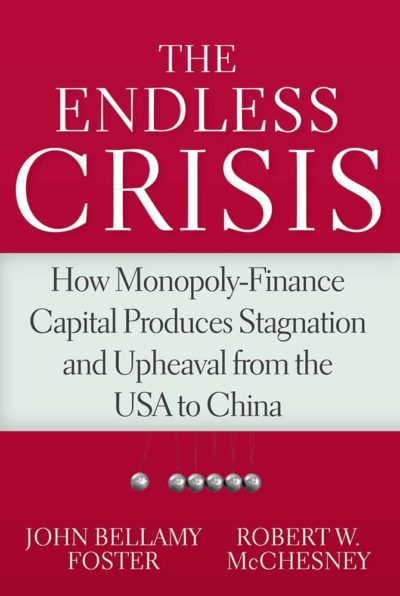
An article that I wrote with Brett Clark on “The Planetary Emergency” for the December 2012 issue of Monthly Review points to the ecological significance of the New Rural Reconstruction movement in China. In my book, The Endless Crisis, written with Robert W. McChesney, there is a discussion of China’s current socioeconomic problems in which the growing ecological crisis of China—accelerating perhaps even more rapidly than the planetary crisis—is addressed. Our concluding chapter on China does not stop short of the critique of Foxconn and of the abysmal forms of labor exploitation in China, where, as Wang and his colleagues indicate, workers recently have been openly referred to by entrepreneurs as “animals” and compared to occupants of zoos—in obscene violation of everything that socialism has stood for historically. My article “James Hansen and the Climate-Change Exit Strategy” in this issue of Monthly Review discusses China’s response to climate change and some of the challenges it faces. All of this makes the new “ecological civilization” discussion emerging in China all the more important. Fred Magdoff, with whom I recently wrote the book, What Every Environmentalist Needs to Know About Capitalism, published an article in the January 2011 issue of Monthly Review entitled “Ecological Civilization,” which was a talk delivered in 2010 at the Ecological Civilization Conference at Fudan University in Shanghai.
I would like to conclude by indicating my complete agreement with Zhihe Wang and his colleagues that ecological Marxism and constructive postmodernism represent overlapping and, to a considerable extent, complementary theoretical interventions, which, from all indications, are generating in China an intellectually powerful and praxis-oriented ecological critique. What Wang has elsewhere called “the indigenization of ecological Marxism in China” represents an extremely hopeful development not only for China but the world. China today must confront not simply capitalism as such, but the peculiar ecological and social rifts of a modern Chinese system, which, whatever its defining socioeconomic characteristics, is clearly threatened, both from within and without, by the cancerous spread of capitalist methods and mores.
Notes
- ↩ John Bellamy Foster, Brett Clark, and Richard York, Critique of Intelligent Design (New York: Monthly Review Press, 2008).
- ↩ Karl Marx, Capital, vol. 3 (London: Penguin, 1981), 949, and Capital, vol. 1 (London: Penguin, 1976), 283; Karl Marx and Frederick Engels, Collected Works, vol. 25 (New York: International Publishers, 1975), 75; John Bellamy Foster, “Marx’s Theory of Metabolic Rift,” American Journal of Sociology 105, no. 2 (September 1999): 366–405.
- ↩ See John Bellamy Foster, “Marx’s Ecology in Historical Perspective,” International Socialism 96 (Autumn 2002): 71–86.
- ↩ Marx and Engels, Collected Works, vol. 5, 141; John Bellamy Foster, Marx’s Ecology (New York: Monthly Review Press, 2000), 21–65; Stephen Greenblatt, The Swerve: How the World Became Modern (New York: W.W. Norton, 2011).
- ↩ Karl Marx and Frederick Engels, excerpt from The German Ideology, in Karl Marx, Writings of the Young Marx on Philosophy and Society (Indianapolis: Hackett, 1997), 408. This is a crossed-out passage in the manuscript, not included in the Collected Works edition.
- ↩ Georg Lukács, History and Class Consciousness (Cambridge, MA: MIT Press, 1971), 1.
- ↩ Karl Marx, Early Writings (London: Penguin, 1975), 328; Marx and Engels, Collected Works, vol. 25, 461.
- ↩ Karl Marx, Capital, vol. 1 (London: Penguin, 1976), 637.
- ↩ James Hansen, Storms of My Grandchildren (New York: Bloomsbury, 2009), 146–47.
- ↩ Karl Marx and Friedrich Engels, MEGA IV: 26 (Berlin: Akademie Verlag, 2011), 214–19. See also Joseph Beete Jukes, The Student’s Manual of Geology, , third edition (Edinburgh: Adam and Charles Black, 1872), 479–93.
- ↩ G.W.F. Hegel, The Phenomenology of Spirit (New York: Oxford University Press, 1977), 11.
- ↩ Georg Lukács, A Defense of History and Class Consciousness (New York: Verso, 2000), 129–31; John Bellamy Foster, Brett Clark, and Richard York, The Ecological Rift (New York: Monthly Review Press, 2010), 215–47.
- ↩ Perry Anderson, Considerations on Western Marxism (London: New Left Books, 1976).
- ↩ Alfred North Whitehead, Science and the Modern World (New York: Free Press, 1925), 51.
- ↩ The general problem of such post-revoutionary social formations is discussed in Paul M. Sweezy, Post-Revolutionary Society (New York: Monthly Review Press, 1980). See also István Mészáros, Beyond Capital (New York: Monthly Review Press, 1995), 622–54.
- ↩ John Bellamy Foster, The Vulnerable Planet (New York: Monthly Review Press, 1994), 96–101.
- ↩ See Wen Tiejun, Lau Kinchi, Cheng Cunwang, He Huili, and Qiu Jiansheng, “Ecological Civilization, Indigenous Culture, and Rural Reconstruction in China,” Monthly Review 63, no. 9 (February 2012): 29–35.
- ↩ John Bellamy Foster and Brett Clark, “The Planetary Emergency,” Monthly Review 64, no. 7 (December 2012): 20.
- ↩ John Bellamy Foster and Robert W. McChesney, The Endless Crisis (New York: Monthly Review Press, 2012), 155–83.
- ↩ John Bellamy Foster, “James Hansen and the Climate Change Exit Strategy,” Monthly Review64, no. 9 (February 2013): 1–22.
- ↩ Fred Magdoff, “Ecological Civilization,” Monthly Review 62, no. 8 (January 2011): 1–25; Fred Magdoff and John Bellamy Foster, What Every Environmentalist Needs to Know About Capitalism(New York: Monthly Review Press, 2011).
- ↩ Zhihe Wang, “Ecological Marxism in China,” Monthly Review 63, no. 9 (February 2012): 44.