Category: Contributions

Forewords, Introductions and Afterwords to Books by Others

  • “Foreword,” to Ian Angus, Facing the Anthropocene

    “Foreword,” to Ian Angus, Facing the Anthropocene

    “Foreword,” to Ian Angus, Facing the Anthropocene (New York: Monthly Reviwe Press, 2016), 9-17.

    The Anthropocene, viewed as a new geological epoch displacing the Holocene epoch of the last 10,000 to 12,000 years, represents what has been called an “anthropogenic rift” in the history of the planet. Formally introduced into the contemporary scientific and environmental discussion by climatologist Paul Crutzen in 2000, it stands for the notion that human beings have become the primary emergent geological force affecting the future of the Earth System. Although often traced to the Industrial Revolution in the late eighteenth century, the Anthropocene is probably best seen as arising in the late 1940s and early 1950s.


  • Afterword: The Making of Scandinavian Ecosocialism

    “Afterword: The Making of Scandinavian Ecosocialism,”[PDF] in The Politics of Ecosocialism, ed. Kajsa Borgnäs, Teppo Eskelinen, Johanna Perkiö, and Rikard Warlenius (London: Routledge, 2015), 195-203.

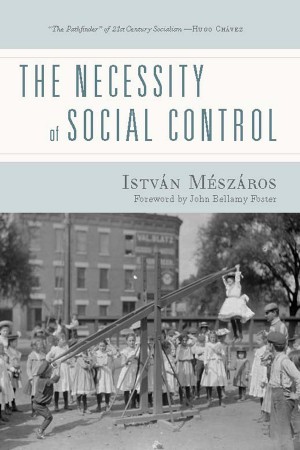
  • “Foreword” to István Mészáros, The Necessity of Social Control

    “Foreword” to István Mészáros, The Necessity of Social Control

    “Foreword” to István Mészáros, The Necessity of Social Control (New York: Monthly Review Press, forthcoming December 2014), 15 pp.

    Reprinted as “Mészáros and the Critique of the Capital System,” Monthly Review 66, no. 7: 1-15.

    István Mészáros is one of the greatest philosophers that the historical materialist tradition has yet produced. His work stands practically alone today in the depth of its analysis of Marx’s theory of alienation, the structural crisis of capital, the demise of Soviet-style post-revolutionary societies, and the necessary conditions of the transition to socialism. His dialectical inquiry into social structure and forms of consciousness—a systematic critique of the prevailing forms of thought—is unequaled in our time. No less a historical figure than Hugo Chávez referred to him as the “pathfinder” of twenty-first century socialism.… The role of this foreword is to help to put his system of thought as a whole, and this book in particular, in their historical contexts, while illuminating some of the distinctive concepts governing his analysis.

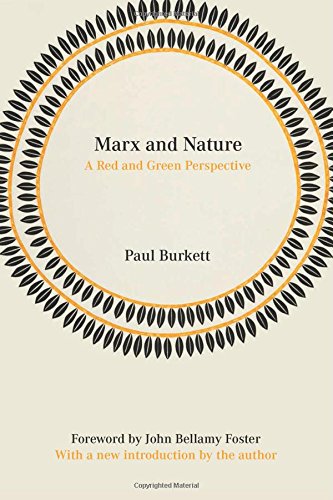
  • “Foreword” to Paul Burkett, Marx and Nature

    “Foreword” to Paul Burkett, Marx and Nature

    “Foreword” to Paul Burkett, Marx and Nature: A Red and Green Perspective (Chicago: Haymarket Books, 2014), pp. 7-13.

    Reprinted as “Paul Burkett’s Marx and Nature Fifteen Years After,” Monthly Review, vol. 66, no. 7 (December 2014), pp. 56-62.

    Every book more than a few years old needs to be seen within the historical context in which it was written—works of social science most of all. Re-reading Paul Burkett’s Marx and Nature today, nearly a decade and a half after its first publication, reminds me of how different in some respects the historical context was then, at the end of the twentieth century, from what we face today, in the second decade of the twenty-first century.… A decade and a half ago the contribution of Marx and Marxism to the understanding of ecology was seen in almost entirely negative terms, even by many self-styled ecosocialists. Today Marx’s understanding of the ecological problem is being studied in universities worldwide and is inspiring ecological actions around the globe.… These changes are of course connected. As the environmental problems engendered by capitalist society have worsened, the necessary movements of ecological defense have radicalized and spread across the face of the planet.

  • Introduction to the Second Edition of The Theory of Monopoly Capitalism

    Introduction to the Second Edition of The Theory of Monopoly Capitalism” [PDF], Monthly Review vol. 65, no. 3 (July 2013), pp.107-134.

    The Theory of Monopoly Capitalism: An Elaboration of Marxian Political Economy was initially written thirty years ago this coming year as my doctoral dissertation at York University in Toronto. It was expanded into a larger book form with three additional chapters (on the state, imperialism, and socialist construction) and published by Monthly Review Press two years later. The analysis of both the dissertation and the book focused primarily on the work of Paul Baran and Paul Sweezy, and particularly on the debate that had grown up around their book, Monopoly Capital: An Essay on the American Economic and Social Order (1966). In this respect The Theory of Monopoly Capitalism was specifically designed, as its subtitle indicated, as an “elaboration” of their underlying theoretical perspective and its wider implications.… Three decades later much has changed, in ways that make the reissuing of The Theory of Monopoly Capitalism in a new edition seem useful and timely. The scholarly research into Baran and Sweezy’s Monopoly Capital has expanded enormously in the intervening years, most notably with the publication of the two missing chapters of Monopoly Capital—one on the theoretical implications of their analysis for economics, the other on culture and communications—and through research into their joint correspondence. The Great Financial Crisis and the resurfacing of economic stagnation have engendered new interest in this tradition of thought. Under this historical impetus the theory itself has advanced to address new developments, particularly with respect to the understanding of stagnation, financialization, and the globalization of monopoly capital.

  • Foreword to the Summer Issue

    Foreword to the Summer Issue,” [PDF] (John Bellamy Foster) Monthly Review, vol. 62, no. 3 (July 2010), pp. i-xviii.

    In the eyes of much of the world, the year 1989 has come to stand for the fall of the Berlin Wall, the demise of Soviet-type societies, and the defeat of twentieth-century socialism. However, 1989 for many others, particularly in Spanish-speaking countries, is also associated with the beginning of the Latin American revolt against neoliberal shock therapy and the emergence in the years that followed of a “socialism for the 21st century.” This revolutionary turning point in Latin American (and world) history is known as the Caracazo or Sacudón (heavy riot), which erupted in Caracas, Venezuela on February 27, 1989, and quickly became “by far the most massive and severely repressed riot in the history of Latin America.”

  • “Foreword” to Paul M. Sweezy, Globalization is Nothing New; Selected Essays

    “Foreword” to Paul M. Sweezy, Globalization is Nothing New; Selected Essays in Bengali (Dhaka, Bangladesh: Shrabon Prokoshani, 2008).

    English version published as “Sweezy in Perspective,” Monthly Review, vol. 60, no. 1 (May 2008), pp. 45-49.

    Translation(s):
    • Portuguese translation of this piece published in Monthly Review, Portuguese-Language Edition, 2008.
  • A New Stage in Capitalism’s War on the Planet

    A New Stage in Capitalism’s War on the Planet

    A New Stage in Capitalism’s War on the Planet“, Monthly Review vol. 59, no. 6 (November 2007), pp. 53-54. DOI: 10.14452/MR-059-06-2007-10_7

    The introduction to this book, the last part to be completed, was sent to the printer in New York City only days before the attacks on the World Trade Center on September 11, 2001, and was first published in October 2001 in Monthly Review. Since then the world has witnessed a continuing war by the United States for control of the oil-rich Middle East and an acceleration of the global ecological crisis—symbolized above all by global warming. The opening years of the twenty-first century can therefore be viewed as marking a new stage in the war of capitalism on the planet.


  • No Radical Change in the Model

    “’No Radical Change in the Model,’” foreword to “Brazil Under Lula: An MR Survey,Monthly Review, vol. 58, no. 9 (February 2007), pp. 15-16.

    Foreword

    In the 2006 presidential election campaign in Brazil, President Luiz Inácio Lula da Silva (known as Lula), leader of the Partido dos Trabalhadores (PT or Workers’ Party), was interviewed at length on July 11, 2006, by the Financial Times (which also interviewed Lula’s main rightist challenger Geraldo Alckmin). The interview touched on many topics but mainly concentrated on Lula’s adherence in his first term of office to the global neoliberal policies of monopoly-finance capital, particularly repayment of debt and “fiscal responsibility.” At two points in the interview the Financial Times bluntly asked whether Lula was looking toward a “radical change in the model,” i.e., whether he and his Workers’ Party intended to break with financial capital and neoliberalism in his second term of office. Lula gave them the answer they wanted: “There is no radical change in the model….What we need now, in economics and in politics, is to strengthen Brazil’s internal and external security.”y

    Lula’s attempt here to reassure the financial community marks the dramatic shift that the Workers’ Party of Brazil has undergone over the years, and especially since winning the presidency in 2002. Although Lula was reelected in October 2006 with 60 percent of the vote, it was not simply as a candidate with a populist base, but one who was also broadly acceptable to global financial capital.

    The PT arose in 1979 in the wake of a massive labor revolt by millions of industrial workers in the years 1978 and 1979. It was during this period of labor unrest that Lula—then president of the Metalworkers’ Union of São Bernardo do Campo and Diadema on the outskirts of São Paulo, Brazil’s most industrialized city—emerged as the new movement’s most charismatic leader, openly defying the military government. By 1989, when Brazil held its first free, democratic, presidential elections since 1960, the Workers’ Party had become such a mass, popular force that Lula came close to winning the presidency, losing in the end to his conservative opponent, Fernando Collor de Mello.

    At the time of that defeat MR editors Harry Magdoff and Paul Sweezy (“Notes from the Editors,” February 1990) observed that Lula’s and the PT’s strengths lay in “stressing the need for land reform, suspension of payment on Brazil’s enormous foreign debt, and above all redistribution of income and wealth.”

    Lula ran subsequently as the PT candidate in the 1994 and 1998 elections but was defeated both times by Fernando Henrique Cardoso, who as a former Brazilian finance minister and then as president played a leading role in the introduction of a monetary stabilization plan for the Brazilian currency (the real) in line with IMF requirements, marking the triumph of neoliberal policy in Brazil.

    In 2002 Lula ran again. But this time the PT under his leadership indicated a greater willingness to accept the conditions imposed by neoliberalism, including full repayment of Brazil’s debt. Taking care of economic “fundamentals” was to be prioritized even at the expense of the PT’s broader social program. On that occasion his election campaign was successful. Lula’s first term consequently was characterized by its adherence to the main neoliberal agenda, including very stringent economic programs aimed at debt repayment and “fiscal responsibility.” This was coupled with a much less ambitious program than originally conceived on behalf of the poor. While passing out some benefits to its constituents the PT has also promoted neoliberal structural reforms that directly undermine the overall position of workers. This has then constituted a kind of Latin American social-democratic “third way” strategy in which neoliberal ends are hegemonic.

    Realizing the importance and complexity of the Brazilian political economy, its centrality to struggles throughout Latin America, and the general lack of an in-depth understanding of its key features outside of Latin America itself, MR last year solicited a group of articles by authors associated with the radical economic association, Sociedade Brasileira de Economia Política (SEP). The SEP publishes its own quarterly journal Revista, and we were able to obtain the help of members of the editorial board of that journal—principally the assistance of Rosa Maria Marques and Paulo Nakatani, who brought the various pieces together—but also the support of Leda Maria Paulani. The following special MR survey, consisting of four articles written last spring together with a more recent introduction commenting on the October 2006 presidential election, is the result.