Tag: Ecology

  • Marx and Communal Society

    Marx and Communal Society

    Marx and Communal Society,” Monthly Review, vol. 77, no. 3 (July-August 2025), pp. 47-67.
    Marx and Communal Society

    “Ultimately communism is the only thing that is important about [Karl] Marx’s thought,” Hungarian British political theorist R. N. Berki observed in 1983.1 Although this was an exaggeration, it is undeniable that Marx’s broad conception of communal society/communism formed the basis of his entire critique of class society and his vision of a viable future for humanity. Yet, there have been few attempts to engage systematically with the development of this aspect of Marx’s thought as it emerged over the course of his life, due to the complexity of his approach to the question of communal production in history and the philosophical, anthropological, and political-economic challenges that this presented, extending to our own day. Still, Marx’s approach to communal society is of genuine significance not only in understanding his thought as a whole, but also in helping guide humanity past the iron cage of capitalist society. In addition to presenting a philosophical anthropology of communism, he delved into the history and ethnology of actual communal social formations. This led to concrete investigations into communal production and exchange. All of this played into his conception of the communism of the future as a society of associated producers.2

    In our time, communal production and exchange, and elements of a communal state, have been developed, with varying degrees of success, in a number of socialist societies following revolutions, notably in the Soviet Union, China, Cuba, Venezuela, and elsewhere around the world. Marx’s understanding of the history, philosophy, anthropology, and political economy of communal/collective society is thus an important source of insight and vision, not only with respect to the past, but also the present and future.

    The Social Ontology of Communal Production

    Marx was a product from his earliest age of the radical Enlightenment, influenced in this respect by both his father, Heinrich Marx, and his mentor and future father-in-law, Ludwig von Westphalen. To this was added his deep encounter with German idealist philosophy, as exemplified by the work of G. W. F. Hegel. Marx was an accomplished scholar of Greek antiquity, engaging in intense studies of both Aristotle, whom he viewed as the greatest of the Greek philosophers, and Epicurus, the leading materialist thinker of the Hellenistic world. He completed his doctoral thesis on Epicurus’s philosophy of nature in 1841, emerging as a materialist soon engaged with the idea of communism.3

    Marx read Pierre-Joseph Proudhon’s What Is Property? as early as 1842. However, along with other radical thinkers in Germany in the 1840s, he first took up discussions of the contemporary communistic movements emerging in France as a result of the spread of these ideas to Germany in the Prussian official Lorenz von Stein’s The Socialism and Communism in Present-Day France (1842) and Moses Hess’s Socialism and Communism (1843), which took the form of a critical commentary on von Stein. Hess was the cofounder in January 1842 of the liberal newspaper Rheinische Zeitung, which Marx became editor-in-chief of in October 1842. One of Marx’s first tasks as editor was to reply to accusations that the Rheinische Zeitung was a communist paper due to the publication of two articles on housing and communist forms of governance, and a piece on followers of Charles Fourier—all written by Hess. Marx’s reply on behalf of the Rheinische Zeitungwas very circumspect, neither supporting nor opposing communism, while making it clear that “the Rheinische Zeitung…does not admit that communist ideas in their present form possess even theoretical reality, and therefore can still less desire their practical realisation.” Marx mentions Fourier here for the first time, along with Victor Prosper Considérant and Proudhon, also referring to the idea of communism in Plato’s Republic.4

    For most thinkers at the time, the question of communism was one simply of opposition to private property and was treated purely philosophically, largely from an idealist standpoint. Hess saw society as having originated in a social compact between individuals—as distinct from both the Epicurean notion of the establishment of an original social contract between kinship groupings, which was defeated and then resurrected in more limited, class-mediated forms, following social revolt and the death of kings; and Aristotle’s sense of humanity as a political/social animal.5 The individualistic view of property of early French and German socialism reflected the influence of Proudhon, who, following Jean-Jacques Rousseau, failed to distinguish between private property and property in general, seeing property simply as “theft.”6 Proudhon thus failed to comprehend the notion of property as having its active principle in appropriation from nature. His analysis implicitly denied the universality of property in human society, and, more specifically, the existence of common property, as depicted in Hegel and Marx. Still, for Hegel, property, even if arising universally in appropriation from nature, existed as an abstract right only as private property. Abstract right thus led to the dissolution of common property.7

    In contrast to these dominant bourgeois views, which penetrated into socialist thought, Marx’s own perspective was both historical and materialist. Humans were from the start social animals. Production, based on the appropriation from nature for human purposes, was originally communal—and held in common. The complete dominance of private property as alienated appropriation/production only came into being under capitalism, preceded by “thousands of centuries” of human history.8 Marx drew from the outset on his extensive knowledge of ancient Greek and Roman philosophy and history and on traces of early Germanic history as revealed by Caesar in The Gallic Wars and by Tacitus in his Germania, which Marx translated in 1837.9 Throughout his life, Marx continued to explore whatever historical and anthropological evidence became available with respect to communal production, exchange, and property, while also considering the inner logic of communal production via philosophical and economic conceptions. As a student of classical antiquity, he would most likely have been aware of ancient accounts of the household communities in India with common tillage of the soil, recorded by Alexander the Great’s admiral Nearchus and related by Strabo.10

    Remnants of the old Germanic Mark system of common tenure and collective production on the land survived into Marx’s lifetime in the region around Trier, where he grew up. His father, a lawyer, had discussed the ramifications of these collective property rights with him in his youth.11 Signs of customary right carrying over from the commons of feudal times, were evident throughout early nineteenth-century Germany. In the same month in which he addressed the question of communism in the Rheinische Zeitung, Marx wrote his first political-economy article on “Debates on the Law on Thefts of Wood,” in which he strongly defended the customary rights of the Rhenish peasant that had persisted into the modern era related to the removal of dead wood (together with dead leaves and berries) from the forests, an act that was then criminalized. In this context, he explored how such customary rights were being systematically expropriated by landowners in league with the state. “We are only surprised,” he declared, “that the forest owner is not allowed to heat his stove with the wood thieves.”12

    Marx’s critique of private property in the 1840s and ’50s depended on an ontological conception of human beings that emphasized social and communal relations arising out of the appropriation of nature. Most of the concrete knowledge of the history of antiquity in Europe prior to the mid-nineteenth century was dependent on ancient Greek and Roman sources. As Eric Hobsbawm wrote in the introduction to Marx’s Pre-Capitalist Economic Formations (part of the latter’s Grundrisse, written in 1857–1858), “Neither a classical [European] education nor the material then available made a serious knowledge of Egypt and the ancient Middle East possible.”13 This was true also of India, Ceylon, and Java to varying degrees, though there Marx was able to rely on the questionable accounts of British and Dutch colonial administrators. The brief treatment of communal property relations under the Incas in Peru included in William Prescott’s History of the Conquest of Peru(1847) was to occupy an important place in Marx’s analysis in the Grundrisse and Capital. From the fifteenth up through the middle of the sixteenth century, the predominant tribe of the Inca social formation in present-day Peru, Ecuador, and Bolivia was “subdivided into 100 clan communes (ayllu), which gradually developed into village communes.”14

    Prior to the “revolution in ethnological time” giving rise to modern anthropological studies, beginning in 1859, the historical and anthropological knowledge of communal production in early kinship and tributary-based societies available to Marx was limited.15 Marx’s historical and anthropological knowledge of communal production in his early years was thus heavily weighted toward ancient Greek and Roman class society, where earlier communal forms of production had left their mark. Nevertheless, he relied on his deep ontological understanding of labor and production in society, allowing him to develop a penetrating analysis that, at least in its broad outlines, remains relevant today.

    Underlying Marx’s entire analysis was his materialist ontology of human labor and production first introduced in his Economic and Philosophical Manuscripts of 1844 and that became the basis of his materialist conception of history as presented in 1845–1846 in the German Ideology, written with Frederick Engels. In Marx’s social ontology, labor and production was a social process in which individuals took part as social beings. Human history could be perceived in changing “modes of appropriation.”16 All human culture was rooted in the reality of human labor and the appropriation of nature, and therefore in the formation of property relations within communities, which were originally kinship communities. The first form of property depicted in The German Ideology was tribal property, associated with hunting and gathering and the earliest forms of agriculture. These were characterized by “the original unity between a particular form of community (clan) and the corresponding property in nature.” Here the division of labor remained undeveloped. Society was patriarchal, while the first forms of the division of labor were associated with the development of the “slavery latent in the family.” In this initial description of tribal society in Marx, there is not yet any direct mention of communal production or property.17

    It is worth noting that there is no reference in The German Ideology to “primitive [original] communism,” a term that neither Marx nor Engels ever used except in reference to the “Asiatic communal system,” the Slavic form of land tenure, and, somewhat more tenuously, the precursors of the German Mark, and did not apply to hunting and gathering societies. The latter, though communal in their arrangements, were not viewed as modes of production in the full sense, but as clan-kinship societies. Use of the term “primitive communism” to describe hunting and gathering societies specifically was a later importation within the Second and Third Internationals.18

    The second historical form of property in The German Ideology is “the ancient communal and state property,” arising “from the union of several tribes into a city by agreement or by conquest, and which is still accompanied by slavery.”19 Private “property in land” in antiquity, as Marx later explained in his Ethnological Notebooks, arose “partly from the disentanglement of the individual rights of the kindred or tribesmen from the collective rights of the Family or Tribe…partly from the growth and transmutation of the Sovereignty of the Tribal Chief.” Private property in land thus was initially mediated by the communal land ownership (ager publicus), and yet gradually served to introduce class relations that weakened the collective order.20

    The notion of the “ancient commune and state” governing social relations in antiquity was associated with the polis as a communally governed society arising out of earlier tribal relations. As Patricia Springborg wrote in “Marx, Democracy, and the Ancient Polis,” the polis was “an urban commune in which private property existed alongside communal property.” The Greek polis, in Marx’s conception, Springborg explained, held “in suspension tribal and communal forms while inaugurating the state as a phenomenon.”21 The economy and conversely the state, as Hegel and Marx, and, later, Karl Polanyi, argued, were not yet disembedded from the polis. Hence, the alienation of the state from civil society in the modern sense did not yet exist, allowing for the persistence of communal forms, together with class divisions.22

    For Marx, slavery, though in many ways constituting the material foundation of the Greek polis of the golden age, was subordinate to the communal order governing property relations, arising out of previous kinship relations. The growth of mobile property and money, particularly coinage, commencing in Lydia in the seventh century BCE, had the effect of intensifying class distinctions. This development was crucial in accounting for the origins and expansion of ancient chattel slavery, while also contributing to the eventual dissolution of the ancient communal order of Greece and Rome.23

    Indeed, although heavily emphasizing the role of slavery in antiquity, Marx never characterized ancient society as an actual “slave mode of production,” as was later to become common in Marxist theory. Thus, in Perry Anderson’s Passages from Antiquity to Feudalism, we are told that the “decisive innovation” of the ancient Greco-Roman world was the “massive scale of chattel slavery” or the “slave mode of production.”24 In contrast, Marx saw slave production in antiquity as a secondary attribute of the communal and state form, associated with the growth of money and trade. At its core, the polis was rooted, from primordial times, in tribal or kinship relations, as in the Greek phratry, out of which its class divisions between the aristocracy and the demos (in the case of Athens) were to emerge with the growth of private property. Slavery was viewed by Marx as something of an add-on. Still, this did not keep him from noting in the Grundrisse, with the golden ages of Pericles’s Athens and Augustus’s Rome clearly in mind, that economically “direct forced labour is the foundation of the ancient world; the community rests on this as its foundation.”25

    The persistent critiques of unlimited acquisition of wealth that played such a prominent role in Greek philosophy from Aristotle to Epicurus were characterized by Marx (and by classical scholars up our day) as resulting from changes in the society that could be traced primarily to the first signs of a money economy, mainly in the interstices and in trading nations, opening the way to the systematic pursuit of wealth for its own sake, and destabilizing prior social relations.26 As Marx wrote: “All previous forms of society—or, what is the same, of the forces of social production—foundered on the development of wealth. Those thinkers of antiquity who were possessed of consciousness therefore directly denounced wealth as the dissolution of the community.”27

    The Political Economy of Communal Society

    “All treatises on political economy,” Marx and Engels wrote, “take private property for granted.”28 In opposition to this and in line with Hegel, Marx insisted that “all production is appropriation of nature on the part of an individual within and through a specific form of society. In this sense it is a tautology to say that property (appropriation) is a precondition of production,” while to claim that production is identical with private property is to deny the greater part of human history. Communal production and property constituted the “natural economy” of society, which had prevailed at a low level of the development of the productive forces. Private property emerged with class society and the division of labor, only becoming the dominant property form under capitalist relations of production.29

    Property,” Marx wrote in the Grundrisse, “originally means—in its Asiatic, Slavonic, ancient classical, Germanic form—the relation of the working (producing or self-reproducing) subject to the conditions of his production or reproduction as his own.” Here he meant by the “Asiatic” form primarily the village communities in India and Java; by the “Slavonic” form, the Russian mir, or peasant commune, which still persisted in the nineteenth century; by the “ancient classical” form, the communal relations still evident in the Greek polis; and by the Germanic form, the old Mark tradition, in which the commune was reflected in German tribes “coming-together” periodically on a collective basis, while not “being-together.”30 Marx also referred to communal property as evidenced in the Celts. Tacitus wrote in his Germania with respect to the Germanic tribes: “Lands proportioned to their own number are appropriated in turn for tillage by the whole body of tillers. They then divide them among themselves according to rank; the division is made easy by the wide tracts of cultivable ground available. The ploughlands are changed yearly, and still there is enough to spare.”31 It was recognized that in many communal societies, “the individual has no property as distinct from the commune, but rather is merely its possessor,” under principles of communal usufruct. A part of the surplus labor invariably goes to the “higher community” for its reproduction.32 In such situations, “membership in the commune remains the presupposition for the appropriation of land and soil, but, as a member of the commune, the individual is a private proprietor” of a “particular plot.”33

    In both the Grundrisse and Capital, Marx laid great stress on Peruvian communal relations under the Incas. Based on Prescott’s work, Marx noted that in Inca society an individual “had no power to alienate or add to his possessions” with respect to the land, which was communally held and redistributed each year. In Capital, he referred to Peru under the Incas as having a “natural economy” or non-commodity economy, and to the “artificially developed communism of the Peruvians.” What fascinated Marx with respect to Peru was that it was a “society in which the highest forms of economy, e.g. cooperation, a developed division of labor, etc.” were “found even though there [was] no kind of money” and a “community of labour.” In some other social formations, such as the Slavic communities, Marx emphasized that while monetary exchange occurred in external relations it was not “at the centre of communal society as the original constituent element.” Even in the Roman Empire at its highest development, the “money system” only dominated in the army.34

    Marx considered the “Asian communal system” represented by still-existing village communities to be one of the main exemplars of the “original unity” between workers and the natural conditions of production. He insisted that “a whole collection of diverse patterns (though sometimes only remnants survive) [of ‘primitivecommunal property’] remained in existence in India, where “communal labour” could be seen in “its spontaneously evolved form.” Indeed, “a careful study of Asiatic, particularly Indian, forms of communal property ownership would indicate that the disintegration of different forms of primitive communal ownership gives rise to diverse forms of property. For instance, prototypes of Roman and German private property can be traced back to certain forms of Indian communal property.” The Asiatic form of property in village communities represented a form (theoretically) anterior to the ancient Greek and Roman mode.35 In Marx’s analysis of precapitalist economic formations, Hobsbawm noted, “the oriental [Asiatic] (and Slavonic) forms are historically closest to man’s origins, since they conserve the functioning primitive (village) community in the midst of the more elaborate social superstructure, and have an insufficiently developed class system.”36

    It is often said that Marx and Engels laid strong emphasis on the idea of an “Asiatic mode” of production, which is usually described, relying more on Karl Wittfogel than on Marx, as a society in which the need for large irrigation projects, and thus vast collective labor, led to the growth of a centralized, despotic state, or a hypertrophy of the state. There is little basis for this in Marx, however. Although Marx employed the notion of an Asiatic mode in the preface to his 1859 Contribution to Political Economy, he almost never used the term and eventually dropped it altogether. Moreover, while Marx referred on occasion to a despotic state managing large irrigation projects, his analysis was generally directed at the village communities themselves, which he saw as self-sustaining collectives exhibiting communal ownership, production, and exchange both in agriculture and small manufacture (artisanal production).37 These Indian village communities, which he explicitly identified with “primitive communism,” exhibited a tenacity of existence that pointed to an antiquity even greater than the “ancient commune and state” of Greece and Rome. Moreover, unlike ancient Greece and Rome, slavery did not lie at the economic foundation of Asiatic society.38 Although such societies often took a despotic tributary form, this did not negate for Marx the communal nature of property/production in the village communities themselves. Nevertheless, despotism from above, together with colonization, often led to their stagnation in terms of mere simple reproduction.39

    The economic nature of communal production and exchange, Marx indicated in the Grundrisse, lay in its attention to collective human needs, and the development of the social individual. “The communal character of production would make the product into a communal, general product, from the outset” not mediated by commodity exchange. “The exchange which originally takes place in production…would not be an exchange of exchange values but of activities” and use values. Such communal production/exchange would be “determined by communal needs and communal purposes [and] would from the outset include the participation of the individual in the communal world of products.” By its very nature, communal production is not determined post festum by the market, allowing capital to mediate all production relations, but rather ex ante on communal principles through which the social character of production is presupposed from the beginning.40In this sense, production on the basis of communal property, in a modern context, he argued, would have to be carried out “in accordance with a definite social plan,” one that “maintains the correct proportion between the different functions of labour and the various needs of the associations” of workers.41

    In capitalist society, according to Marx, “Time is everything, man is nothing; he is, at most, time’s carcase. Quality no longer matters. Quantity alone determines everything.”42 In contrast, where communal production is concerned, labor time as pure quantity is crucial but does not have the final say:

    The determination of time remains, of course, essential. The less time the society requires to produce wheat, cattle, etc., the more time it wins for other production, material or mental. Just as in the case of an individual, the multiplicity of its development, its enjoyment and its activity depends on economization of time. Economy of time, to this all economy ultimately reduces itself. Society likewise has to distribute its time in a purposeful way, in order to achieve a production adequate to its overall needs…. Thus, economy of time, along with the planned distribution of labour time among the various branches of production, remains the first economic law on the basis of communal production. It becomes law, there, to an even higher degree. However, this is essentially different from a measurement of exchange values (labour or products) by labour time. The labour of individuals in the same branch of work, and the various kinds of work, are different from one another not only quantitatively but also qualitatively.43

    It is true, Marx wrote to Engels in 1868, that “no form of society can prevent the labour time at the disposal of society from regulating production in ONE WAY OR ANOTHER. But so long as this regulation is a not effected through the direct and conscious control of society over its labour time—which is only possible under common ownership—but through the movement of commodity prices,” the result is the anarchy of capitalist class society and the failure to meet the “hierarchy of…needs.” Under the generalized commodity economy of capitalism, the most pressing human and social needs—including the free development of the individual—rather than constituting the chief aims of production, become barriers to accumulation.44

    The emergent productive power of labor as cooperation through which workers become members of a “working organism” existed prior to capitalism. As Marx wrote in Capital, “simple co-operation,” which achieved “gigantic structures,” was evident in the colossal works of “the ancient Asiatics, Egyptians, Etruscans,” and, as he had noted elsewhere, in those of the Incas of Peru. Early civilizations in Asia “found themselves in possession of a surplus which they could apply to works of magnificence or utility and in the construction of these their command over the hands and arms of almost the entire non-agricultural population has produced stupendous monuments which still indicate their power.”45 Such diverse non-commodity societies were able to extract surplus as tribute from a largely agricultural population. This conformed to the model of natural economies, or what is now broadly called the tribute-paying or tributary mode of production, which encompassed numerous precapitalist civilizations from antiquity to feudalism, most of which retained communal or collectivist relations at the base of society.46 As Samir Amin remarked, “the tribute-paying mode,” emerged out of earlier “communal modes of production.” It “adds to a still existing village community a social and political apparatus for the exploitation of this community through the exaction of tribute.” Though it varied substantially in different times and places, it constituted “the most widespread form of precapitalist societies.”47

    From Medieval Commons/Communes to the Paris Commune of 1871

    Up to early modern times, peasant villages in Europe relied on customary rights in relation to the land, often accompanied by petty commodity production. Hence, the transition from feudalism to capitalism in Europe, as in England beginning in the fifteenth century, depended on the dissolution of the customary rights and enclosure of the commons, thereby generating a modern proletariat—a process that took centuries. The commons or communal property, even occurring within feudalism and other forms of tributary production, was associated with collective rights of appropriation while geared to use values and noncommodity forms of exchange. Whereas private property in a generalized commodity economy is alienable, communal property in the land is not, and is rooted in the customary rights of a particular community or locality. As historian Peter Linebaugh notes, “common rights are embedded in a particular ecology with its local husbandry.”48 In medieval society, peasant communities had customary rights to the appropriation of the land/nature that placed limits on the corresponding rights of the feudal lords to the land.

    The medieval commons of England are often thought of as simply having been based on the commons proper (woodlands, marshes, and uncultivated meadows used for grazing and for natural materials and resources), but the commons in this narrow sense could not be separated from the common fields themselves, directly surrounding the towns and villages, which were normally kept in tillage through collective ploughing, with the strips of land distributed in such a way as to ensure the equality of villagers in the access to the most fertile land.49 Marx wrote extensively in Capital and elsewhere on the enclosure of the commons as crucial to the development of capitalism, and the brutal means used in their forcible expropriation, commenting on “the stoical peace of mind with which the political economist regards the most shameless violation of the ‘sacred rights of property’ and the grossest acts of violence against persons, as soon as they are necessary in order to lay the foundations of the capitalist mode of production.”50

    The notion of communal society has always been connected to the question of the political command structure of society as well as property/production, raising the issue of communal governance. In the late medieval era, particularly in northern Italy and Flanders, there emerged urban communes or self-governing towns based on binding oaths between equal (usually wealthy) citizens in defiance of feudal notions of rank and vassalage. The medieval urban communes were built around guilds and so took the form of guild-based merchant oligarchies, forming the birthplace of the bourgeoisie. The feudal era also generated utopian conceptions of urban communes, arising from a nascent bourgeoisie.51 The government of the city of Paris following the storming of the Bastille in 1789 was known as the Paris Commune. It was from this earlier Paris Commune, emerging from a bourgeois revolution, that the revolutionary workers’ Paris Commune of 1871 was to take its name.52 A far cry from the earlier medieval communes, and even from the Commune of Paris of 1789, the short-lived Paris Commune of 1871, emerging during the Franco-Prussian War, represented, according to Marx, not the construction of a new state power but a negation of state power, and thus of the alienated dual relation of state and civil society. It constituted a genuine nineteenth-century revolutionary working-class urban communal order, which was to end after seventy-two days in a massacre of the communards by the French state.

    For Marx, the Paris Commune pointed to a new communal political command structure that, in breaking with the capitalist state as a power above society nonetheless carried out functions analogous to it, still affected by the bourgeois order from which it had emerged. Universal male suffrage was introduced. Elected officials were to be paid at rates comparable to the general workers’ wage, with the instant recall of those elected if they did not follow the mandates of their constituents. The Commune abolished the death penalty, child labor, and conscription while eliminating debts. The workers were organized into cooperative societies to run the factories, with plans to organize the cooperatives into one big union. A women’s union was created, as well as a system of universal secular education.53 As Marx wrote in The Civil War in France (1871):

    The Commune intended to abolish that class property which makes the labour of the many the wealth of the few. It aimed at the expropriation of the expropriators. It wanted to make individual property a truth by transforming the means of production, land and capital, now chiefly the means of enslaving and exploiting labour, into mere instruments of free and associated labor.—But this is Communism, “impossible” Communism!…. [Indeed,] if co-operative production is not to remain a sham and a snare; if it is to supersede the Capitalist system; if united co-operative societies are to regulate national production upon a common plan, thus taking it under their own control and putting an end to constant anarchy and periodical convulsions which are the fatality of Capitalist production—what else…would it be but Communism, “possible” Communism?… This was the first revolution in which the working class was acknowledged as the only class capable of social initiative…. The great social measure of the Commune was its own working existence. Its special measures could but betoken the tendency of a government of the people by the people…. Another measure of this [working] class [formation] was the surrender, to associations of workmen, under reserve of compensation, of all closed workshops and factories, no matter whether the respective capitalists had absconded, or preferred to strike work.54

    For Marx, the Paris Commune, with all of its weaknesses, had proven that in a working-class republic, a state power above civil society was no longer necessary along with the abolition of bourgeois civil society itself. The Paris Commune was an urban commune that prefigured a working-class republic as a whole based on collective production under a common plan and democratic social governance, thereby constituting an initial phase in the transition to a fuller communist society. “The Communal Constitution would have restored to the social body all the forces hitherto absorbed by the State parasite feeding upon and clogging the free movement of society.”55

    This overall view of the shaping of communal society, sharpened by the experience of the Paris Commune, was reflected in Marx’s Critique of the Gotha Programme, written in 1875. For Marx, the 1871 Paris Commune had represented the form at last discovered of “the revolutionary dictatorship of the proletariat,” destined, he believed, to overthrow the class dictatorship of capital, constituting a new, more democratic order in the transition to socialism/communism. In fully developed communism, as envisioned by Marx and Engels, there would be no Leviathan of state power standing above society. The state would gradually “wither away” as the political command structure was transferred to the population at large, replaced by what Engels called simply community/commune.56 Nor would there be civil society in the bourgeois sense. The economy would be run on a common plan in which decisions would be made principally ex ante by the associated producers, not post festum by the market. Creative labor, would be “the prime necessity of life” such that “the free development of each” would become the basis of “the free development of all.” The overall structure of the economy would be that of a “co-operative society based on common ownership of the means of production” and governed by the principle from each according to one’s ability, to each according to one’s need. “Within the co-operative society based on common ownership of the means of production, the producers do not exchange their products…since now, in contrast to capitalist society, individual labour no longer exists in an indirect fashion but directly as a component part of the total labour.” In such a society, “communal satisfaction of needs, such as schools, health services, etc.” would be vastly increased in proportion, as would the realm of cultural development generally. The “sources of life,” that is, the land/nature, would be made into common property for the benefit of all.57

    In delimiting the overall character of production, Marx wrote in Capital: “Freedom, in this sphere [determined by natural necessity], can only consist in this, that socialised man, the associated producers, govern the human metabolism with nature in a rational way…accomplishing it with the least expenditure of energy,” in the process of promoting sustainable human development.58 The alienated social metabolism between humanity and nature would be transcended. As Marx had indicated early on in his Economic and Philosophical Manuscripts, “communism, as fully developed naturalism, equals humanism, and as fully developed humanism equals naturalism; it is the genuine resolution of the conflict between man and nature.”59

    The Revolution in Ethnological Time

    The year 1859 saw the publication of both Charles Darwin’s On the Origin of Species, which provided a strong theory of natural evolution for the first time, and a closely related “revolution in ethnological time,” resulting from the discovery of prehistorical human remains in Brixham Cave in Southwestern England. The Brixham Cave discovery expanded the length of time in which human beings were recognized to have lived on Earth by thousands of centuries. Human remains, sometimes accompanied by primitive instruments, had been found prior to this, including the first Neanderthal remains in the Neanderthal Valley in Germany in 1856. Although less spectacular than the Neanderthal discovery, the Brixham Cave remains left no doubt about “the great antiquity of mankind.”60

    The result was a great rush to explore the evolutionary and anthropological origins of human beings, the nature of early societies, and the origins of the family, the state, and private property, in such works as Thomas Huxley’s Evidences as to Man’s Place in Nature (1863); Charles Lyell’s Geological Evidences of the Antiquity of Man (1863); John Lubbock’s Pre-historic Times (1864); Henry Sumner Maine’s Village-Communities in the East and West (1871); Lewis Henry Morgan’s Ancient Society (1877); and John Budd Phear’s The Aryan Village in India and Ceylon (1880). In Germany, Georg Ludwig von Maurer continued the research that he had commenced in 1854 with his great work on the German Mark, Introduction to the History of the Mark, Village, and Town Constitutions and Public Power.

    In 1880–1882, Marx composed a series of excerpts from the works of Morgan, Phear, Maine, and Lubbock, known as his Ethnological Notebooks. He had taken extensive notes a year earlier from the ethnological studies of the young Russian sociologist Maxim Kovalevsky, whose book manuscript, Communal Landownership: The Causes, Course and Consequences of Its Dissolution, dealt with communal relations in India, Algeria, and Latin America.61 In 1880–1881, he took down passages from William B. Money’s Java; or How to Manage a Colony (1861).

    The source of Marx’s interest in ethnological studies at the end of his life was best indicated by his response to Maurer’s work on the German Mark, in which Maurer had conclusively demonstrated that the Mark had a stronger communal basis than was previously thought. Writing to Engels in 1868, Marx indicated that these ethnological investigations of Maurer and others revealed, unknowingly on their part, that it was crucial “to look beyond the Middle Ages into the primitive age of every nation, and that [this] corresponds to the socialist trend.” Nevertheless, Maurer and other similar ethnological investigators, such as the philologist and cultural historian Jakob Grimm, Marx remarked, showed no real comprehension of this tendency: “They are then surprised to find what is newest in what is oldest.” The surviving communal forms, remnants from more egalitarian communities of the past, pointed in a dialectical way to the future developed communist society.62

    Given his previous close studies of communal property and communal governance in societies, Marx was able to incorporate these new discoveries in all their richness without fundamentally altering his basic approach, developed over his life. In his Ethnological Notebooks, the focus is often on communal relations. Twenty-seven passages from Morgan’s Ancient Society addressing communal property, housing, and land tenure are highlighted by Marx with parallel lines drawn next to them in the margins or with brief comments.63 Still, much more emphasis than in Marx’s earlier work was placed here on kinship-based and gender relations, as they shaped these communities. He was particularly impressed by Morgan’s studies of the Haudenosaunee, called the Iroquois Confederacy by the French and the League of the Five Nations by the English, representing an earlier clan-based (gens-based) society. “All members of the Iroquois gens,” Marx wrote, drawing on Morgan, were “personally free, bound to defend each other’s freedom.”64 The Haudenosaunee built large longhouses that included multiple families. The longhouses were described by Morgan in his Houses and House-Life of the American Aborigines (1881), as “large enough to accommodate, five, ten, and twenty families, and each household practiced communism in living.”65 In Morgan’s words, as excerpted and emphasized by Marx: “It (a higher plan of society) will be a revival, in a higher form, of the liberty, equality and fraternity of the ancient gentes [traditional communal society].”66

    Marx’s understanding of property as arising originally from appropriation of nature removed the myth of peoples without property used to justify the expropriation of the land by European colonists. In his interpolated extracts from Kovalevsky’s Communal Landownership with respect to Algeria, Marx (via Kovalevsky) observed that “centuries of Arabic, Turkish, finally French rule, except in the most recent period…were unable to break up the consanguineal [kinship-based] organization, and the principles of indivisibilityand inalienability of landownership.”67 Yet, only a revolt could secure lasting communal land tenure. Following two months spent in Algiers in 1882 for his health, Marx was to declare that the Algerians “will go to rack and ruin WITHOUT A REVOLUTIONARY MOVEMENT.”68 Likewise, he was to take special note via his excerpts from Kovalevsky of the British “robbery of the communal and private property of the peasants” in India.69

    Due to ill health, Marx was unable in these last years prior to his death in 1883 to develop a treatise, as he had clearly intended, based on his Ethnological Notebooks. However, Engels sought to carry Marx’s ethnological discoveries via Morgan, Maurer, and others forward in his Origins of the Family, Private Property, and the State (1884), written in the year after Marx’s death, as well as in The Mark (1882), which Marx read and commented on prior to publication. Engels’s analysis was deeply rooted in the examination of kinship and gender relations, particularly the gens (clan) as it manifested itself in different cultures. Everywhere—in the Iroquois in North America, in the Incas in Peru, in the village communities in India and Java, in the Russian obshchina, in Celtic clans in Europe, in Greek antiquity, and in the German Mark—there were indications, he argued, of large household communities, common living, common land tenure, common tillage, and cooperative labor, varying over time and location. Aspects of these archaic communal relations were evident in the ancient Greek phratry and the Roman gens.70 “The patriarchal household community,” he declared,

    was widespread, if not universal, as the intermediate stage between the mother-right communistic family and the modern isolated family…. The questions whether their economic unit was the gens or the household community or an intermediate communistic kinship group, or whether all three of these groups existed depending on land conditions will remain subject of controversy for a long time yet. But Kovalevsky maintains that the conditions described by Tacitus presuppose not the Mark or village community, but the household community; only this latter developed, much later into the village community, owing to the growth of population.71

    In Engels’s conception, in the earliest, most traditional, hunter and gatherer tribal societies, where an economic surplus did not yet exist, the social order was centered more on the reproduction of kinship relations and of the population than on production in the economic sense.72

    The contemporary issue of the Russian commune, which played an important part in Marx and Engels’s thought, first arose in 1847–1852. It was at that time that the Prussian Baron von Haxthausen-Abbenburg (a German aristocrat and official and supporter of serfdom) wrote a study of Russian agrarian relations with the support of the tsar, in which he uncovered the widespread existence of the Russian mir (obshchina). This discovery was to play a big role in the development of Russian populism. At first, Marx saw nothing particularly distinctive in the Russian mir, viewing it as simply a manifestation of a decaying archaic communal order. However, upon receiving a copy of The Situation of the Working Class in Russia by the young Russian scholar V. V. Bervi (Flerovskii) in 1869, Marx devoted himself with the utmost urgency to learning to read Russian, which he achieved in less than a year. This led him to the intensive study of Russian populism, which ended up changing his views about the contemporary significance of the mir.73

    Marx’s developed view of the Russian commune was manifested in the 1881 drafts of his letter to Vera Zasulich, and in the 1882 preface (written together with Engels) to the second Russian edition of The Communist Manifesto. In his draft letters to Zasulich, Marx argued that the Russian mir was the most developed form of communal agriculture, traces of which had been found “everywhere” in Europe, and in parts of Asia. Earlier forms, such as the German tribes at the time of Caesar, were kinship-based and characterized by communal living and collective cultivation. In contrast, the later agrarian commune of the German Mark, as described by Tacitus more than a century later, combined village communal ownership, including the periodic redistribution of the land, with individual homes and cultivation. The agrarian commune displayed a “dualism” in forms of property that was both a source of greater vitality and also a sign of impending dissolution and the gradual emergence of private property, in which the remaining communal property would become merely an appendage.74

    All of the surviving forms in the lineage of communal agriculture, to be found in Russia and in Asia in the nineteenth century (in the former, free from the distorting force of external colonization), exhibited the same fundamental characteristics and dualism of the agrarian commune. Wherever agrarian communism had survived, it was due to its existence as a “localised microcosm” that was subjected to “a more or less centralized despotism above the commune.” All of this raised the question as to whether the Russian commune or mir could be the basis for the development of a new communist society. Marx’s tentative answer was that given: (1) the non-kinship basis of the Russian commune; (2) its “contemporaneity,” which meant that it was able to incorporate some of the “positive achievements of the capitalist system without having to pass under its harsh tribute”; and (3) its survival on a national basis, it could conceivably be the nucleus of a newly developed communal society, rooted in cooperative labor. The crisis of contemporary capitalist society could itself promote “the return of modern societies to a higher form of an ‘archaic’ type of collective ownership of production.” But for this to happen, a revolution would be necessary drawing on contemporary socialist movements.75

    Marx and Engels concluded their preface to the second Russian edition of The Communist Manifesto with the words: “If the Russian Revolution becomes the signal for proletarian revolution in the West, so that the two complement each other, then Russia’s peasant communal land-ownership may serve as the point of departure for a communist development.”76

    Communal Society as Past and Future

    Marx indicated several times over the course of his life that the survival of remnants of communal landownership in the region surrounding Trier, where he grew up, had left a deep impression on him. He had discussed these archaic property relations in his youth with his father, a lawyer. His translation of Tacitus’s Germania, completed while Marx was still in his teens, no doubt reinforced these views. His early studies of the Greek polis and philosophy via Aristotle and Epicurus (both of whom addressed the nature of community); his engagement as editor of the Rheinische Zeitung with the question of the peasantry’s loss of customary rights to the forest; and his adoption of Hegel’s notion of appropriation/property as the basis of society all fed into this perspective. Property, for Marx, writing in 1842, arose from “the elemental power of nature” and human labor. This was visible in the Germany of his day in the customary/communal right to gather wood from the forest, in line with all forms of appropriation basic to human existence.77

    Marx’s approach to the question of communism from the beginning was materialist and historical, emphasizing the social origins of human beings, as opposed to the individualist, idealist, Romantic, and utopian views common among French socialists and German Young Hegelians. From his earliest writings, he stressed the natural, communal basis of human appropriation from nature and the social development of property relations as a product of human labor evident throughout human history, contrasting this to the alienated relations of capitalist private property. This involved a deeply anthropological view and a labor theory of culture.78 The resulting social ontology underpinned his entire critique of political economy. The notion that the past offered clues to the human future, and the possibility of transcending the present through the creation of a higher communal society, governed Marx’s thought almost from the beginning.

    Due to the underlying importance of communal society in Marx’s thought, he drew on all the historical and anthropological information available in his time to explore the various forms of communal property and communal governance, including both agrarian communes and urban communal structures. He dug deeply into Greek and Roman history, reports of colonial administrators, and early ethnological works. This research was carried forward by other classical Marxists, particularly Rosa Luxemburg.79 Ultimately, Marx was convinced that the past mediated between the present and the future. The natural, spontaneously communal basis of humanity would be resurrected in a higher form of society, not just in Europe, but worldwide via revolution. “No misinterpretation of Marx,” Hobsbawm wrote, “is more grotesque than the one which suggests that he expected a revolution exclusively from the advanced industrial countries of the West.”80

    In our time, the revolutions in China, with its early, vibrant People’s Communes and its current system of collective land tenure in communities, and in Venezuela, with its diverse communes and its struggle to create a “communal state,” demonstrate that the human future, if there is to be one at all, requires the creation of a communal society, a society of, by, and for the associated producers.81

    Notes

    1. R. N. Berki, Insight and Vision: The Problem of Communism in Marx’s Thought (London: J. M. Dent, 1983), 1.
    2. Paresh Chattopadhyay, Marx’s Associated Mode of Production (London: Palgrave Macmillan, 2016).
    3. On Marx and Epicurus, see John Bellamy Foster, Breaking the Bonds of Fate: Epicurus and Marx(forthcoming, Monthly Review Press).
    4. Karl Marx and Frederick Engels, Collected Works (New York: International Publishers, 1975), vol. 1, 215–23; Moses Hess, The Holy History of Mankind and Other Writings (Cambridge: Cambridge University Press, 2004); David McLellan, Karl Marx: His Life and Thought (New York: Harper and Row, 1973), 47–56.
    5. Moses Hess, “Speech on Communism, Elberfeld, 15 February 1845,” Marxists Internet Archive, marxists.org; Lucretius 5.1136; Aristotle, Politics I.1253a; Patricia Springborg, “Marx, Democracy and the Ancient Polis,” Critical Philosophy 1, no. 1 (1984): 52. In referring to man as a “political animal,” Aristotle meant a member of a polis, that is, society, particularly a town.
    6. Jean-Jacques Rousseau, The “Discourses” and Other Early Political Writings (Cambridge: Cambridge University Press, 2019), 165; Pierre-Joseph Proudhon, What Is Property? (Cambridge: Cambridge University Press, 1993), 13–16, 70.
    7. G. W. F. Hegel, The Philosophy of Right (Oxford: Oxford University Press, 1952), 41–42. On property as appropriation in classical political economy (as in John Locke), see C. B. Macpherson, The Political Theory of Possessive Individualism (Oxford: Oxford University Press, 1962), 194–262; John Locke, Two Treatises of Government (Cambridge: Cambridge University Press, 1988), 297–301.
    8. Karl Marx, Capital, vol. 1 (London: Penguin, 1976), 647.
    9. Marx, Collected Works, vol. 1, 17.
    10. Marx and Engels, Collected Works, vol. 26, 168.
    11. Karl Marx and Frederick Engels, Selected Correspondence (Moscow: Progress Publishers, 1975), 189; Karl Marx, “Marx-Zasulich Correspondence: Letters and Drafts,” in Late Marx and the Russian Road, ed. Teodor Shanin (New York: Monthly Review Press, 1983), 118; Kevin B. Anderson, The Late Marx’s Revolutionary Roads (London: Verso, 2025), 70. On the German Mark, see Frederick Engels, “The Mark,” in Engels, Socialism: Utopian and Scientific (New York: International Publishers, 1989), 77–93.
    12. Marx and Engels, Collected Works, vol. 1, 254; Daniel Bensaïd, The Dispossessed: Karl Marx’s Debates on Wood Theft and the Rights of the Poor (Minneapolis: University of Minnesota Press, 2021). On such customary rights in the English context in the eighteenth century, see E. P. Thompson, Customs in Common (New York: The New Press, 1993).
    13. Eric Hobsbawm, Introduction to Karl Marx, Pre-Capitalist Economic Formations (New York: International Publishers, 1964), 21.
    14. Editors’ note, in Marx and Engels, Collected Works, vol. 35, 773. Marx was to rely in Capital on such works as George Campbell, Modern India: A Sketch of the System of Civil Government (London: John Murray, 1852) and T. Stamford Raffles, The History of Java (London: John Murray, 1817).
    15. Thomas R. Trautmann, Lewis Henry Morgan and the Invention of Kinship (Berkeley: University of California Press, 1987), 3.
    16. Marx and Engels, Collected Works, vol. 29, 461.
    17. Karl Marx, Grundrisse (London: Penguin, 1973), 495; Marx and Engels, Collected Works, vol. 5, 32–33. The question of “mother right” or of traditional matrilineal society was only introduced later by Engels in The Origin of the Family, Private Property and the State, based primarily on Lewis Henry Morgan’s Ancient Society and Marx’s Ethnological Notebooks.
    18. Karl Marx, Theories of Surplus Value (Moscow: Progress Publishers, 1975), part 3, 422–23; Frederick Engels, “Supplement to Volume Three of Capital,” in Karl Marx, Capital, vol. 3 (London: Penguin, 1981), 1038; Marx and Engels, Collected Works, vol. 47, 103. Engels expanded the concept of “primitive communism” to the precursors of the Germanic Mark association, as well as to the village communities in India and the Russian commune or mir (obshchina) in his day. The inclusion of precursors of the German Mark in this context was probably what accounted for his own very provisional substitution of the term “primitive communism” (in his appendix to Capital and a couple of letters) for the Asiatic mode as characterizing the base mode of production in such societies. Engels refrained altogether from alluding to earlier hunting and gathering societies, as “primitive communism,” seeing these societies as determined largely by kinship relations rather than economics. Nevertheless, neither Marx nor Engels had any doubt about the communal-clan character of these earlier societies, which was reinforced in the 1870s and ’80s by their anthropological writings: Marx’s Ethnological Notebooks and Engels’s Origins of the Family, Private Property, and the State. See Stephen P. Dunn, “The Position of the Primitive-Communal Social Order in the Soviet-Marxist Theory of History,” in Toward a Marxist Anthropology, ed. Stanley Diamond (Berlin: De Gruyter, 2011), 175, 181; Moses Finley, “Ancient Society,” in A Dictionary of Marxist Thought, ed. Tom Bottomore et al. (Oxford: Blackwell, 1983), 20.
    19. Marx and Engels, Collected Works, vol. 5, 33.
    20. Karl Marx, Ethnological Notebooks, ed. Lawrence Krader (Assen, Netherlands: Van Gorcum, 1974), 292; Marx, Grundrisse, 474–75, 477, 483.
    21. Springborg, “Marx, Democracy and the Ancient Polis,” 52–53.
    22. Karl Marx, Early Writings (London: Penguin, 1974), 90; Hegel, The Philosophy of Right, 183; Marx, Capital, vol. 3, 970; Karl Polanyi, Primitive, Archaic and Modern Economies (Boston: Beacon Press, 1971), 82–83.
    23. Marx, Grundrisse, 103, 491, 495–96; Marx, Ethnological Notebooks, 213; Marx and Engels, Collected Works, vol. 5, 332; Marx, Capital, vol. 3, 970; Springborg, “Marx, Democracy and the Ancient Polis,” 59; Finley, “Ancient Society,” 20. As Samir Amin notes, slavery “is practically nowhere found to be the origin of class differentiation.” Samir Amin, Unequal Development: An Essay on the Social Formations of Peripheral Capitalism (New York: Monthly Review Press, 1976), 20. Coinage appeared in China about the same time as in Lydia (or earlier). See “Chinese Coinage,” American Numismatic Association, n.d., money.org
    24. Marx, Capital, vol. 3, 245; Perry Anderson, Passages from Antiquity to Feudalism (London: New Left Books, 1974), 18, 35. G. E. M. de Ste. Croix’s great work, The Class Struggle in the Ancient Greek World(London: Duckworth, 1981) can be seen as aligned with Anderson in this respect. In contrast, see Ellen Meiksins Wood, Peasant-Citizen and Slave (London: Verso, 1989), 42–80. Wood argued that, aside from domestic service and work in silver mines, two areas where slave labor predominated, the remaining enslaved people in ancient Athens were “scattered through the division of labour,” including areas such as agriculture and the “lower civil service,” as in the “Scythian archers who represented the nearest thing to an Athenian police force.” Wood, Peasant-Citizen and Slave, 79.
    25. Marx, Grundrisse, 245, 491, 495–96; Marx, Ethnological Notebooks, 213; Marx and Engels, Collected Works, vol. 5, 332; Springborg, “Marx, Democracy and the Ancient Polis,” 59; Finley, “Ancient Society,” 20. On the tribal formation in Attica, see George Thomson, The Prehistoric Aegean: Studies in Ancient Greek Society (London: Lawrence and Wishart, 1978), 104–9.
    26. This has now been established in great detail in contemporary classical scholarship. See Richard Seaford, Money and the Early Greek Mind: Homer, Philosophy, Tragedy (Cambridge: Cambridge University Press, 2004), 1–20, 125–36, 147–72.
    27. Marx, Grundrisse, 540.
    28. Marx and Engels, Collected Works, vol. 4, 31–32.
    29. Marx, Grundrisse, 87–88, 488–89.
    30. Marx, Grundrisse, 483, 495. In relation to Java, Marx was influenced by Thomas Stamford Raffles’s 1817 History of Java. Marx, Capital, vol. 1, 417, 916; Raffles, History of Java.
    31. Tacitus, Germania, 26; translation as found in Tacitus, The Agricola and the Germania, trans. H. Mattingly and S. A. Handford (London: Penguin, 1970), 122–23.
    32. Marx, Grundrisse, 473–75.
    33. Marx, Grundrisse, 473–75; Springborg, “Marx, Democracy, and the Ancient Polis,” 56.
    34. Marx, Grundrisse, 102–3, 473, 490; Karl Marx, Capital, vol. 2 (London: Penguin, 1978), 196, 226; Marx, Capital, vol. 3, 1017; William H. Prescott, History of the Conquest of Mexico/History of the Conquest of Peru (New York: Modern Library, n.d.; originally published separately in 1843/1847), 756–57.
    35. Marx, Theories of Surplus Value, Part 3, 422–23; Karl Marx, A Contribution to the Critique of Political Economy (Moscow: Progress Publishers, 1970), 21, 33; Marx, Grundrisse, 490–95.
    36. Hobsbawm, Introduction to Marx, Pre-Capitalist Economic Formations, 37–38.
    37. Marx’s concept of the “Asiatic mode of production,” a term which he almost never used directly (though he made frequent reference to Asiatic village communities), had the virtue of going against any unilinear theory of development, raising the issue of alternative paths. He saw it as standing for the oldest form of communal property, which, like the related Slavic form, was remarkable for its tenacity. He was eventually to conclude that the Russian commune (as well as perhaps some Asiatic village communities) could conceivably be the basis of revolutionary developments when integrated with modern communist thought, possibly skirting the capitalist path. See Marx, Theories of Surplus Value, part 3, 422–23; Lawrence Krader, The Asiatic Mode of Production: Sources, Development and Critique in the Writings of Karl Marx (Assen, Netherlands: Van Gorcum and Co., 1975), 5–7, 183; John Bellamy Foster and Hannah Holleman, “Weber and the Environment,” American Journal of Sociology 117, no. 6 (2012): 1640–41; Bryan S. Turner, “Asiatic Society,” in A Dictionary of Marxist Thought, 32–36; Karl Wittfogel, “Geopolitics, Geographical Materialism and Marxism,” Antipode 17, no. 1 (1985): 21–71.
    38. Marx, Grundrisse, 470–73; Marx, Theories of Surplus Value, Part 3, 422; Marx, Pre-Capitalist Economic Formations, 69–70, 88; Marx and Engels, Collected Works, vol. 25, 149–50.
    39. It is a mistake to argue, as Kevin Anderson does, that Marx was mainly interested in “communal social formations” as a whole, and that “communal property” was “too superficial a category for his investigations.” Rather, Marx always based his analysis in this sphere on communal property, often found in forms that were in contradiction to the larger tributary formation. Nor is it meaningful to claim that many traditional societies “lack much in the way of property,” since property itself for Marx (and Hegel) is merely derivative of forms of appropriation that lie at the basis of human material existence in all of its forms. Hence, no society can be devoid of property. Anderson, The Late Marx’s Revolutionary Roads, 8–19.
    40. Marx, Grundrisse, 171–72.
    41. Marx, Capital, vol. 1, 171–72.
    42. Marx and Engels, Collected Works, vol. 6, 127; István Mészáros, Beyond Capital (New York: Monthly Review Press, 1995), 765.
    43. Marx, Grundrisse, 172–73; Mészáros, Beyond Capital, 749. The notion of “time’s carcase” here has to do with Epicurus’s conception of time as the accident of accidents, “death the immortal,” erasing all qualitative features. Marx, Collected Works, vol. 1, 63–65; Marx, Collected Works, vol. 6, 166.
    44. Marx and Engels, Collected Works, vol. 42, 515; Karl Marx, Texts on Method, ed. Terrell Carver (Oxford: Basil Blackwell, 1975), 195.
    45. Marx, Capital, vol. 1, 451–53.
    46. On the concept of “natural economy” in Marx and Rosa Luxemburg, see Scott Cook, Understanding Commodity Economies (New York: Rowman and Littlefield, 2004), 114, 130–31, 151; Rosa Luxemburg, The Accumulation of Capital (New York: Monthly Review Press, 1951), 368–85.
    47. Amin, Unequal Development, 13–20.
    48. Peter Linebaugh, The Magna Carta Manifesto (Berkeley: University of California Press, 2008), 44–45.
    49. Jan de Vries, The Economy of Europe in an Age of Crisis, 1600–1750 (Cambridge: Cambridge University Press, 1976), 43; Christopher Dyer, “The Economy and Society,” in Oxford Illustrated History of Medieval England, ed. Nigel Saul (Oxford: Oxford University Press, 1997), 143–46; Thomas Edward Scrutton, Commons and Common Fields (Cambridge: Cambridge University Press, 1887), 1; John Bellamy Foster, Brett Clark, and Hannah Holleman, “Marx and the Commons,” Social Research 88, no. 1 (Spring 2021): 1–5.
    50. Marx, Capital, vol. 1, 889. See Ian Angus, The War Against the Commons: Dispossession and Resistance in the Making of Capitalism (New York: Monthly Review Press, 2023).
    51. See Jan Dumolyn and Jelle Haemers, Communes and Conflict: Urban Rebellion in Late Medieval Flanders, eds. Andrew Murray and Joannes van den Maagdenberg (Boston: Brill, 2023), 229–49.
    52. Mitchell Abidor, “The Paris Commune: Myth Made Material,” Tocqueville21, May 11, 2021, tocqueville21.com.
    53. Mathijs van de Sande and Gaard Kets, “From the Commune to Communalism,” Resilience, March 22, 2021, resilience.org.
    54. Karl Marx and Frederick Engels, Writings on the Paris Commune, ed. Hal Draper (New York: Monthly Review Press, 1971), 76–81.
    55. Marx and Engels, Writings on the Paris Commune, 75; Frederick Engels in Karl Marx, Critique of the Gotha Programme (New York: International Publishers, 1938), 31.
    56. Marx and Engels, Collected Works, vol. 25, 247–48, 267–68; V. I. Lenin, The State and Revolution(Moscow: Progress Publishers, 1969), 16–27. On the whole question of the “withering away of the state,” see Mészáros, Beyond Capital, 460–95.
    57. Marx, Critique of the Gotha Programme, 5–10, 31; Karl Marx and Frederick Engels, The Communist Manifesto (New York: Monthly Review Press, 1964), 41.
    58. Marx, Capital, vol. 3, 959.
    59. Marx, Early Writings, 348.
    60. Trautmann, Lewis Henry Morgan and the Invention of Kinship, 3; Lewis Henry Morgan, Ancient Society, ed. Eleanor Burke Leacock (New York: Merdian Books, 1963); Preface to John Bellamy Foster, Marx’s Ecology (New York: Monthly Review Press, 2000), 212–13.
    61. Karl Marx, “Excerpts from M. M. Kovalevsky,” in Krader, The Asiatic Mode of Production, 346–414.
    62. Karl Marx to Frederick Engels, March 25, 1868, in Marx and Engels, Selected Correspondence, 188–89.
    63. Lawrence Krader, Introduction to Marx, Ethnological Notebooks, 28.
    64. Marx, Ethnological Notebooks, 150.
    65. Lewis Henry Morgan, Houses and House Lives of the American Aborigines (Chicago: University of Chicago Press, 1965), 6.
    66. Marx, Ethnological Notebooks, 81, 139; Morgan, Ancient Society, 562.
    67. Marx, “Excerpts from M. M. Kovalevsky,” 400.
    68. Karl Marx to Laura Lafargue, April 13, 1882, Collected Works, vol. 46, 242; Peter Hudis, “Marx Among the Muslims,” Capitalism Nature Socialism 15, no. 4 (2004): 67.
    69. Marx, “Excerpts from M. M. Kovalevsky,” 387. See John Bellamy Foster, Brett Clark, and Hannah Holleman, “Marx and the Indigenous,” Monthly Review 71, no. 9 (February 2020): 9–12.
    70. Marx and Engels, Collected Works, vol. 26, 167–68, 190–203; Marx and Engels, Collected Works, vol. 6, 482; Frederick Engels, “The Mark,” in Frederick Engels, Socialism: Utopian and Scientific (New York: International Publishers, 1989), 77–93. Engels’s “The Mark” is often referred to as first having appeared as an appendix to the 1892 edition of Socialism: Utopian and Scientific, but it was initially published in the first German edition of Socialism: Utopian and Scientific in 1882. Engels sent it to Marx prior to publication requesting suggested changes. Although Marx had earlier taken notes on the Teutonic Mark in his Ethnological Notebooks based on Maurer’s discussion, it was Engels’s “The Mark” and Marx’s comments in this respect in his draft letters to Vera Zasulich that represented their most developed view, an area in which they were in close accord. Marx and Engels, Selected Correspondence, 334.
    71. Marx and Engels, Collected Works, vol. 26, 241–42. Engels’s Origin of the Family, Private Property, and the State is often dismissed for its supposed rigid notion of “primitive communism.” Thus, anthropologist David Graeber and archaeologist David Wengrow in The Dawn of Everything use this as an excuse for dismissing Engel’s analysis, despite the fact that Engels himself never used the term “primitive communism” in his book, which was imported into historical materialism in this context by Second and Third International Marxism. Nor did Engels ever apply the term “primitive communism” to hunting and gathering societies, which he saw through a much more complex kinship lens, though recognizing “communal” elements. The main outlines of Engels’s argument, focusing on kinship, community, and egalitarianism in traditional societies, conforms to what anthropology in general has long since discovered in this respect. Having foisted the notion of some kind of absolute, pure, and holistic “primitive communism” on Engels, Graeber and Wengrow proceed to declare that property relationships were more “ambiguous” than Engels thought. They emphasize the gendered division of labor, as if this invalidates Engels’s argument, ignoring his own analysis there. Nevertheless, the existence of communal property and relatively egalitarian arrangements in hunting and gathering societies and in many later societies is not to be denied. Hence, Graeber and Wengrow themselves point to a “baseline communism” supposedly in opposition to Engels’s dogmatic (though in fact nonexistent) use of “primitive communism” to describe hunting and gathering societies. David Graeber and David Wengrow, The Dawn of Everything: A New History of Humanity (New York: Farrar, Straus and Giroux, 2021), 47. For a more detailed discussion of Engels’s Origin of the Family, Private Property, and the State, emphasizing kinship-family-gender aspects of his argument, see John Bellamy Foster, The Return of Nature (New York: Monthly Review Press, 2020), 287–96. On the egalitarian character of traditional kinship societies and their collective/communal aspects, see Morton Fried, The Evolution of Political Society: An Essay on Political Anthropology (New York: Random House, 1967); Richard B. Lee, “Reflections on Primitive Communism,” in Hunters and Gatherers, eds. Tim Ingold, David Riches, and James Woodburn (New York: Berg, 1988), 252–68.
    72. Marx and Engels, Collected Works, vol. 26, 131–32; Dunn, “The Position of Primitive-Communal Order in the Soviet-Marxist Theory of History,” 180–81.
    73. Haruki Wada, “Marx and Revolutionary Russia,” in Shanin, Late Marx and the Russian Road, 43–45.
    74. Marx, “Marx-Zasulich Correspondence,” 103, 107–9, 118–20.
    75. Marx, “Marx-Zasulich Correspondence,” 110–13, 120–21.
    76. Karl Marx and Frederick Engels, “Preface to the Second Russian Edition of the Manifesto of the Communist Party” (1882), in Late Marx and the Russian Road, ed. Shanin, 139.
    77. Marx and Engels, Collected Works, vol. 1, 234.
    78. Charles Woolfson, The Labour Theory of Culture: A Re-Examination of Engels’s Theory of Human Origins (London: Routledge and Kegan Paul, 1982); Marx and Engels, Collected Works, vol. 25, 452–64.
    79. Rosa Luxemburg, Complete Works, vol. 1, ed. Peter Hudis (London: Verso, 2014), 146–234.
    80. Hobsbawm, Introduction to Marx, Pre-Capitalist Economic Formations, 49.
    81. On China, see William Hinton, Fanshen: A Documentary of Revolution in a Chinese Village (New York: Monthly Review Press, 2008) and Lu Xinyu, “‘Chinese-Style Modernization’: Revolution and the Worker-Peasant Alliance,” Monthly Review 76, no. 9 (February 2025): 22–41. On Venezuela, see John Bellamy Foster, “Chávez and the Communal State,” Monthly Review 66, no. 11 (April 2015): 1–17; and Chris Gilbert, Commune or Nothing!: Venezuela’s Communal Movement and Its Socialist Project (New York: Monthly Review Press, 2023).
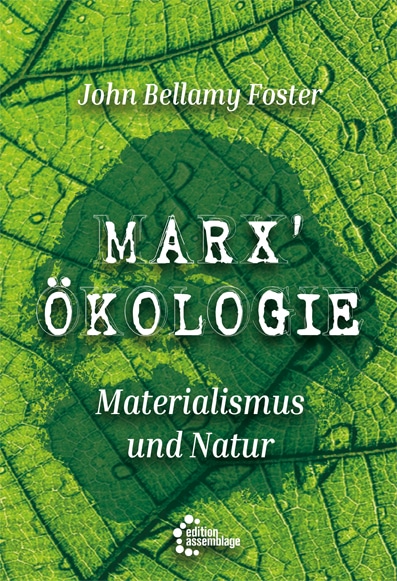
  • Preface to the German Edition of Marx’s Ecology

    Preface to the German Edition of Marx’s Ecology

    Preface to the German Edition of Marx’s Ecology,” Monthly Review, vol. 76, no. 7 (December 2024), pp. 41-43.

    Marx' Ökologie: Materialismus und Natur
    Marx’ Ökologie: Materialismus und Natur

    The research leading to the writing of Marx’s Ecologybegan in the mid-1990s in response to a request for an article on “Erde” (Earth) for volume 3 (Ebene-Extremisis) of the Historisch-Kritisches Wörterbuch des Marxismus, edited by Wolfgang Fritz Haug at the Free University of Berlin.1 I was asked at that time to provide an account of how the classical political economists up through Karl Marx had approached the question of the earth or soil. My original background was in political economy. But in the late 1980s and ’90s I had turned to the study of the global ecological crisis, leading to the publication of my book The Vulnerable Planet in 1994, along with a number of articles on Marx and ecology.2 Yet, while I was familiar at the time with the classical rent theory in the work of Adam Smith, Thomas Robert Malthus, David Ricardo, and Marx, and knew of Justus von Liebig’s influence on Marx with respect to the analysis of the nineteenth-century soil crisis, I had never systematically examined the underlying ecological assumptions of classical political economy with respect to the earth/soil. Nor to my knowledge had anyone else. I therefore set out to explore the question in depth. The result of this investigation was the recovery of Marx’s far-reaching ecological argument. Thus, it was in the Historisch-Kritisches Wörterbuch des Marxismus that I was to offer the first systematic elaboration of Marx’s conception of the rift in the metabolism between humanity and the soil. From there, I went on to write my article “Marx’s Theory of Metabolic Rift” in the American Journal of Sociology in 1999, which laid out the wider implications of Marx’s theory of ecological crisis, followed by the publication of Marx’s Ecology in 2000.3

    The recovery of Marx’s metabolic rift theory raised entirely new questions. How was it that Marx had developed such an incisive ecological crisis theory based in the natural science of his day, surpassing that of all others in the understanding of what he termed the “social metabolism” connecting humanity and the earth as a whole? The obvious answer was that this could be traced to his overall materialist outlook. But what exactly did that materialism entail? In Western Marxism it was commonly contended that materialism in Marx’s thought had primarily to do with the means of production and could be understood exclusively in terms of economic relations, divorced from both natural-scientific conceptions and philosophical materialism. Yet, Marx’s ecological analysis was clearly materialist in the much broader sense of adhering to a materialist conception of nature, underpinning his materialist conception of history. Hence, the only way to understand the development of Marx’s ecological thought, I concluded, was to examine the origins and development of his materialism, starting with his doctoral thesis on Epicurus’s philosophy of nature. Moreover, such an inquiry could not be carried out by simply exploring his work in isolation, but also had to be seen in terms of the historical evolution of materialism in general as it had developed up through the nineteenth century. It was this argument, then, that formed the basis of Marx’s Ecology as a whole.

    However, it was not the overall analysis of Marx’s Ecology with respect to materialism and nature, but rather Chapter 5 on the metabolic rift theory, that first caught people’s imaginations and dominated in the initial reception of the book, leading almost immediately to new, far-reaching theoretical developments. The real breakthrough here occurred in 2005 with the publication by Brett Clark and Richard York of “Carbon Metabolism: Global Capitalism, Climate Change, and the Biospheric Rift” in Theory and Society.4 They demonstrated that Marx’s theory of the metabolic rift provided the basis for understanding capitalism’s disruption of the Earth System’s carbon metabolism, generating the climate-change emergency. In 2010, a decade after the publication of Marx’s Ecology, I wrote The Ecological Rift, together with Clark and York, linking metabolic rift theory to the emergence of the Anthropocene and the Earth System crisis. A decade still further on, in 2020, I completed, along with Clark, The Robbery of Nature, connecting the metabolic rift to capitalism’s expropriation of humanity and the earth.5

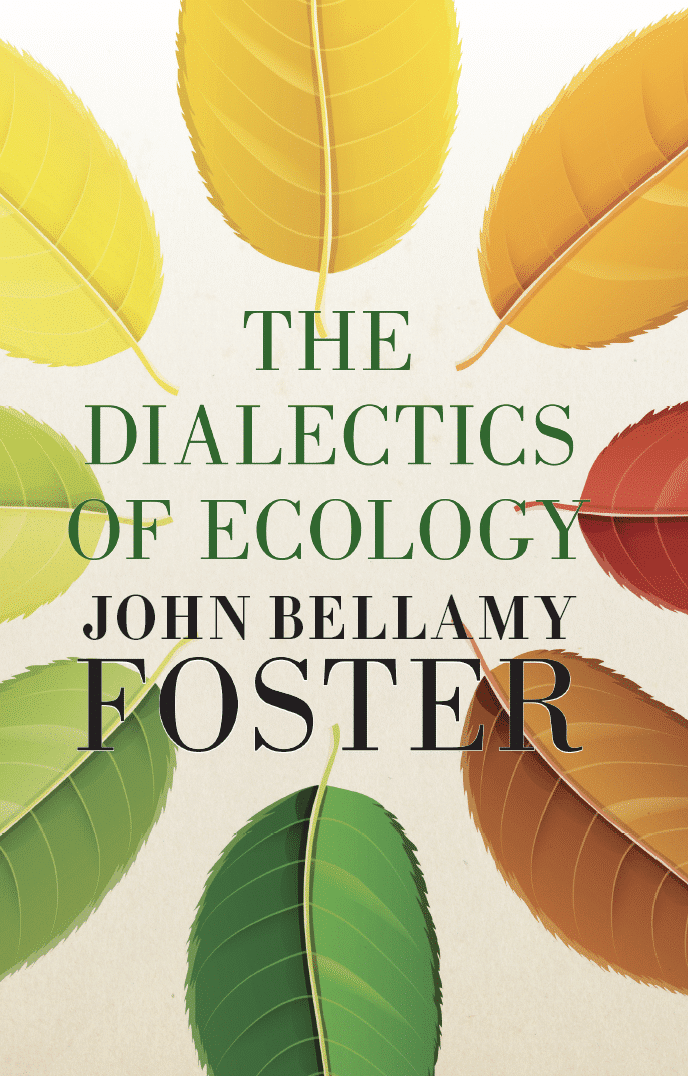
    Although metabolic rift theory was to occupy a central place in the contemporary ecosocialist critique, the broader questions with respect to materialism and nature raised in Marx’s Ecologywere to engender still further investigations into the ecological bases of historical materialism, expanding the overall range of analysis. A common criticism leveled at Marx’s Ecology was that Marx’s environmental critique had no discernible influence on subsequent socialist and ecological thinkers, making it of little historical significance. In the epilogue to Marx’s Ecology, it was explained why any such criticism would be incorrect, based on what was already then known of the work of later socialist ecological thinkers. But it took twenty years of research before I was able in 2020 to address this question fully in The Return of Nature. There I demonstrated the ways in which socialist ecological analyses focusing on the metabolism of humanity and nature and the dialectics of nature, and rooted in the work of Marx and Frederick Engels, had been central to the development of both ecological science and the modern ecological critique. The wider implications of this for environmental theory and practice are brought out in my 2024 book The Dialectics of Ecology.6

    Although many critical issues remain to be explored, and crucial debates naturally persist within ecosocialism, there is no longer any question about the depth of Marx’s metabolic critique, its influence on the development of ecology, or its centrality in terms of the philosophy of praxis in our day.

    —John Bellamy Foster
    Eugene, Oregon
    September 25, 2023

    Notes

    1. John Bellamy Foster, “Erde,” in Historisch-Kritisches Wörterbuch des Marxismus, Band 3 (Ebene-Extremismus) (Berlin: Argument-Verlag, 1997), 669–710. English translation in Historical Materialism 15, no. 3 (January 2007): 255–62.
    2. John Bellamy Foster, The Vulnerable Planet (New York: Monthly Review Press, 1994).
    3. John Bellamy Foster, “Marx’s Theory of Metabolic Rift,” American Journal of Sociology 105, no. 2 (September 1999): 366–405.
    4. Brett Clark and Richard York, “Carbon Metabolism: Global Capitalism, Climate Change, and the Biospheric Rift,” Theory and Society 34, no. 4 (2005): 391–428.
    5. John Bellamy Foster, Brett Clark, and Richard York, The Ecological Rift (New York: Monthly Review Press, 2010); John Bellamy Foster and Brett Clark, The Robbery of Nature (New York: Monthly Review Press, 2020).
    6. John Bellamy Foster, The Return of Nature (New York: Monthly Review Press, 2020); The Dialectics of Ecology (New York: Monthly Review Press, 2024).

    2024, Volume 76, Number 07 (December 2024)

  • The Dialectics of Ecology: Socialism and the Defense of Nature

    The Dialectics of Ecology: Socialism and the Defense of Nature

    The Dialectics of Ecology: Socialism and the Defense of Nature (New York: Monthly Review Press, 2023), 360 pp.

    The Dialectics of EcologyToday the fate of the earth as a home for humanity is in question—and yet, contends John Bellamy Foster, the reunification of humanity and the earth remains possible if we are prepared to make revolutionary changes. As with his prior books, The Dialectics of Ecology is grounded in the contention that we are now faced with a concrete choice between ecological socialism and capitalist exterminism, and rooted in insights drawn from the classical historical materialist tradition. In this latest work, Foster explores the complex theoretical debates that have arisen historically with respect to the dialectics of nature and society. He then goes on to examine the current contradictions associated with the confrontation between capitalist extractivism and the financialization of nature, on the one hand, and the radical challenges to these represented by emergent visions of ecological civilization and planned degrowth, on the other.
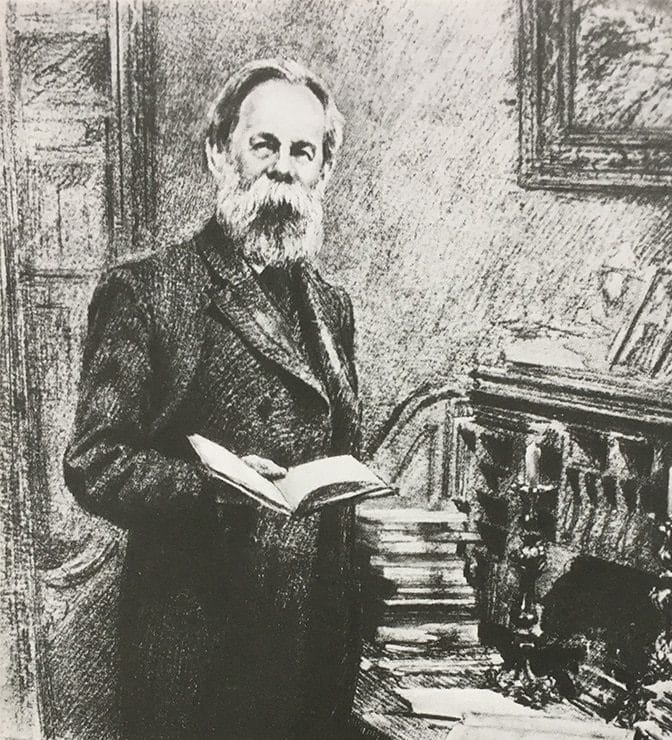
    The product of contemporary ecosocialist debates, The Dialectics of Ecology builds on earlier works by Foster, including Marx’s Ecology (2000) and The Return of Nature (2020), aimed at the development of a dialectical naturalism and the formation of a path to sustainable human development.

  • The Return of the Dialectics of Nature: The Struggle for Freedom as Necessity

    The Return of the Dialectics of Nature: The Struggle for Freedom as Necessity

    The Return of the Dialectics of Nature: The Struggle for Freedom as Necessity,” vol. 74, no. 7 (December 2022), pp. 1-20 (revised version of Isaac and Tamarra Deutscher Lecture published in Historical Materialism in 2022).

    Frederick Engels. Drawing by N. Zhukov, 1930s, Museum of Karl Marx and Frederick Engels, Moscow.
    Frederick Engels. Drawing by N. Zhukov, 1930s, Museum of Karl Marx and Frederick Engels, Moscow.

    This article is the 2020 Deutscher Memorial Lecture, delivered each year by the recipient of the Isaac and Tamara Deutscher Memorial Prize, and which was awarded in 2020 to John Bellamy Foster for The Return of Nature: Socialism and Ecology (Monthly Review Press, 2020). The lecture was first published in Historical Materialism 30, no. 2 (2022): 3–28. It has been revised for publication in Monthly Review, with the consent of Historical Materialism and their publisher, Brill.

    It is a fundamental premise of Marxism that as material conditions change, so do our ideas about the world in which we live. Today we are seeing a vast transformation in the relations of human society to the natural-physical world of which it is a part, evident in the emergence of what is now referred to as the Anthropocene Epoch in geological history, during which humanity has become the major force in Earth System change. An “anthropogenic rift” in the biogeochemical cycles of the earth, arising from the capitalist system, is now threatening to destroy the earth as a safe home for humanity and for innumerable species that live on it on a timeline not of centuries, but of decades.1 This necessarily demands a more dialectical conception of the relation of humanity to what Karl Marx called the “universal metabolism of nature.”2 The point today is not simply to understand the world, but to change it before it is too late.

    Given that Marxism has been, since its conception in the mid-nineteenth century, the primary basis of the critique of capitalist society, it naturally could be expected to lead the way in the ecological critique of capitalism. But while historical materialists and socialists more broadly can be said to have played the leading, formative role in the development of the ecological critique—particularly within the sciences—the key contributions of socialist ecology, principally in Britain, took place outside the main tendencies that were to define twentieth-century Marxism as a whole. Beginning in the 1920s and 1930s, a deep chasm emerged within Marxian theory, impeding the development of a coherent ecological view within the left. The dogmatism with which, on one side of this chasm, official Soviet thought by the mid-1930s approached the issue of the dialectics of nature and dialectical materialism more generally, had its counterpart, on the other side, in Western Marxism’s categorical rejection of the dialectics of nature and the materialist conception of nature. To speak of “The Return of the Dialectics of Nature: The Struggle for Freedom as Necessity” is thus to refer to the transcendence in our time, based on classical historical materialism and the dialectical naturalism that arose in Britain in the interwar period, of the principal contradictions hindering the development of a unified Marxian ecological critique.

    I. Post-Lukácsian Marxism and the Critique of the Dialectics of Nature

    A major shift occurred in Marxian thought nearly a century ago following the publication in 1923 of Georg Lukács’s History and Class Consciousness, giving birth to what is now known as the Western Marxist philosophical tradition, but which could more accurately be referred to as “post-Lukácsian Marxism.”3 Lukács employed Hegelian dialectics to argue that the proletariat was the identical subject-object of history, giving a new philosophical coherence to Marxism and at the same time redefining dialectical thought in terms of totality and mediation.

    Yet, in what was to become a defining trait of Western Marxism, Lukács, in conformity with the neo-Kantian tradition, rejected Frederick Engels’s own notion of a dialectics of nature, on the alleged grounds that Engels had followed “Hegel’s mistaken lead” in seeing the dialectic as fully operative in external nature.4 Lukács applied Giambattista Vico’s principle that we can understand history (the transitive realm) because we have “made it,” and thus dialectical reflexivity can be said to apply in all such situations. Conversely, by the same logic, we cannot understand nature (the intransitive realm) dialectically, in the same sense, since it is devoid of a subject.5

    At the same time, Lukács, it should be noted, did not categorically reject the dialectics of nature in History and Class Consciousness, subscribing rather to the notion, as Engels himself did, that there exists a “merely objective dialectics” of nature, capable of being perceived by the “detached observer.”6 This could then be seen as underlying the higher historical subject-object dialectics of human social practice. In this way, Lukács, following Engels in this respect, conceived of a hierarchy of dialectics, extending from merely objective dialectics, all the way up to the dialectics of the identical subject-object of history. Moreover, in his later works, beginning with his Tailism manuscript written within just a few years of History and Class Consciousness, Lukács was to become a strong advocate of a dialectics of nature and societyrooted in Marx’s theory of social metabolism.7

    Yet post-Lukácsian Marxists took the categorical rejection of the dialectics of nature as a defining principle of Western Marxism and even of Marx’s own thought. Engels was in this way separated from Marx. As Jean-Paul Sartre wrote: “In the historical and social world…there reallyis dialectical reason; by transferring it to the ‘natural’ world, and forcibly inscribing it there, Engels stripped it of rationality: there was no longer a dialectic which man produced by producing himself, and which, in turn produced man; there was only a contingent law, of which nothing could be said except it is so and not otherwise.”8 This criticism went hand-in-hand with a hostility toward materialism and scientific realism, in the sense of the rejection of the materialist conception of nature, and a distancing from the achievements of science.9 Serious ecological analysis was therefore missing from the Western Marxist philosophical tradition.

    Although there was the famous criticism of “the domination of nature” in the work of Frankfurt School theorists Max Horkheimer and Theodor Adorno, it never got past the criticism of Enlightenment science—only to accede pessimistically in the end to its unavoidable necessity.10Herbert Marcuse’s treatment of “The Revolt of Nature” in Counter-Revolution and Revolt did not go beyond the notion of the domination (and pollution) of nature’s “sensuous aesthetic qualities” as a means for the domination of humanity and the need for an environmental rebellion in response.11 There could, in fact, be no meaningful analysis of nature-society where both the materialist conception of nature and the dialectics of nature were denied, leaving Marxist theory with no dialectical critical-realist analysis on which to base an ecological critique. At most, within Western Marxist philosophical discourse, the relation of human beings to nature was reduced to technology, which was then subject to critique as the positivistic fetishism of technique, divorced from the wider question of the natural world and the human-social relation within it.

    What was missing in such a one-dimensional approach was any notion of nature itself as an active power. As Roy Bhaskar wrote in criticism of these tendencies of Western Marxism: “Marxists [meaning Western Marxist philosophers] have…for the most part considered only one part of the nature-social relation, that is, technology, describing the way human beings appropriate nature, effectively ignoring the ways (putatively studied in ecology, social biology, and so on) in which, so to speak, nature reappropriates human beings.”12

    Yet, a powerful strain of ecological dialectics and critical, non-mechanistic materialism persisted in the natural sciences in the British Isles, evolving out of a tradition that drew on both Marx and Charles Darwin, and that later became the heir of the early revolutionary Soviet ecology of the 1920s and early 1930s. It was this “second foundation” of Marxist thought within the natural sciences which survived in the West, particularly in Britain, and that stretched back to Marx and Engels themselves, that was to play the formative role in the development of an ecological critique, and which was to constitute the main story told in The Return of Nature.13

    II. From Marx’s Ecology to The Return of Nature

    The Return of Nature has as its central area of inquiry the question of the organic interconnections between socialism and ecology that emerged in the century following the deaths of Darwin and Marx in 1882 and 1883, respectively, focusing in particular on developments in Britain and the United States. It follows a thread that was established in my book Marx’s Ecology twenty years earlier. That work is best known for its explanation of Marx’s theory of metabolic rift. But the real intent of the book was to explain how Marx’s materialism had developed, going back to his confrontation in his doctoral thesis with Epicurus’s ancient materialist philosophy. Marx’s ecological perspective, it was argued, had developed as a counterpart to his understanding of the materialist conception of nature underlying the materialist conception of history.

    A full materialist outlook, such as that developed by Marx, has three aspects: (1) ontological materialism, focusing on the physical basis of reality independent of human thought and existence, and out of which the human species itself emerged; (2) epistemological materialism, which is best understood as dialectical critical-realist; and (3) practical materialism, focusing on human praxis and its basis in labor. Since Marx and Engels rejected mechanical or metaphysical materialism, their materialism was necessarily dialectical in all three aspects: ontology, epistemology, and practice.14 In Marx, materialism was closely related to mortality (“death the immortal”) applicable to all of existence, defining the material world.15 In this perspective derived from ancient Greek materialism, nothing comes from nothing, and nothing being destroyed is reduced to nothing. The human social world, in Marx’s conception, was, in the sense of Epicurean materialism, an emergent form or level of organization within the natural-material universe. Energy (matter and motion), change, contingency, the emergence of new assemblages or organizational forms, all characterize the natural-physical world, which could be explained in terms of itself, as a process of natural history.16 Marx’s analysis was from the outset rooted in the evolutionary theory of which Darwin’s theory of natural selection was the nineteenth-century culmination.

    Marx in his critique of political economy added to this overall materialist view the threefold ecological conception of: (1) the universal metabolism of nature; (2) the social metabolism (or the specifically human relation to nature through the labor and production process); and (3) the metabolic rift (representing the ecological destruction that ensues when the social metabolism comes into conflict with the universal metabolism of nature).17 The labor and production process was thus the key not only to the mode of production in a given historical form of society, but also represented the human relation to nature, and thus social-ecological relations. Marx’s theory of metabolic rift, which was first developed in the context of the rift in the soil nutrient cycle caused by the shipment of food and fiber to the new urban centers—where the essential nutrients, such as nitrogen, phosphorous, and potassium, ended up as pollution rather than returning to the soil—constituted the most advanced attempt in his day to capture the human-ecological relation. All subsequent ecological thought, up to ecosystem theory and Earth System analysis, was to be rooted in this same essential approach, focusing on metabolism.

    Nevertheless, the argument of Marx’s Ecology left the story of the formative role played by socialist thinkers after Marx in the emergence of ecology largely unaddressed. Moreover, there remained the contentious issue of the dialectics of nature, associated with Engels in particular. These issues were to be taken up in The Return of Nature. Although Marx’s Ecology was a straightforward attempt to capture Marx’s materialist and ecological views, the story told in The Return of Nature was much more complex, not least of all because it had to transgress certain divisions within Marxism itself.

    Here we have to understand that the simultaneous rejection of both the materialist conception of nature and the dialectics of nature within Western Marxism was an inheritance of the neo-Kantian tradition, which had its origin within German philosophy with Friedrich Lange’s 1865 work, The History of Materialism. Lange attempted to use Kant’s notion of the noumenon, or the unknowable thing-in-itself, as the basis for demolishing materialism, a viewpoint that was carried forward in more sophisticated ways by later neo-Kantians. It was with the rise of neo-Kantianism that epistemology came to occupy its dominant place within philosophy, pushing aside ontology, and also displacing the dialectical logic associated with G. W. F. Hegel. Materialist ideas and natural science were seen as inherently positivistic. Room was made again for religion and idealist philosophy via the Kantian noumena or things-in-themselves.18 Closely related to this, as Marx and Engels noted, were the agnostic, dualistic views of British scientists such as Thomas Huxley and John Tyndall.19

    In opposition to the neo-Kantian dualism of Lange, which rejected both materialism and Hegelian dialectics, Marx responded by boldly stating: “Lange is naive enough to say that I ‘move with rare freedom’ in empirical matter. He hasn’t the least idea that this ‘free movement in matter’ is nothing but a paraphrase for the method of dealing with matter—that is the dialectic method.”20 Likewise, in Capital, Marx wrote: “My dialectical method is, in its foundations, not only different from the Hegelian, but exactly opposite to it.… With me…the ideal is nothing but the material world reflected in the mind of man, and translated into the forms of thought.”21

    In referring to the reflection of the “material world in the mind of man,” Marx had no simplistic notion of mirroring in mind, but rather a dialectical conception of reflection (and reflexivity) and a situated conception of knowledge, in which reason and both objective and subjective agency play central roles within an ever-changing historical reality. Marx’s position, while realist, was therefore a form of “dialectical critical realism.” As Bhaskar has explained, Marx’s dialectical “method, though naturalist and empirical is not positivist, but rather realist.… His epistemological dialectics [his critical realism] commits him to a specific [materialist] ontological dialectics and a conditional [historical] relational dialectics as well.”22

    From a classical historical-materialist standpoint, the dialectics of nature can be seen as part of a dialectical hierarchy. Thus, in terms of what Marx in Capital called “its foundations,” it stands for the material world characterized by motion, contingency, change, and evolution: the dialectic as material process. Central here is the notion that nature (apart from human beings) in the contingent, emergent effects of its manifold processes can be said to have a kind of agency, even if this is unconscious agency. At a social level, the dialectic can be seen in terms of human consciousness and practice, the realm of the identical subject-object of the human-historical realm, standing for human society as an emergent form of nature. In its alienated form under capitalism, the human-social realm often appears to be independent of the material world of nature, or even as completely dominant over nature—though this is a fallacy. In between these two abstract realms, of the merely objective and the merely subjective dialectics, lies the mediating realm of human labor and production, the dialectics of nature and society (what Lukács was to call the “ontology of social being”), arising from practice, which is, for Marx, the key to materialist dialectics.23

    Marx gives us two basic ways of looking at this mediation of nature and society through production (which, for him, in its broadest sense accounts for all human appropriation of nature and thus all material activity). In one of these pathways (most evident in his early writings but also apparent in his later works, such as his Notes on Adolph Wagner, written in 1879–80) the human relation to the universal metabolism of nature is seen in terms of human sensuous interaction with nature, which in classical German philosophy was closely tied to aesthetics, but which Marx linked to production as well. The second is in his theory of the labor and production process as the social metabolism between human beings and nature, representing the active relation of human beings to the earth. For Marx, we can know the world, including, to a considerable extent, the intransitive realm beyond the human subject, because we are part of it through our production and our sensuous existence, and we live in the context conditioned by nature’s laws, albeit in an emergent form in which historical laws, via specific modes of production, also condition human existence, mediating between nature and humanity.24 Engels later adds to this, in line with Marx, the role of mathematics and scientific experiments as ways in which humanity connects dialectically to the wider, “merely objective” realm, employing methods of scientific inference arising originally from the human material relation to nature.25

    In essence, while neo-Kantianism was rooted within a categorical division between the human subject and the objective natural world—between phenomena and noumena—that could not be transcended, Marxian materialist dialectics was grounded in human corporeal existence within the physical world, in a context of emergence, or integrated levels. Here the dualism between humanity and nature was not a fundamental assumption but rather was seen as a result of an alienated consciousness rooted in an alienated system. We can know nature, as Engels was to write in The Dialectics of Nature, because “we, with flesh, blood and brain, belong to nature, and exist in its midst.”26

    III. The Dialectics of Nature and the Creation of Ecology

    The Return of Nature, moving on from where Marx’s Ecology left off, had a double burden. The historical narrative was concerned with explaining the various ways in which a tradition of socialist ecological analysis had arisen within art and science, in many ways dominating the ecological critique of contemporary capitalist society in the century from the deaths of Darwin and Marx up to the rise of the modern environmentalist movement. But at a deeper, more theoretical level, The Return of Nature was concerned as well with the ways in which a materialist dialectics of nature, often combined with other traditions, such as radical Romanticism and Darwinian evolutionary theory, guided the development of modern ecology, based on the insights of socialist thinkers. Here the conception of the dialectics of nature, in its various forms—despite its categorical rejection by post-Lukácsian Marxists—could be perceived as playing the crucial role in a process of ecological discovery and critique.

    A dialectical aesthetic as well as a dialectical conception of labor could be seen as underlying William Morris’s understanding of nature-society relations. Dialectical conceptions also informed E. Ray Lankester’s evolutionary and ecological materialism. But the thread of the dialectics of nature only fully enters the narrative of The Return of Nature once the work of Engels is considered. In many ways, Engels’s famous claim that “Nature is the proof of dialectics” is the key, provided we understand what he meant by this in more contemporary terms by saying, “Ecology is the proof of dialectics.”27

    Although Engels has been heavily criticized by numerous thinkers for adopting a crude “reflectionist” view of knowledge, a close inspection of his work shows such claims are clearly false when placed in the context of his actual arguments.28 Almost invariably, when Engels refers to “reflection,” he immediately turns around and indicates that what we perceive as objectively conditioned by the material world around us (of which we are part) is a result not simply of conditions external to ourselves, but also a product of our active role in changing the world around us, and our understanding of it through our self-conscious reason. Our rules of scientific interference, our logic, our mathematics, our scientific experiments, our modeling, all have their roots in principles derived from human labor and production; that is, our metabolic relation to the world at large. “Reflection,” as Marx and Engels use it—which invariably implies reflexivity, and which is employed by them in the Hegelian, dialectical sense—is anything but positivist in character.29

    Similarly, in attributing agency and thus dialectical relations of a “merely objective” kind to nature itself, Engels does this in a manner that emphasizes reciprocal relations, reflexivity, change, contingency, development, attraction-and-repulsion (contradiction), and emergence (or integrative levels) within nature itself, relying on Hegel’s complex notion of “reflection determinations” from the “Doctrine of Essence” in his Logic.30 The purpose is to capture the active, systemic, non-mechanistic relations that constitute the natural world, from which evolution (in the broadest sense) arises, and out of which humanity itself emerges. For Engels, as for Marx, it is our understanding of our own position within nature and our metabolism with the universal metabolism of nature that gives us the essential clues to those physical properties and principles that extend beyond ourselves. In this regard, Engels does not hesitate to attribute a kind of agency to nature, the material world itself, understood in its broadest terms as in motion and constituted by the “transformation of energy.”31

    Engels’s well-known three “laws” of the dialectics of nature, better understood today as underlying ontological principles, perfectly manifested this outlook.32 The first law, or the transformation of quantity into quality and vice-versa, is now known in natural science as “phase transition” (or as a “threshold effect”) and was explained in precisely that way by the Marxist mathematician Hyman Levy.33 It can be seen as referring to the general phenomenon of integrative levels or the emergence of new organizational forms and assemblages within the material world, a view directly opposed to reductionist approaches to nature, and leading to a hierarchy of natural laws, the product of evolution, transformation, and change. Such an analysis is essential to all science today.

    The notion of the unity/identity of opposites, or what Lukács, following Hegel, called “the identity of identity and non-identity,” which has played such a large role in Marxian dialectics, was aimed at overthrowing notions of fixity, dualism, reductionism, and mechanism, focusing on the contradictions and feedback loops that induce transformative change.34

    This then points to the third ontological principle, in which emergence now can be seen as the result of contradictions (“the incompatible development of different elements within the same relation”) arising from material-historical changes, and leading to the “negation of the negation,” an expression common to Hegel, Marx, and Engels. In the Marxian version, this phrase stands for the way in which the past mediates between the present and the future in material-historical development, producing a dialectic of continuity and change.35 Engels himself referred to the “spiral form of development,” which occurs when the residuals of the past and the active elements of the present coalesce to generate what Ernst Bloch was to call the “not-yet,” or an altogether new reality. For Bhaskar, this takes the form of the “absenting of absence,” or the transformative action directed at what has been inherited from the past in order to create a future existence.36

    In a sense, the negation of the negation is a historical, evolutionary conception of emergence. Although emergence of new levels of organization was articulated in Engels’s first “law,” in terms of the transformation of quantity to quality and vice-versa, now, following the generative principle of the unity of opposites (of contradiction), it takes on a developmental character: the emergence of a new form as a result of a historical process of reciprocal action or contradiction. This is what Bloch meant when he wrote that the “essential distinction between Hegel’s dialectic and all previous candidates” was that “it is not stilled in the unity of contraries or contradictions.”37 In Marxian terms, the past is never simply past but rather mediates between the present (the moment of praxis) and the future.

    In this way, Engels, in line with Marx, provided a dialectics of nature that was also a dialectics of emergence.38 His analysis recognized the unity and complexity of nature, as well as the “alienated mediation” of nature and society represented by capitalism’s irreversible rifts in nature’s own metabolism.39 This led to his powerful condemnation of capitalism’s conquest of nature, as if of a foreign people, undermining ecological conditions. What Engels referred to metaphorically as the “revenge” of nature was evident in deforestation, desertification, species extinctions, floods, destruction of the soil, pollution, and the spread of disease.40 Few other thinkers (outside of Marx and Justus von Liebig) in the nineteenth century captured so powerfully and succinctly the dialectic of ecological destruction under capitalism.

    Contrary to those who have argued (but without any substantive warrant) that Engels sought to subsume the dialectic of human society in the dialectic of nature, his work The Dialectics of Nature, although incomplete, was structured so as to move from the analysis of the “merely objective dialectics” of nature via natural science, to an anthropological basis in “The Part Played by Labour in the Transition from Ape to Man.” Here the analysis was grounded in the dialectics of nature and society, evolving out of human labor and production and the human social metabolism with nature.41 This conformed to the structure adopted in Anti-Dühring in which the argument proceeded logically from natural philosophy to political economy and socialism, with political economy and the mode of production seen as relatively autonomous from the dialectics of nature as such, since conditioned by the dialectics of human history. What in fact mediated between the two, for Engels as for Marx, was human labor and production, that is, the social metabolism. Herein lay the actual material realm of human beings constituting the dialectic of nature and society, or what the later Lukács was to call the “ontology of social being.”

    Indeed, all critical-dialectical thought, encompassing both the “merely objective dialectics of nature,” and what could be called its polar opposite, the “merely subjective dialectics of society,” began for Engels, as for Marx, with the human social metabolism via labor and production, constituting the objective ground of all human existence: the dialectic of nature and society. Human self-consciousness required that the objective world become its own, but this could only be achieved on the basis of ontological principles expressing the specifically human relation to the universal metabolism of nature.

    All of our most fundamental scientific concepts regarding extra-human nature had their historical origins in human interactions with nature and the inferences that were drawn from them. To picture how this works, we can turn to the ancient Greeks. Empedocles in the middle of the fifth century BCE developed an experiment proving the corporeal nature of invisible and motionless air by demonstrating its resistance. This influenced Greek notions of flight. Thus, in Aeschylus’s play Agamemnon, written shortly after, in which two eagles in flight (representing the two heads of the house of Atreus) are said to be rowing with “winged oars beating the waves of the wind,” like the ships below, what is being presented is something more than simply a loose poetic metaphor. Rather it was a direct application of the physical principle (the corporeal nature of air) derived from Empedocles’s experiment.42 In order to describe poetically the resistance that a bird’s wings would experience in flight, Aeschylus drew on experience derived from human labor, referring to the oars of ships and the resistance that propelled the ships forward as they rowed. While such an example may seem quaint, and although we have infinitely more sophisticated explanations of a bird’s flight today, what is significant is that basic scientific principles with regard to external nature arose from the earliest times through inferences from human interactions (primarily human production) with the natural world; inferences that then, in Epicurus’s famous phrase, had to “await confirmation.”43 Although the scope of our experiments, our instruments, and our interactions with the universe have expanded, the fact that the basic concepts with which we approach extra-human natural phenomena arise first and foremost from our own material experience in interacting with nature remains the same.

    Engels’s analysis of the dialectics of nature was developed mainly in his Anti-Dühring, which he read to Marx as it was written in draft form (and to which Marx contributed a chapter as well as notes on the Greek atomists), along with his unfinished Dialectics of Nature.44 It was all clearly provisional, a work in progress, and incomplete. The British socialist scientists who were to be strongly influenced by Engels’s materialist dialectics viewed it as a great, unfinished, and open-ended work of scientific inquiry; one far exceeding, as J. D. Bernal noted, the works in the philosophy of science in Engels’s own time, represented by Herbert Spencer and William Whewell in England and Lange in Germany.45

    For many of the leading British socialist thinkers of the early twentieth century—figures as varied as Lankester, Arthur G. Tansley, Benjamin Farrington, George Thomson, Bernal, Joseph Needham, Lancelot Hogben, and Christopher Caudwell—a key point of reference was Epicurean materialism, which was seen as offering not only a deep “materialist conception of nature,” but also, via the swerve (clinamen, declension), the concept of contingency, understood as a movement away from a purely mechanical worldview. The Epicurean swerve was a notion stressed by Marx in his doctoral dissertation, which became available in the 1920s.46 This was viewed by the British socialist scientists as connecting to a dialectical world view and to Engels’s dialectics of nature. Epicurus, as Needham emphasized, conceived nature as arising of itself, while swerving away from all rigid determinism.47

    The result of this historical-materialist Wissenschaft (a term often translated as science, but also referring to knowledge more generally when approached systematically on any topic) was a great renaissance of dialectical naturalism.48 This included, to point to just a few of the many pioneering developments:

    1. Lankester’s thesis that all major epidemics in animals and humans in the present age are the result of human production, and capitalism in particular;49
    2. Haldane’s theory (in parallel with that of the Soviet biologist A. I. Oparin) of the material origins of life—a discovery which was tied to a recognition of how life had created the earth’s atmosphere, linked to the Russian biochemist V. I. Vernadsky’s analysis of the biosphere;50
    3. Haldane’s role in the neo-Darwinian evolutionary synthesis and his integration of this with the dialectics of nature based on Engels’s writings;51
    4. Bernal’s operationalization of the dialectics of nature and the negation of the negation in terms of a theory of the role of residuals in effecting the emergence of new forms of inorganic/organic organization;52
    5. Needham’s theory of integrative levels or emergence, encompassing both natural and social history;53
    6. Tansley’s introduction of the concept of ecosystem, in which he was influenced by Lankester’s earlier ecological analysis and Marxist mathematician Levy’s dialectical systems theory;54
    7. Hogben’s and Haldane’s devastating scientific refutation of the genetic basis of race;55
    8. Haldane’s early empirical analysis, based on his father’s research, of the build-up of carbon dioxide in the atmosphere;56
    9. Bernal’s leading role in the critique of the social relations of science;57
    10. Caudwell’s attempt to explore the interconnections in the dialectics of art and science;58
    11. Farrington’s and Thomson’s pioneering research into Epicurean materialism and its relation to the development of Marxist thought;
    12. Bernal’s critique of nuclear-weapons development and treatment of how this threatened the end of life in its present form.59

    And collectively, this manifested itself as the detailed critique of ecological degradation and destruction integrated into the work of all of these thinkers.

    Not only were the scientific and cultural achievements associated with these leading figures in materialist dialectics within realms of science and art of great importance in their time (though later effaced by the Cold War), they were also connected fairly directly with the battles that occurred beginning in the 1950s, with the advent of the Anthropocene, around the sustainability of the natural environment and the rise of the environmental movement. These developments helped inspire the work of leftist scientists like Barry Commoner, Rachel Carson, and, later on, figures such as Stephen Jay Gould, Richard Levins, Richard Lewontin, Steven Rose, Hilary Rose, and Helena Sheehan, and still more recent analysts such as Howard Waitzkin, Nancy Krieger, and Rob Wallace. The reality is that there is a powerful tradition of historical-materialist analysis within and related to natural science that has often fallen outside the purview of Western Marxism.60

    The problem here is well-illustrated by a couple of statements by Perry Anderson, one of the premier Marxist cultural theorists and historians in Britain from the 1960s to the present day. Writing in the New Left Review in 1968, Anderson referred to the “false science…and the fantasies of Bernal.”61 The undeniable fact that Bernal was one of the leading scientific figures in Britain in the 1930s through the 1960s, famous for his major discoveries, and a Marxist, recognized as one of the great intellectual luminaries of his time—even if sometimes deviating into a kind of Soviet positivism—gets short shrift here. More significantly, Anderson felt compelled to declare in 1983 that “problems of the interaction of the human species with its terrestrial environment [were] essentially absent from classical Marxism,” thereby excluding Marx and Engels’s contributions in this respect, suggesting that the whole tradition of explorations of the dialectics of nature (and of nature and society) by Marxist theorists was outside the sphere of historical materialism properly speaking.62 Similar positions were adopted by a host of other thinkers, such as George Lichtheim, Leszek Kołakowski, Shlomo Avineri, David McLellan, and Terrell Carver, all of whom sought to separate Engels from Marx and the dialectics of nature from Marxism.63

    Insofar as this tendency of post-Lukácsian Marxism had a common basis, it had to do with postulations, inherited from neo-Kantianism and deeply embedded in the dominant traditions of philosophy, that rejected realism (critical or otherwise), and with it any possibility of a dialectics of nature. How is it, then, that a dialectics of nature has been so powerful in unlocking the secrets of the universe? The reason is that nature and society are not different realities, but are co-evolving existences, in which society is asymmetrically dependent upon the larger natural world of which it is a part. Our knowledge of nature, of ourselves, and of our place in the world, derives from this fact, spurred on in part by the very alienation of nature and the resulting self-consciousness that the capitalist system has generated. As Needham wrote:

    Marx and Engels were bold enough to assert that it [the dialectical process] happens actually in evolving nature itself, and that the undoubted fact that it happens in our thought about nature is because we and our thought are part of nature. We cannot consider nature otherwise than as a series of levels of organization, a series of dialectical syntheses. From the ultimate particle to atom, from atom to molecule, from molecule to colloidal aggregate, from aggregate to living cell, from cell to organ, from organ to body, from animal body to social association, the series of organizational levels is complete. Nothing but energy (as we now call matter and motion) and levels of organization (or the stabilised dialectical syntheses) at different levels have been required for the building of our world.64

    For Caudwell, “the external world does not impose dialectic on thought, nor does thought impose it on the external world. The relation between subject and object, ego and Universe, is itself dialectic. Man, when he attempts to think metaphysically, contradicts himself, and meanwhile continues to live and experience reality dialectically.”65

    The French Marxist Roger Garaudy put this in more straightforwardly epistemological terms:

    To say that there is a dialectic of nature, is to say that the structure and movement of reality are such that only a dialectical thought can make phenomena intelligible and allow us to handle them.

    That is no more than an inference: but it is an inference founded on the totality of human practice—an inference that is constantly subject to revision as a function of the progress of that practice.…

    At the current stage of the development of the sciences, the representation of the real which emerges from the sum total of confirmed knowledge, is that of an organic whole in a constant process not only of development but also of auto-creation. It is this structure that we call “dialectical.”66

    Kant argued in his Critique of Judgment that, in dealing with the intransitive world of nature beyond our perceptions, it is necessary to conceive of it teleologically in order to say anything about it at all.67 Science, however, has progressed far beyond this point, and while sometimes still presenting nature in teleological terms, it is more likely to resort to mechanical, systemic (systems theory), or dialectical terms.68 The last of these most fully captures the universal metabolism of nature, encompassing its different integrative levels—including the inorganic and organic, the extra-human and human—connected with the results of human praxis.

    IV. The Dialectic of the Anthropocene

    Why are these issues so important today, and why is there now a return to the dialectics of nature? This has to do with our own material conditions, which are increasingly dominated by the planetary emergency and the emergence of the Anthropocene, commencing around 1945 with the first nuclear detonation (followed by the bombings in Hiroshima and Nagasaki), which represented a fundamental change in the human relation to the earth. As a result, the dialectic of nature in the twenty-first century is in many ways a dialectic of the Anthropocene. The Anthropocene Epoch is designated by science, though not yet officially, as a new epoch in the geological time scale, following the Holocene Epoch of the last 11,700 years. In the Anthropocene, humanity has arisen as the primary driver effecting changes in the Earth System. The dialectic of nature and society has thus evolved to the point that human production is generating an “anthropogenic rift” in the biogeochemical cycles of the planet, resulting in the crossing of various planetary boundaries and representing the transgressing of critical thresholds in the Earth System that define a livable climate for humanity.

    Climate change is one such threshold or planetary boundary. In essence, the quantitative build-up of carbon dioxide in the atmosphere has resulted in a qualitative change in the climate sufficient to threaten human existence, and even that of most life on Earth. Other planetary boundaries that have been crossed or are in the process of being crossed are represented by ocean acidification, loss of biological diversity (and species extinction), the disruption of nitrogen and phosphorus cycles, loss of ground cover (including forests), loss of fresh water sources (including desertification), and chemical and radioactive pollution of the environment.69

    The sources of these changes are not simply anthropogenic (something that will not be reversed so long as industrial civilization continues to exist), but are due more concretely to the worldwide expansion of capitalism as an accumulative system geared to its own internal growth ad infinitum and embodying in that respect the most destructive relation to the earth conceivable. This was captured by Marx’s theory of metabolic rift, now raised to the level of an anthropogenic rift in the Earth System.70

    Although we have a widely accepted name for the new geological epoch, characterized by the human economy’s current role as the primary geological force on the level of the Earth System itself, we still have no name for the new geological age, nested within the Anthropocene Epoch that underlies the current Anthropocene crisis. Officially, in terms of geological ages, we are still in the Meghalayan Age of the last 4,200 years, dating from a period of climate change that was thought to have brought down some of the early civilizations (though this is currently a matter of dispute among scientists). But how are we to conceive of the new geological ageassociated with the inception of the Anthropocene Epoch?

    My Monthly Review colleague Brett Clark and I, as professional environmental sociologists, have proposed the name Capitalinian (also referred to by geologist Carles Soriano as the Capitalian) for this first geological age of the Anthropocene, standing for the fact that it is the capitalist world-system that has created the present planetary emergency.71 The only solution—indeed, the only way of preventing the present mode of production from bringing about an Anthropocene extinction (or Quaternary Period extinction) event—is for human society to move beyond capitalism and the Capitalinian towards a future, more sustainable geological age within the Anthropocene, which we have labeled the Communian, after community, commune, and communal.

    What is called the practical, relational dialectic, the dialectic of history is now therefore caught up with the dialectic of nature and society reflected in Marx’s theory of metabolic rift. This has now been given a wider field of operation, only truly apparent in our time, in which the metabolism of the entire planet, or the dialectic of nature, is being affected by an anthropogenic rift in the Earth System and in ways that threaten our own existence, calling to mind Engels’s “revenge” of nature and Lankester’s “Nature’s revenges.”72

    It is important to understand that this Earth System crisis in the Capitalinian is tied to the long history of expropriation and exploitation that together constitute the foundation of capitalism’s relation to the earth and humanity. Expropriation, in Marx’s terms, meant appropriation without equivalent or reciprocity, that is, robbery. Marx thus spoke of the robbery of nature underlying the metabolic rift.73 But he also wrote about the expropriation of the land from the population, removing the workers from the most basic means of production and thus control over their own lives. The age that Marx critically referred to as “so-called original accumulation” (so-called, because it was defined not so much by accumulation as by robbery) was an age of expropriation.74 Expropriation went beyond the theft of land to the theft of human bodies themselves. This is associated with what Clark and I have designated as the “corporeal rift,” marked by genocide, enslavement, and colonization of much the world’s population, underlying the relations of class exploitation.75

    It is this wider logic of the expropriation of lands and bodies behind the capitalist system of exploitation that gave rise to the history of racial capitalism. This process of expropriation can also be seen in the robbing of women’s household labor (which led Marx in his day to refer critically to women in capitalism as the slaves in the household) and in the continuing agribusiness expropriation of the land of subsistence workers, primarily peasants. Even people’s leisure time away from work throughout the world is being expropriated in various ways in the accelerated accumulative society of digital capitalism. Today capitalism is thus involved in myriad ways in the expropriation of the entire earth and its population: a system of robbery so extensive that the human relation to the earth, the very basis of human existence, is now in danger of being severed. The alienation of nature and the alienation of labor that characterize capitalism point, in the end, only to destruction.

    Our practical dialectics today thus require a knowledge of the dialectics of nature and society. The merely objective dialectics of nature, excluding the human subject, and the merely subjective dialectics of society, excluding natural-physical existence, are not enough. A greater critical unity of thought and action is being forced upon us. Dialectics, as Lewontin and Levins explained, focuses on “wholeness and interpenetration, the structure of process more than things, integrated levels, historicity and contradiction.”76

    In ancient Greece, the Ionian philosophers, such as Heraclitus, focused on material processes as dialectical. For Heraclitus, describing the basic metabolic process underlying life:

    As things change to fire,
    and fire exhausted
    falls back into things,
    the crops are sold
    for money spent on food.77

    In contrast to the Ionians, the Eleatics, such as Parmenides (followed by Plato and much later, by Plotinus) conceived of a dialectic of the idea, or reason. Hegel can be seen as wedding these two vital streams together, building on all of modern philosophy and the Enlightenment in his idealist philosophy, but giving precedence to dialectics as idea or reason.78 Marx’s materialist dialectics returned to material processes as underlying all reality, leading to an objective dialectic of change and emergence, of the metabolism of nature and society, and ending in a dialectics of human history and practice.

    This materialist dialectical synthesis, the dialectic of nature and society, remains of great importance today. We live in a time, as Marx and Engels noted in The German Ideology, in which humanity must struggle in revolutionary ways not simply for the advancement of human freedom, but also in order to avoid destruction due to what can be called “capitalism’s deadly threat” to the world and life in general. For Epicurus, Marx wrote, “the world [the earth] is our friend.”79 Materialist dialectics tells us that our goal in the present moment must be one of creating a world of ecological sustainability and substantive equality, one which promotes sustainable human development. But this starts in our time with an ecological and social revolution that is forced upon us. Today, the struggle for freedom and the struggle for necessity coincide everywhere on the planet for the first time in human history, creating a prospect of ruin or revolution: either a fall into the depths to which the Capitalinian has brought us, or the creation of a new Communian Age.80

    Notes

    1. Clive Hamilton and Jacques Grinevald, “Was the Anthropocene Anticipated?,” Anthropocene Review, 2, no. 1 (2015): 59–72.
    2. Karl Marx and Frederick Engels, Collected Works, vol. 30, (New York: International Publishers, 1975–2004), 54–66.
    3. Georg Lukács, History and Class Consciousness, trans. Rodney Livingstone, (London: The Merlin Press, 1971); Roy Bhaskar, Reclaiming Reality (London: Routledge, 2011), 131.
    4. Lukács, History and Class Consciousness, 24; Martin Jay, Marxism and Totality (Berkeley: University of California Press, 1984), 115–18.
    5. Giambattista Vico, The New Science, trans. Thomas Goddard Bergin and Max Harold Fisch (Ithaca, NY: Cornell University Press, 1976), 493; John Bellamy Foster, The Return of Nature(New York: Monthly Review Press, 2020), 17.
    6. Lukács, History and Class Consciousness, 207; Marx and Engels, Collected Works, vol. 25, 492.
    7. Georg Lukács, In Defense of History and Class Consciousness: Tailism and the Dialectic, trans. Esther Leslie (London: Verso, 2000), 102–7; Georg Lukács, The Ontology of Social Being, vol. 3, trans. David Fernbach (London: The Merlin Press, 1980).
    8. Jean-Paul Sartre, Critique of Dialectical Reason, vol. 1, trans. Alan Sheridan-Smith (London: Verso, 2004), 32.
    9. Sebastiano Timpanaro, On Materialism, trans. Lawrence Garner (London: Verso, 1975), Karl Jacoby, “Western Marxism” in A Dictionary of Marxist Thought, ed. Tom Bottomore (Oxford: Blackwell, 1983), 523–26; Lucio Colletti, Marxism and Hegel, trans. Lawrence Garner (London: Verso, 1973), 191–92.
    10. Max Horkheimer and Theodor Adorno, The Dialectic of Enlightenment, trans. John Cumming (New York: Continuum, 1998), 224, 254; Alfred Schmidt, The Concept of Nature in Marx, trans. Ben Fowkes (London: New Left, 1971), 156; Max Horkheimer, The Eclipse of Reason (New York: Continuum, 2004), 123–27.
    11. Herbert Marcuse, Counter-Revolution and Revolt (Boston: Beacon, 1972), 59–78.
    12. Bhaskar, Reclaiming Reality, 132.
    13. Foster, The Return of Nature, 7.
    14. Bhaskar, Reclaiming Reality, 115.
    15. Lucretius, On the Nature of the Universe, ed. Ronald Melville, Don Fowler and Peta Fowler (Oxford: Oxford University Press, 1999), 93 (III: 869).
    16. Anthony Arthur Long, “Evolution vs. Intelligent Design in Classical Antiquity,” Townsend Center for the Humanities, 2006, available at berkeley.edu; Anthony Arthur Long, From Epicurus to Epictetus (Oxford: Oxford University Press, 2006); John Bellamy Foster, Brett Clark, and Richard York, Critique of Intelligent Design (New York: Monthly Review Press, 2008), 155–77.
    17. John Bellamy Foster, “Marx and the Rift in the Universal Metabolism of Nature,” Monthly Review 65, no. 7 (December 2013): 1–19.
    18. On neo-Kantianism and its consequences for dialectical and materialist philosophy, see Evald Vassilievich Ilyenkov, Dialectical Logic, trans. H. Campbell Creighton (Delhi: Aakar Books, 2008), 289–319; Frederick C. Beiser, After Hegel (Princeton, NJ: Princeton University Press, 2014); Foster, The Return of Nature, 264–69. In the words of Lukács, who started out as a neo-Kantian, “according to Kant’s theory the world given to us is only appearance, with a transcendental unknowable thing-in-itself behind it.” (Georg Lukács, Conversations with Lukács, ed. Theo Pinkus [London: The Merlin Press, 1974], 76.)
    19. Marx and Engels, Collected Works, vol. 45, 50, 462.
    20. Karl Marx, Letters to Kugelmann (New York: International Publishers, 1934), 112. Marx was replying to the second edition of Friedrich Albert Lange’s On the Workers’ Question (1870).
    21. Karl Marx, Capital, vol. 1, trans. Ben Fowkes (London: Penguin, 1976), 102.
    22. Bhaskar, Reclaiming Reality, 120. Kai Heron, writing from a Lacano-Hegelian perspective, has recently stated that Marxian ecology based on Marx’s theory of metabolic rift is unable “to account for the contingent emergence of ourselves” as “subjects, from nature.” This, however, is exactly what the theory of contingent emergence developed in classical historical materialism, which is carried forward by today’s dialectical critical realism (including Marxian ecology) is, in the final analysis, all about. To call this “contemplative materialism” thus misses the point: today the issue is the formation of a revolutionary ecological subject, conceived in terms of the “transformative model of social activity,” viewed as a contemporary expression of historical materialism. Kai Heron, “Dialectical Materialisms, Metabolic Rifts and the Climate Crisis,” Science and Society 85, no. 4 (2021): 501–26; Roy Bhaskar, Dialectic: The Pulse of Freedom (London: Verso, 1993), 2, 152–73.
    23. Georg Lukács, The Ontology of Social Being, vol. 2, trans. David Fernbach (London: The Merlin Press, 1978), 6–7, 103. Writing of “the hidden nature speculation in Marx” and Marx’s concept of metabolism, Alfred Schmidt observed: “Only in this way”—that is, through the mediation of human activity—”can we speak of a ‘dialectic of nature.’” Schmidt’s intention was to reduce the notion of the “merely objective dialectic of nature,” referred to by Lukács in History and Class Consciousness, to the dialectics of nature and society. (Alfred Schmidt, The Concept of Nature in Marx, trans. Ben Fowkes [London: New Left, 1971], 79.)
    24. See John Bellamy Foster, “The Dialectics of Nature and Marxist Ecology,” in Dialectics for the New Century, ed. Bertell Ollman and Tony Smith (Basingstoke: Palgrave Macmillan, 2008), 50–82; Andrew Feenberg, Lukács, Marx, and the Sources of Critical Theory (Totowa, NJ: Rowman and Littlefield, 1981); John Bellamy Foster and Paul Burkett, Marx and the Earth (Chicago: Haymarket, 2016), 50–66.
    25. Marx and Engels, Collected Works, vol. 25, 13–14, 503; Lukács, History and Class Consciousness, xix.
    26. Marx and Engels, Collected Works, vol. 25, 461.
    27. Marx and Engels, Collected Works, vol. 25, 23; Foster, The Return of Nature, 254.
    28. Leszek Kołakowski, Main Currents in Marxism, trans. Paul Stephen Falla (New York: W. W. Norton, 2005), 324–25; Shlomo Avineri, The Social and Political Thought of Karl Marx(Cambridge: Cambridge University Press, 1968), 67, 86; Norman Levine, Dialogue with the Dialectic (London: George Allen and Unwin, 1984), 10–12.
    29. On Hegel’s complex, dialectical concept of reflection (and its relation to reflexivity and refraction), see Michael Inwood, A Hegel Dictionary (Oxford: Blackwell, 1992), 247–50. For the distinction between the mechanistic and Marxian conceptions of reflection, see Roger Garaudy, Marxism in the Twentieth Century, trans. René Hague (New York: Charles Scribner’s Sons, 1970) 53–54. Lukács was to relate the origins of dialectical reflection, in the Marxian sense, directly to praxis and production (the metabolism with nature), stating: “The most primitive kind of work, such as quarrying of stones by primeval man, implies a correct reflection of the reality he is concerned with. For no purposive activity can be carried out in the absence of an image, however crude, of the practical reality involved.” (Lukács, History and Class Consciousness, xxv.) This complex, dialectical view of the concept of “reflection” had roots that went back to Immanuel Kant, who wrote of the “Amphiboly of the Conceptions of Reflection.” See Immanuel Kant, Critique of Pure Reason (London: J. M. Dent, 1934), 191–208.
    30. See Marx and Engels, Collected Works, vol. 25, 43, 493–94; G. W. F. Hegel, The Science of Logic, trans. A. V. Miller (New York: Humanities, 1969), 399, 405–12, 490–91, 536; Foster, The Return of Nature, 244–51; George Lukács, The Young Hegel, trans. Rodney Livingstone (Cambridge, MA: The MIT Press, 1975) 280; Georg Lukács, The Ontology of Social Being, vol. 1, trans. David Fernbach (London: The Merlin Press, 1978), 74–82.
    31. Marx and Engels, Collected Works, vol. 25, 13.
    32. Marx and Engels, Collected Works, vol. 25, 110–32, 356–61; Craig Dilworth, “Principles, Laws, Theories, and the Metaphysics of Science,” Synthese 101, no. 2 (1994): 223–47.
    33. Marx and Engels, Collected Works, vol. 25, 115–19, 356–61; Hyman Levy, The Universe of Science (London: Watts and Co., 1932), 30–32, 117, 227–28.
    34. Lukács, Conversations with Lukács, 73–75.
    35. Bertel Ollman, The Dance of the Dialectic (Urbana: University of Illinois Press, 2003), 17; Marx and Engels, Collected Works, vol. 25, 120–32; Karl Marx, Capital, vol. 1, 929. The notion of the negation of the negation arises out of Hegel’s attempts to explain determinate negations that express continuity and change. See G. W. F. Hegel, The Phenomenology of Spirit, trans. A. V. Miller (Oxford: Oxford University, 1977), 51.
    36. Marx and Engels, Collected Works, vol. 25, 313; J. D. Bernal, “Dialectical Materialism,” in Aspects of Dialectical Materialism, ed. Hyman Levy (London: Watts and Co., 1934), 103–4; Bhaskar, Dialectic: The Pulse of Freedom, 150–52, 377–78; Ernst Bloch, The Principle of Hope, vol. 1, trans. Neville Plaice, Stephen Plaice, and Paul Knight (Cambridge, MA: MIT Press, 1986), 9–18, 306–13; Jay, Marxism and Totality, 183–86. An account of the dialectic as a spiral form of development was developed by William Morris and E. Belfort Bax, probably in conjunction with Engels, in The Manifesto of the Socialist League. See William Morris and E. Belfort Bax, The Manifesto of the Socialist League (London: Socialist League Office, 1885), 11. The characterization of the dialectic as a spiral also appears in E. Belfort Bax, The Religion of Socialism (Freeport, NY: Books for Libraries, 1972), 2–5.
    37. Bloch, The Principle of Hope, vol. 1, 71.
    38. Kaan Kangal, “Engels’s Emergentist Dialectics,” Monthly Review 72, no. 6 (November 2020): 18–27, John Bellamy Foster, “Engels’s Dialectics of Nature in the Anthropocene,” Monthly Review 72, no. 6 (November 2020): 1–17.
    39. Karl Marx, Early Writings, trans. Rodney Livingstone and Gregor Benton (London: Penguin, 1974), 260–61.
    40. Marx and Engels, Collected Works, vol. 25, 459–64; Foster, The Return of Nature, 177–215, 273–87.
    41. For a standard criticism of Engels in this respect, see Levine, Dialogue with the Dialectic, 8–12. For a response, see John L. Stanley, Mainlining Marx (New Brunswick, NJ: Transaction, 2002).
    42. Benjamin Farrington, Head and Hand in Ancient Greece (London: Watts and Co., 1947) 11–15; Aeschylus, The Oresteia, trans. George Thomson (New York: Alfred A. Knopf, 2004).
    43. Epicurus, The Epicurus Reader, trans. Brad Inwood and Lloyd P. Gerson (Indianapolis: Hackett, 1994), 42. Epicurus was known for his method of scientific inference as well as his epistemology. A few fragments of his writings have been preserved in the form of letters or collections of maxims. However, all of his 300 books are lost, except for parts of his On Nature, which have been recovered from the Herculaneum papyri. Nevertheless, we have a brief summary from Diogenes Laertius of his Canon, which was the first distinct epistemological work in the ancient Greek tradition. The most intact Epicurean treatment of the method of scientific inference (retrieved from the Herculaneum papyri) was Philodemus’s work on method and signs. See Epicurus, The Epicurus Reader, 41–42; Gisela Striker, “Epistemology,” in The Oxford Handbook of Epicurus and Epicureanism, ed. Philip Mitsis (Oxford: Oxford University Press, 2020), 43–58; Philodemus, Philodemus: On Methods of Inference, ed. Philip Howard De Lacey and Estelle Allen De Lacey (Philadelphia: American Philosophical Association, 1941).
    44. Foster, The Return of Nature, 253.
    45. D. Bernal, World Without War (New York: Prometheus, 1936), 1–2.
    46. Marx and Engels, Collected Works, vol. 1, 34–107, 403–514. As the Epicurean scholar Cyril Bailey pointed out, Marx was the first figure in modern times to recognize the significance of Epicurus’s swerve. Cyril Bailey, “Karl Marx on Greek Atomism,” Classical Quarterly 22, no. 3–4 (1928): 205–6. Marx drew on a wide body of fragments in writing his dissertation (and his seven Epicurean Notebooks) at a time when these had not previously been collected, including one fragment recovered from the charred papyri in the Herculaneum library. Michael Heinrich, Karl Marx and the Birth of Modern Society (New York: Monthly Review Press, 2019), 296. On the influence of Epicurus on the British Marxists of the 1930s and ’40s, see Foster, The Return of Nature, 369–70. Benjamin Farrington, in particular, played a major role in introducing the British Marxian scientists to Epicurus, not only through his own works, but also in facilitating the reading of Marx’s doctoral dissertation by thinkers in this tradition. See Lancelot Hogben, Lancelot Hogben, Scientific Humanist (London: The Merlin Press, 1998), 105; Benjamin Farrington, Science and Politics in the Ancient World (London, George Allen and Unwin, 1939); Benjamin Farrington, The Faith of Epicurus (London, Weidenfeld and Nicolson, 1967); George Thomson, The First Philosophers (London: Lawrence and Wishart, 1955), 311–14.
    47. Joseph Needham, Time: The Refreshing River (London: George Allen and Unwin, 1948), 55, 124, 191.
    48. See Joseph Fracchia, “Dialectical Itineraries,” History and Theory 38, no. 2 (1991): 169–97.
    49. Ray E. Lankester, The Kingdom of Man (New York: Henry Holt, 1911), 159–91; John Bellamy Foster, Brett Clark, and Hannah Holleman, “Capital and the Ecology of Disease,” Monthly Review 73, no. 2 (June 2021): 1–23.
    50. B. S. Haldane, The Science of Life (London: Pemberton, 1968), 6–11; J. D. Bernal, The Origin of Life (New York: World Publishing, 1967), 24–35; Richard Levins and Richard Lewontin, The Dialectical Biologist (Cambridge, MA: Harvard University Press, 1985), 277; Vladimir I. Vernadsky, The Biosphere, trans. David B. Langmuir (New York: Springer Verlag, 1998).
    51. B. S. Haldane, The Marxist Philosophy and the Sciences (New York: Random House, 1939); Foster, The Return of Nature, 383–98.
    52. D. Bernal, “Dialectical Materialism,” 103–4; Henri Lefebvre, Metaphilosophy, trans. David Fernbach (London: Verso, 2016) 301–2.
    53. Needham, Time: The Refreshing River, 233–72.
    54. G. Tansley, “The Use and Abuse of Vegetational Concepts and Terms,” Ecology 16, no. 3 (1935): 284–307; Levy, The Universe of Science.
    55. Foster, The Return of Nature, 337–39.
    56. B. S. Haldane, “Carbon Dioxide Content of Atmospheric Air,” Nature 137 (1936): 575; Foster, The Return of Nature, 397, 612–13.
    57. D. Bernal, The Social Function of Science (New York: Macmillan, 1939).
    58. Christopher Caudwell, Studies and Further Studies in a Dying Culture (New York: Monthly Review Press, 1971); Foster, The Return of Nature, 417–56.
    59. Foster, The Return of Nature, 489–96; Bernal, World Without War; Bernal, The Origin of Life, xvi, 176–82.
    60. Foster, The Return of Nature, 502–26; Foster, Clark, and Holleman, “Capital and the Ecology of Disease”; Helena Sheehan, Marxism and the Philosophy of Science (Atlantic Highlands, NJ: Humanities, 1985).
    61. Perry Anderson, “Components of the National Culture,” New Left Review I, no. 50 (1968): 3–57. Compare Eric Hobsbawm, Fractured Times (London: Little, Brown, 2013), 169–83.
    62. Perry Anderson, In the Tracks of Historical Materialism (London: Verso, 1983), 83.
    63. McLellan’s Marxism After Marx reflected the tendency not only to condemn but also to exclude from the Marxist canon those who were seen as falling outside the narrowly defined Western Marxist tradition. Thus, of the British Marxists up through the 1930s considered in The Return of Nature, including Morris, Hogben, Haldane, Bernal, Levy, Needham, Farrington, Thomson, and Caudwell, only the last is mentioned in the chapter on “British Marxism” in McLellan’s work, and this was confined to a mere two sentences. We are told that “Christopher Caudwell was the only really original pre-war British Marxist”—and then only for his treatment of “literature,” not his theory of art in general or his analysis of science. See David McLellan, Marxism After Marx (Boston: Houghton Mifflin, 1979), 30.
    64. Needham, Time: The Refreshing River, 14–15.
    65. Caudwell, Studies and Further Studies in a Dying Culture, 227 (Further Studies).
    66. Garaudy, Marxism in the Twentieth Century, 61.
    67. Immanuel Kant, Critique of Judgment, trans. James Creed Meredith (Oxford: Oxford University Press, 1952) 50–54, 67–74, 77–86.
    68. Systems theory often overlaps with dialectics. See Richard Lewontin and Richard Levins, Biology Under the Influence (New York: Monthly Review Press, 2007), 101–24.
    69. Johan Rockstrom et al., “A Safe Operating Space for Humanity,” Nature 461 (2009): 472–75; Will Steffen et al., “Planetary Boundaries,” Science 347, no. 6223 (2015): 736–46; Richard E. Leakey and Roger Lewin, The Sixth Extinction (New York: Anchor, 1996).
    70. Hamilton and Grinevald, “Was the Anthropocene Anticipated?,” 67.
    71. John Bellamy Foster and Brett Clark, “The Capitalinian: The First Geological Age of the Anthropocene,” Monthly Review 73, no. 4 (September 2021): 1–16; Carles Soriano, “On the Anthropocene Formalization and the Proposal by the Anthropocene Working Group,” Geologica Acta 18, no. 6 (2020): 1–10.
    72. Marx and Engels, Collected Works, vol. 25, 461; Lankester, The Kingdom of Man, 159–91.
    73. Marx, Capital, vol. 1, 637–38.
    74. Marx, Capital, vol. 1, 871; John Bellamy Foster and Brett Clark, The Robbery of Nature (New York: Monthly Review Press, 2020), 43–61. Marx strongly preferred the concept of “original expropriation” to “original accumulation,” since what was at issue was expropriation, not accumulation. See Karl Marx, Value, Price, and Profit, in Karl Marx, Wage-Labour and Capital/Value, Price and Profit (New York: International Publishers, 1935), 38
    75. Foster and Clark, The Robbery of Nature, 78–103.
    76. Lewontin and Levins, Biology Under the Influence, 103.
    77. Heraclitus, Fragments, trans. Brooks Haxton (London: Penguin, 2001), 15.
    78. Bhaskar, Dialectic: The Pulse of Freedom, 115–16; Thomson, The First Philosophers, 271–95.
    79. Marx and Engels, Collected Works, vol. 5, 141. See also Walter Baier, Eric Canepa, and Haris Golemis, eds., Capitalism’s Deadly Threat (London: The Merlin Press, 2021).
    80. “The real ‘Golden Age’ of historical anthropology cannot be conceived of without the just as real ‘Golden Age’ of a new humanist cosmology.” (Bloch, The Principle of Hope, 138.)